
- Introduction: Why Shopify Analytics is Your E-commerce Compass
- Understanding Shopify's Native Analytics Capabilities
- Core E-commerce Metrics: The Foundation of Performance Tracking
- Advanced Analytics & Strategic Reporting for Growth
- Translating Data into Actionable Strategies for Optimization
- The Future of Shopify Analytics: AI & Predictive Insights
- Conclusion: Empowering Your E-commerce Growth with Data-Driven Decisions
Introduction: Why Shopify Analytics is Your E-commerce Compass
In the dynamic world of e-commerce, operating a Shopify store without a robust understanding of your data is akin to navigating a ship without a compass. Shopify Analytics serves as that crucial navigational tool, providing the insights necessary to steer your business toward sustained growth and profitability.
Beyond Basic Sales: Unlocking Growth Potential
Many merchants view analytics as merely a dashboard for checking daily sales figures. However, its true power lies in dissecting performance, identifying trends, and understanding the 'why' behind your numbers. This deep dive moves beyond surface-level reporting to unlock tangible growth opportunities.
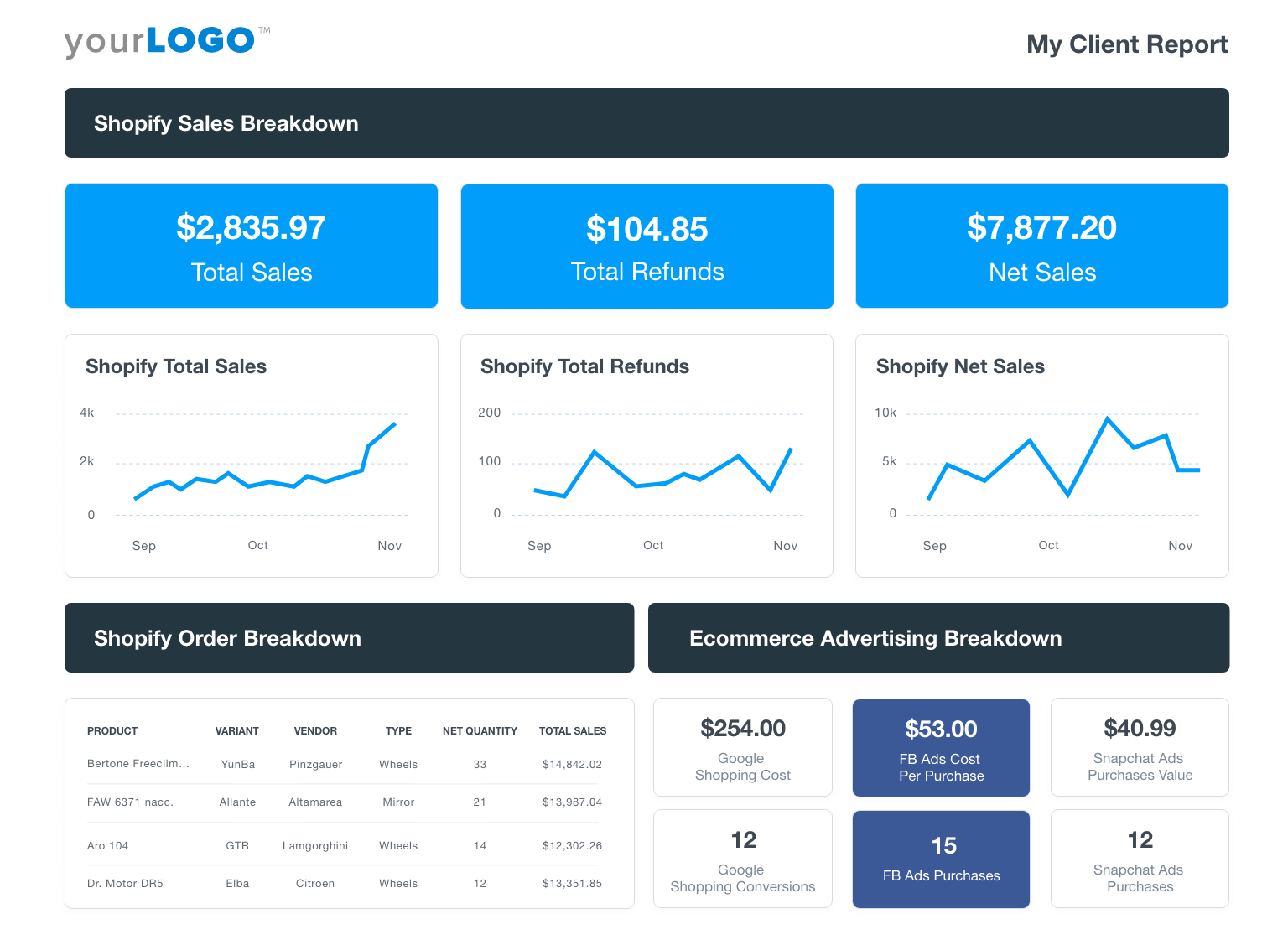
The Strategic Imperative for Data-Driven Decisions in E-commerce
For operators, agency owners, and enterprise merchants, data-driven decision-making is no longer an option—it's a strategic imperative. Leveraging Shopify Analytics empowers you to optimize every facet of your operation, from marketing spend to inventory management and customer retention. It’s the bedrock for scaling efficiently and competitively.
Understanding Shopify's Native Analytics Capabilities
Shopify provides a powerful suite of native analytics tools directly within your admin. These tools offer varying levels of depth, catering to different business sizes and needs.
Overview of the Shopify Admin Dashboard & Standard Reports
The Shopify admin dashboard offers an immediate snapshot of your store's health, displaying key performance indicators (KPIs) like total sales, online store sessions, and conversion rate. Standard reports provide more granular data across several categories:

- Sales Reports: Detail sales by product, channel, discount, and time period.
- Customer Reports: Segment customers by behavior, location, and purchase history.
- Marketing Reports: Track traffic sources, campaign performance, and acquisition costs.
- Finance Reports: Offer comprehensive financial overviews, including taxes, payments, and liabilities.
These foundational Shopify Reporting tools are essential for daily monitoring and identifying initial trends.
Deep Dive into Shopify Plus Analytics & Custom Reporting Features
For enterprise merchants on Shopify Plus, the analytics capabilities are significantly extended. Shopify Plus unlocks a more sophisticated reporting infrastructure, crucial for large-scale operations.
- Custom Reports: The Report Builder allows Plus merchants to create highly specific reports by combining various data points, filters, and dimensions. This flexibility is vital for answering unique business questions.
- Advanced Segmentation: Segmenting data by custom attributes, like specific customer tags or product types, provides deeper insights into niche performance.
- Data Export & API Access: Plus provides enhanced options for exporting data or accessing it programmatically via APIs. This facilitates integration with external data warehouses and business intelligence (BI) platforms.
Leveraging these advanced features enables granular analysis that directly informs complex business strategies.
Identifying Limitations and When to Integrate External Analytics Tools
While robust, native Shopify analytics have inherent limitations, particularly for highly complex businesses or those requiring a holistic view across multiple platforms. Shopify's focus is primarily on sales and on-site behavior.
Limitations include:
- Limited cross-channel attribution modeling beyond basic last-click.
- Less granular behavioral insights (e.g., scroll depth, rage clicks).
- Difficulty in consolidating data from non-Shopify sources (e.g., brick-and-mortar sales, other e-commerce platforms).
Recognizing these gaps is key to knowing when to augment Shopify Analytics with specialized external tools for a truly comprehensive data strategy.
Core E-commerce Metrics: The Foundation of Performance Tracking
Tracking the right E-commerce Metrics is paramount. These are the fundamental indicators of your store's health and growth trajectory.
Sales Performance Metrics for Profitability
Understanding your sales goes beyond the revenue number; it's about discerning true profitability.
Total Sales, Net Sales, and Gross Profit Margin (GPM)
Total Sales represents the gross revenue before any deductions. Net Sales subtracts returns, refunds, and discounts, giving a more accurate picture of actual revenue. Gross Profit Margin (GPM) is arguably one of the most critical E-commerce Metrics, calculated as (Net Sales - Cost of Goods Sold) / Net Sales. A healthy GPM ensures you have enough capital to cover operating expenses and invest in growth.
Average Order Value (AOV) and its Optimization
Average Order Value (AOV) is the average amount spent per customer order. Optimizing AOV directly boosts revenue without increasing traffic. Strategies include bundling products, offering free shipping thresholds, and implementing upsells/cross-sells at various points in the customer journey.
Conversion Rate (CR) Across the Sales Funnel
The Conversion Rate (CR) measures the percentage of visitors who complete a desired action, typically a purchase. Tracking CR across the entire Sales Funnel Analysis (e.g., visitor-to-add-to-cart, add-to-cart-to-checkout, checkout-to-purchase) helps pinpoint specific areas for improvement.
Refund Rate, Return Rate, and Their Impact on Net Revenue
High Refund Rate and Return Rate directly erode net revenue and can signal issues with product quality, descriptions, or customer expectations. Monitoring these metrics is crucial for maintaining profitability and customer satisfaction.
Customer Behavior Metrics for Retention & Loyalty
Sustainable growth hinges on understanding and retaining your customers.
Customer Acquisition Cost (CAC) and Its Calculation
Customer Acquisition Cost (CAC) is the total cost of sales and marketing efforts required to acquire a new customer, divided by the number of customers acquired. Calculating CAC accurately is vital for evaluating marketing efficiency and ensuring profitable customer acquisition.
Customer Lifetime Value (CLTV) and Strategies for Enhancement
Customer Lifetime Value (CLTV) projects the total revenue a business can reasonably expect from a single customer account over their relationship with the business. Enhancing CLTV through personalized experiences, loyalty programs, and exceptional service is a cornerstone of long-term profitability.
Repeat Customer Rate and Churn Analysis
The Repeat Customer Rate indicates the percentage of customers who have made more than one purchase. A high rate signifies strong customer loyalty. Churn Analysis involves identifying customers who have stopped purchasing and understanding the reasons why, allowing for targeted re-engagement strategies.
Session Duration, Bounce Rate, and Exit Rate Analysis
These behavioral metrics reveal how users interact with your site. Session Duration shows engagement, while a high Bounce Rate (visitors leaving after viewing only one page) or Exit Rate (visitors leaving from a specific page) can indicate issues with content, navigation, or page performance. These are critical for Product Performance Tracking and UX optimization.
Marketing & Traffic Metrics for ROI Optimization
Every marketing dollar spent should be accounted for and optimized for maximum return.
Detailed Traffic Sources, Channels, and Referral Analysis
Understanding where your traffic originates (e.g., organic search, paid ads, social media, direct, email) is fundamental. Detailed Traffic Sources, Channels, and Referral Analysis helps allocate marketing budgets effectively and optimize Marketing Channel Effectiveness.
Return on Ad Spend (ROAS) by Campaign and Channel
Return on Ad Spend (ROAS) measures the gross revenue generated for every dollar spent on advertising. Tracking ROAS at the campaign and channel level is critical for identifying profitable marketing efforts and scaling successful campaigns.
Click-Through Rate (CTR) and Cost Per Acquisition (CPA)
Click-Through Rate (CTR) measures the percentage of people who click on an ad or link after viewing it. Cost Per Acquisition (CPA) is the cost to acquire a single customer through a specific marketing effort. Both are key indicators of ad creative and targeting efficiency.
Understanding Multi-Channel Attribution Models
In a complex digital landscape, customers interact with multiple touchpoints before converting. Multi-Channel Attribution Models (e.g., first-click, last-click, linear, time decay) help distribute credit for conversions across various marketing channels, providing a more accurate view of ROI beyond last-click data.
Product Performance Metrics for Inventory & Merchandising
Optimizing your product catalog and inventory is crucial for profitability and customer satisfaction.
Top-Selling Products, Underperformers, and Product Conversion Rates
Identifying your Top-Selling Products and Underperformers is essential for merchandising decisions. Tracking Product Conversion Rates provides insight into which products resonate most with visitors and convert effectively, informing inventory and marketing strategies.
Inventory Turnover Rate and Stockout Risk Assessment
The Inventory Turnover Rate measures how many times inventory is sold and replaced over a period. A healthy turnover rate indicates efficient inventory management. Coupled with Stockout Risk Assessment, this helps prevent lost sales and optimize carrying costs.
Product Page Views, Add-to-Cart Rates, and Checkout Abandonment by Product
Analyzing these granular E-commerce Metrics for individual products reveals specific friction points. High page views but low add-to-cart rates might indicate issues with pricing or descriptions. High add-to-cart but high checkout abandonment by product could point to shipping cost surprises or complex checkout flows for specific items.
Advanced Analytics & Strategic Reporting for Growth
Moving beyond basic metrics, advanced analytics provide deeper, more actionable insights for scaling your Shopify store.
Sales Funnel Analysis: Pinpointing Drop-Off Points
A detailed Sales Funnel Analysis is indispensable for identifying precisely where potential customers abandon their journey. This pinpoints critical areas for Conversion Rate Optimization (CRO).
Visitor-to-Cart, Cart-to-Checkout, and Checkout-to-Purchase Conversion Gaps
Breaking down the funnel into distinct stages—Visitor-to-Cart, Cart-to-Checkout, and Checkout-to-Purchase—allows you to identify specific conversion gaps. For instance, a high drop-off from cart to checkout might indicate unexpected shipping costs or a cumbersome login requirement.
Cohort Analysis: Understanding Customer Behavior Over Time
Cohort Analysis groups customers by their acquisition date (cohort) and tracks their behavior over subsequent periods. This technique is powerful for understanding the long-term impact of marketing campaigns and product changes.
Retention Rates and LTV Trends by Acquisition Cohort
By analyzing Retention Rates and LTV Trends by Acquisition Cohort, you can discern if customers acquired during a specific campaign or period exhibit higher long-term value or better retention. This informs future marketing spend and customer engagement strategies.
Segmenting Your Data for Deeper Insights
Segmentation is the process of breaking down your data into smaller, more homogeneous groups. This allows for hyper-targeted analysis and strategy development.
Customer Segmentation (New vs. Returning, High-Value, Geographic)
Segmenting customers by attributes like New vs. Returning, High-Value (based on CLTV or AOV), or Geographic location enables personalized marketing campaigns and product recommendations. Understanding these segments is key to maximizing Customer Lifetime Value (CLTV).
Product Segmentation (Category, Price Point, Brand)
Analyzing Product Performance Tracking by Category, Price Point, or Brand helps optimize merchandising, pricing strategies, and promotional efforts. It reveals which product types resonate with specific customer segments.
Traffic Segmentation (Organic, Paid, Social, Direct)
Segmenting traffic by Organic, Paid, Social, or Direct channels provides crucial insights into the quality and conversion potential of each source. This directly informs your Marketing Channel Effectiveness and budget allocation.
Integrating External Analytics Tools for a Holistic View
For enterprise-level Shopify Reporting and a truly holistic view, integrating external tools is often essential.
Google Analytics 4 (GA4) Implementation and Custom Event Tracking
Google Analytics 4 (GA4), with its event-driven data model, offers unparalleled flexibility for tracking user behavior beyond basic page views. Proper implementation involves setting up enhanced e-commerce tracking and custom events (e.g., 'scroll_depth', 'video_play', 'form_submission') via Google Tag Manager. This provides a rich dataset for comprehensive Sales Funnel Analysis and user journey mapping. For robust GA4 implementation, refer to the official Google Analytics 4 e-commerce documentation.
Heatmapping & Session Recording Tools (e.g., Hotjar, Microsoft Clarity)
Tools like Hotjar or Microsoft Clarity provide visual insights into user interaction. Heatmapping reveals where users click, move their mouse, and scroll, while Session Recordings allow you to watch anonymized user sessions. These are invaluable for identifying UX friction points and informing Conversion Rate Optimization (CRO) efforts.
Business Intelligence (BI) Platforms for Enterprise-Level Reporting (e.g., Looker Studio, Power BI)
For complex data consolidation and advanced visualization across multiple data sources (Shopify, ERP, CRM, marketing platforms), Business Intelligence (BI) Platforms like Looker Studio (formerly Google Data Studio) or Power BI are indispensable. They allow for custom dashboards, predictive modeling, and executive-level reporting that goes far beyond native Shopify Analytics.
Translating Data into Actionable Strategies for Optimization
Data without action is merely information. The true value of analytics lies in its application to drive tangible business improvements.
Optimizing Conversion Rates (CRO) Through Data Insights
Data-driven Conversion Rate Optimization (CRO) is a continuous process of improving your site's ability to convert visitors into customers.
A/B Testing Strategies for Product Pages, Checkout, and CTAs
Insights from analytics can inform hypothesis for A/B tests. For example, if product page bounce rates are high, test alternative layouts, image galleries, or call-to-action (CTA) placements. Similarly, optimize checkout flows based on abandonment rates at specific steps. This iterative testing is crucial for refining the user experience.
Improving User Experience (UX) Based on Behavioral Data
Behavioral data from heatmaps and session recordings directly informs UX improvements. Identifying areas of confusion, broken elements, or ignored content allows for targeted design and development enhancements that streamline the customer journey.
Enhancing Customer Lifetime Value (CLTV) and Retention
Focusing on existing customers is often more cost-effective than constantly acquiring new ones. Data helps optimize this.
Personalization and Dynamic Content Based on Purchase History
Leveraging customer segmentation and purchase history data allows for powerful personalization. Dynamic content on your site, targeted email campaigns, and product recommendations tailored to individual preferences significantly boost Customer Lifetime Value (CLTV).
Targeted Retention Marketing Tactics and Loyalty Programs
Analytics identifies at-risk customers or high-value segments. This enables the deployment of targeted retention marketing tactics, such as exclusive offers for repeat customers or re-engagement campaigns for churn risks. Implementing a robust loyalty program, informed by customer data, can dramatically increase repeat purchases.
Refining Marketing Spend and Maximizing ROI
Every dollar spent on marketing should be scrutinized for its effectiveness. Data provides that lens.
Data-Driven Budget Allocation and Channel Optimization
Using Return on Ad Spend (ROAS), Customer Acquisition Cost (CAC), and multi-channel attribution insights, you can intelligently allocate your marketing budget. Shift spend from underperforming channels to those with higher ROI, maximizing your overall marketing effectiveness.
Identifying Underperforming Campaigns and Opportunities for Scale
Regular analysis of Marketing Channel Effectiveness allows for quick identification of underperforming campaigns. Conversely, data highlights campaigns that are exceeding expectations, presenting clear opportunities for increased investment and scale. This iterative optimization is key to sustained growth.
Streamlining Operations and Inventory Management
Analytics extends beyond the customer-facing aspects to optimize internal operations, leading to greater efficiency and profitability.
Demand Forecasting and Predictive Analytics for Inventory Planning
Historical sales data, combined with external factors like seasonality and marketing campaigns, can fuel Demand Forecasting and Predictive Analytics. This allows for more accurate inventory planning, reducing stockouts and minimizing excess inventory carrying costs. Consider tools that integrate with your Shopify store for advanced forecasting, like those mentioned in Shopify's official documentation on best-selling products, which can inform inventory decisions.
Strategies for Reducing Returns and Improving Product Quality
Analyzing refund and return rates by product or customer segment can pinpoint specific issues. This data can inform strategies to reduce returns, such as improving product descriptions, enhancing imagery, or even making direct feedback loops to product development for quality improvements.
The Future of Shopify Analytics: AI & Predictive Insights
The evolution of Shopify Analytics is rapidly moving towards more intelligent, automated, and predictive capabilities.
Leveraging Machine Learning for Sales Forecasting and Trend Prediction
Machine learning algorithms are increasingly being integrated into analytics platforms to provide highly accurate Sales Forecasting and Trend Prediction. This moves beyond historical data to identify complex patterns and anticipate future market shifts, enabling proactive business decisions.
AI-Powered Personalized Recommendations and Dynamic Pricing
AI is set to revolutionize personalization, offering truly dynamic content and product recommendations based on real-time user behavior and preferences. Furthermore, AI-powered Dynamic Pricing can optimize pricing strategies in real-time, maximizing profitability based on demand, inventory levels, and competitor pricing.
Conclusion: Empowering Your E-commerce Growth with Data-Driven Decisions
Mastering Shopify Analytics is not just about tracking numbers; it's about cultivating a data-driven culture that permeates every aspect of your e-commerce operation. For seasoned operators, agency owners, and enterprise merchants, a deep understanding of E-commerce Metrics and Shopify Reporting provides the strategic advantage needed to thrive.
By diligently tracking core metrics, leveraging advanced analysis techniques, and integrating external tools when necessary, you empower your business to make informed decisions. This leads to optimized conversion rates, enhanced customer lifetime value, efficient marketing spend, and streamlined operations. Embrace analytics as your ultimate growth engine, and navigate the complex e-commerce landscape with confidence and precision.
Frequently Asked Questions
What are the key native analytics features in Shopify?
Shopify's native analytics include a comprehensive admin dashboard with KPIs, standard reports for sales, customers, marketing, and finance, and for Shopify Plus, custom reports, advanced segmentation, and API access for deeper insights.
Which core e-commerce metrics are crucial for profitability and growth?
Essential metrics include Net Sales, Gross Profit Margin (GPM), Average Order Value (AOV), Conversion Rate (CR), Customer Acquisition Cost (CAC), Customer Lifetime Value (CLTV), and Return on Ad Spend (ROAS).
When should I consider integrating external analytics tools with Shopify?
External tools like Google Analytics 4, heatmapping software, or Business Intelligence platforms are beneficial when native Shopify analytics have limitations, such as for cross-channel attribution, granular behavioral insights, or consolidating data from non-Shopify sources.
How can I use Shopify analytics to improve my store's conversion rate?
Analytics can inform A/B testing strategies for product pages and checkout flows, identify friction points through sales funnel analysis, and improve user experience (UX) based on behavioral data from heatmaps and session recordings.

Ecommerce manager, Shopify & Shopify Plus consultant with 10+ years of experience helping enterprise brands scale their ecommerce operations. Certified Shopify Partner with 130+ successful store migrations.

![Shopify Plus: Map Risk to Revenue [Boost CRO & Profit]](img/blog/shopify-plus-risk-to-revenue-1.webp)
