
- Transaction Fee Thresholds and Tiered Structures: Anticipating Future Shifts
- App Ecosystem Costs vs. Native Feature Adoption: A Strategic Re-evaluation
- Regional Licensing, Compliance, and Data Residency Overhead: The Hidden Variables
- The Digital Nomad's Strategic Advantage: Geo-Arbitrage and Agile Resource Allocation
- Leveraging Global Talent Pools for Specialized Project Management Expertise
- Time Zone Optimization for Continuous Oversight and Rapid Iteration
- Minimizing Operational Overheads Through Location Independence and Lean Practices
- Advanced Project Management Frameworks for Proactive Cost Mitigation on Shopify Plus
- Implementing Lean-Agile Methodologies for Platform Cost Sprints
- Developing a Risk Management Matrix for Pricing Volatility Scenarios
- Value Stream Mapping Shopify Plus Workflows for Efficiency Gains and Waste Reduction
- Technological Toolkit: Predictive Analytics and Automation for Unseen Cost Arbitrage
- AI-Powered Spend Tracking and Anomaly Detection Across Shopify Plus Subscriptions and Apps
- Custom Scripting and API-Driven Solutions for Real-time Cost Monitoring
- Scenario Planning Tools for Future Pricing Models and Platform Evolution
- Case Studies in Unseen Arbitrage: Real-World Shopify Plus Cost Optimization by Nomadic Teams
- Negotiating App Integrations with Geo-Specific Leverage and Vendor Relationships
- Optimizing Development Sprints for Peak Platform Value and Reduced Overruns
- Strategic Re-evaluation of Feature Usage vs. Cost: Build vs. Buy Decisions
- Building a Resilient Shopify Plus Ecosystem Beyond 2026: A Long-Term Vision
- Diversifying Platform Dependencies and Crafting Exit Strategies
- Continuous Vendor Relationship Management and Contract Renegotiation
- Internal Skill Development for Self-Sufficiency and Reduced External Reliance
- Further Reading & References
- Related Reading
What is Shopify Plus Pricing Volatility? Shopify Plus pricing volatility refers to the anticipated shifts in the platform's cost structure, including transaction fees, subscription tiers, and app ecosystem expenses, potentially impacting total cost of ownership (TCO) for enterprise merchants by 2026. This dynamic requires proactive financial forecasting and strategic operational adjustments.
Enterprise merchants leveraging Shopify Plus understand that platform costs extend far beyond the base monthly subscription. As 2026 approaches, anticipating shifts in Shopify's commercial strategy is crucial for maintaining profitability. The platform's evolution suggests a move towards more granular, performance-based pricing.
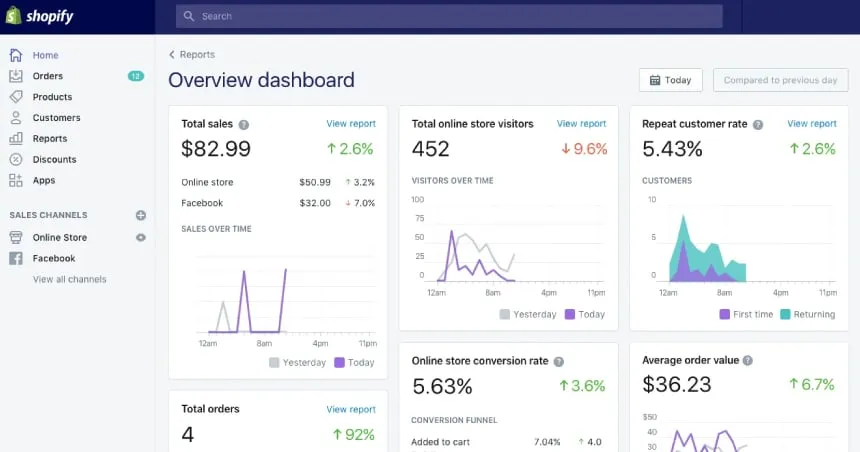
Shopify Plus AI cost optimization dashboard
Transaction Fee Thresholds and Tiered Structures: Anticipating Future Shifts
Shopify Plus traditionally features a lower transaction fee (0.15% to 0.25% with Shopify Payments, 0.4% to 0.6% for third-party gateways) compared to standard plans. This structure is often tied to annual revenue tiers. Future models may introduce more aggressive thresholds or variable rates based on specific product categories or market segments.
Expect potential shifts towards a multi-tiered transaction fee system. This could mean higher fees for merchants exceeding specific annual gross merchandise volume (GMV) benchmarks, or conversely, deeper discounts for truly exceptional scale. Understanding your projected GMV growth is paramount.
Merchants should model various GMV scenarios against potential new tiered fee structures. A 0.1% increase in transaction fees on a $50M GMV means an additional $50,000 in annual costs. Proactive financial forecasting is essential to mitigate these potential impacts.
App Ecosystem Costs vs. Native Feature Adoption: A Strategic Re-evaluation
The Shopify app ecosystem is a powerful extension, yet it represents a significant and often overlooked portion of the total cost of ownership (TCO). As Shopify Plus matures, it continuously integrates more native functionalities that previously required third-party apps. This presents a critical "build vs. buy" decision for every merchant.
Consider the long-term cost implications of app subscriptions, especially for mission-critical functions like subscriptions, loyalty programs, or advanced search. Many apps operate on usage-based pricing, which scales with your business but can become disproportionately expensive. A detailed TCO analysis should compare a five-year app subscription cost against a one-time custom development expense leveraging Shopify's APIs or native features.
For instance, evaluate whether a complex third-party loyalty app truly outperforms Shopify's evolving native customer segmentation and discount capabilities. Consolidating features into native solutions, even if requiring initial development, can significantly reduce recurring SaaS subscription models and simplify your tech stack.
Regional Licensing, Compliance, and Data Residency Overhead: The Hidden Variables
Operating a global e-commerce business on Shopify Plus introduces complexities beyond transactional fees. Regional licensing requirements, data privacy compliance (e.g., GDPR, CCPA, LGPD), and data residency mandates can significantly inflate operational overheads. These are often unseen variables in initial cost projections.
Each new market might necessitate specific legal counsel, specialized app integrations for local payment gateways, or even distinct Shopify Plus stores to satisfy data residency laws. For example, maintaining data within the EU for GDPR compliance might require specific server configurations or third-party data processing agreements with additional costs.
Currency exchange rate impact also plays a role. Fluctuations can affect the actual cost of your Shopify Plus subscription, app subscriptions, and even development services if paid in different currencies. Implementing a robust financial forecasting e-commerce strategy that accounts for these geo-economic factors is non-negotiable.
The Digital Nomad's Strategic Advantage: Geo-Arbitrage and Agile Resource Allocation
Digital nomads inherently possess a strategic advantage in managing Shopify Plus cost dynamics: the ability to leverage global talent pools and optimize operational overheads through location independence. This model facilitates unseen cost arbitrage opportunities.
Leveraging Global Talent Pools for Specialized Project Management Expertise
The digital nomad model breaks geographical barriers for talent acquisition, offering access to highly specialized project management expertise at competitive rates. Instead of being confined to local talent markets, merchants can engage experts in specific Shopify Plus niches, such as headless commerce architecture, complex ERP integrations, or advanced analytics.
This global talent arbitrage allows for significant cost savings on labor, particularly for roles requiring deep technical knowledge. A skilled Shopify Plus developer in Eastern Europe or Southeast Asia might offer comparable expertise to a Western counterpart at a fraction of the cost, without compromising quality. This approach is central to cloud cost optimization in a SaaS environment.
Consider fractional roles: a fractional CTO or a specialized Shopify Plus consultant can provide high-level strategic guidance and project oversight without the overhead of a full-time, in-house executive. This agile resource allocation ensures you pay for expertise only when and where it's needed.
Time Zone Optimization for Continuous Oversight and Rapid Iteration
A distributed team, strategically spread across multiple time zones, can enable a "follow-the-sun" development and support model. This offers continuous oversight and drastically accelerates project iteration cycles. Tasks initiated by a team in one region can be picked up and advanced by another team as their workday begins.
This asynchronous workflow minimizes downtime and can shorten development sprints, leading to faster time-to-market for new features or critical bug fixes. For example, a development team in Asia can work on a feature, hand it off to a QA team in Europe, which then passes it to a marketing team in North America for launch preparation, all within a 24-hour cycle.
Effective remote project management tools are crucial for this model. Platforms like Asana, Jira, or Monday.com, combined with robust communication tools, ensure seamless collaboration and transparency across geographically dispersed teams. This setup directly contributes to minimizing operational overheads by maximizing productivity.
Minimizing Operational Overheads Through Location Independence and Lean Practices
Location independence inherently reduces significant operational overheads associated with traditional brick-and-mortar businesses. Eliminating office rent, utilities, and associated administrative costs frees up substantial capital. This capital can then be reallocated towards core business growth, platform investments, or talent development.
Digital nomad teams often embody lean practices by necessity, focusing on essential tools and processes. This means less reliance on expensive, enterprise-grade software suites and a greater emphasis on efficient, cloud-based alternatives. A lean operational model directly translates to a lower total cost of ownership (TCO) for your entire e-commerce operation.
By adopting a distributed, location-independent structure, businesses can maintain a highly agile and cost-efficient operational footprint. This strategic advantage allows for greater financial flexibility, crucial for navigating the unpredictable cost dynamics of platform evolution like Shopify Plus's 2026 pricing.
Advanced Project Management Frameworks for Proactive Cost Mitigation on Shopify Plus
Proactive cost mitigation on Shopify Plus requires more than reactive budget adjustments; it demands advanced project management frameworks tailored to platform economics. These methodologies integrate financial foresight directly into operational planning.
Implementing Lean-Agile Methodologies for Platform Cost Sprints
Traditional project management often overlooks the granular cost implications of platform usage. Lean-Agile methodologies, adapted for platform cost sprints, focus on delivering maximum value with minimal waste, directly impacting your Shopify Plus expenditure.
Here are the core logical steps for implementing Lean-Agile for platform cost sprints:
- Define Cost-Centric Sprints: Establish sprint goals directly tied to cost reduction or efficiency gains, e.g., "Reduce third-party app dependencies by migrating three features to native Shopify functions this sprint."
- Value Stream Map Current Costs: Identify all recurring Shopify Plus-related expenses, including subscriptions, app fees, development hours, and API call costs. Visually map their contribution to key business processes.
- Prioritize Cost-Saving Backlog: Create a backlog of initiatives ranked by potential cost savings and implementation effort. This could include app consolidation, code optimization, or feature re-evaluation.
- Execute Short, Iterative Sprints: Conduct 1-2 week sprints focusing on specific cost-reduction tasks. Regularly review progress and financial impact.
- Measure and Report ROI: Quantify the actual savings or efficiency gains achieved at the end of each sprint. Use these metrics to inform future sprint planning and demonstrate tangible value.
- Continuous Optimization: Integrate cost monitoring as a continuous process, regularly reviewing new app releases, Shopify native features, and team efficiency.
This iterative approach allows for rapid adjustments to changing platform cost dynamics, preventing budget overruns before they escalate. It transforms cost management from an annual review to a weekly operational priority.
Developing a Risk Management Matrix for Pricing Volatility Scenarios
A robust risk management matrix is indispensable for preparing for Shopify Plus pricing volatility. This tool systematically identifies, assesses, and mitigates potential financial impacts from platform changes.
Construct your matrix by mapping potential risks (e.g., increased transaction fees, app deprecation, new regional compliance costs) against their likelihood and potential financial impact. Assign a score to each, allowing you to prioritize mitigation strategies. For instance, a 5% increase in base subscription fees combined with a 0.1% transaction fee hike on a $100M GMV business represents a substantial, high-impact risk requiring immediate contingency planning.
Mitigation strategies might include negotiating long-term contracts with app vendors, exploring multi-platform strategies, or having a budget allocation specifically for unforeseen platform cost adjustments. This proactive stance is crucial for maintaining a stable financial outlook.
Value Stream Mapping Shopify Plus Workflows for Efficiency Gains and Waste Reduction
Value Stream Mapping (VSM) helps visualize the flow of value creation within your Shopify Plus operations, from customer interaction to order fulfillment. Applying VSM to your platform workflows identifies non-value-added activities and waste that indirectly inflate costs.
Map out processes like product onboarding, content updates, customer support, and order processing. Look for delays, handoffs, reworks, and unnecessary steps that consume developer time, app resources, or operational bandwidth. For example, excessive manual data entry due to poor API integration between Shopify and your ERP is a significant waste that can be streamlined.
By optimizing these workflows, you reduce the indirect costs associated with inefficient operations. This includes fewer developer hours spent on maintenance, lower usage-based app fees due to streamlined processes, and faster time-to-market for new initiatives. This optimization effort directly contributes to a lower total cost of ownership (TCO) for your Shopify Plus enterprise solutions.
Technological Toolkit: Predictive Analytics and Automation for Unseen Cost Arbitrage
Leveraging advanced technological tools, particularly predictive analytics and automation, is critical for uncovering and capitalizing on unseen cost arbitrage opportunities within the Shopify Plus ecosystem.
AI-Powered Spend Tracking and Anomaly Detection Across Shopify Plus Subscriptions and Apps
AI-powered spend tracking tools provide granular visibility into your Shopify Plus expenditures, from core subscription fees to every single app charge. These platforms can ingest data from billing statements, API usage logs, and app invoices, creating a unified view of your cloud cost optimization.
More importantly, these tools employ anomaly detection algorithms to flag unusual spending patterns. A sudden spike in API calls, an unexpected increase in a particular app's usage-based fee, or a deviation from projected transaction costs can be identified immediately. This early detection allows for rapid investigation and remediation, preventing minor issues from becoming major financial drains.
Implementing such a system transforms cost management from a reactive, monthly reconciliation task into a proactive, real-time monitoring function. It provides the data-driven insights necessary to negotiate better terms with vendors or adjust platform usage dynamically.
Custom Scripting and API-Driven Solutions for Real-time Cost Monitoring
Beyond off-the-shelf tools, custom scripting and API-driven solutions offer unparalleled control over real-time cost monitoring. Shopify's robust Admin API allows merchants to programmatically extract data related to orders, transactions, app usage, and other operational metrics that indirectly influence costs.
Develop custom dashboards that pull data from Shopify, your payment gateways, and key app providers. These dashboards can visualize your cost dynamics per transaction, per customer, or per product category. Set up automated alerts via webhooks or custom scripts that notify your team when specific cost thresholds are breached. For example, an alert could trigger if your third-party payment gateway fees exceed a certain percentage of your daily GMV.
This level of granular, real-time data empowers operations managers to make immediate, informed decisions, such as adjusting marketing spend, optimizing shipping strategies, or even temporarily disabling non-essential apps to manage expenses. This is a critical component of effective platform evolution management.
Scenario Planning Tools for Future Pricing Models and Platform Evolution
Future-proofing your Shopify Plus operations demands sophisticated scenario planning. Dedicated tools can simulate the financial impact of various shopify plus pricing 2026 models, platform changes, and market shifts.
These tools allow you to input variables like projected GMV growth, potential transaction fee increases, app subscription adjustments, and even currency fluctuations. They then generate detailed financial forecasts, illustrating the total cost of ownership (TCO) under different conditions. This helps identify breaking points where current strategies become unsustainable.
By running multiple scenarios (e.g., optimistic, realistic, pessimistic), you can develop contingency plans for each. This might involve budgeting for a Shopify migration service if costs become prohibitive, or strategically investing in internal development to reduce app dependency. This proactive financial modeling mitigates risks associated with long-term platform evolution.
Case Studies in Unseen Arbitrage: Real-World Shopify Plus Cost Optimization by Nomadic Teams
The strategic application of digital nomad project management principles creates tangible cost optimization through unseen arbitrage. These case studies highlight actionable strategies implemented by agile, distributed teams.
Negotiating App Integrations with Geo-Specific Leverage and Vendor Relationships
A digital nomad e-commerce operator, managing a high-growth fashion brand on Shopify Plus, needed a robust subscription management app. Initial quotes from leading providers were based on Western market pricing, reflecting higher operational costs for those vendors.
The nomadic team, however, leveraged its distributed network. They identified an equally capable app developer based in a region with lower operating costs and negotiated directly, highlighting their own global team's efficiency and potential for a long-term, high-volume partnership. This geo-specific leverage resulted in a 30% reduction in annual subscription fees compared to initial quotes. This demonstrates the power of global talent arbitrage extending to vendor negotiations.
Furthermore, by fostering strong, personal vendor relationships through consistent, clear communication (a hallmark of effective remote project management), they secured favorable terms for future feature requests and priority support, further enhancing value.
Optimizing Development Sprints for Peak Platform Value and Reduced Overruns
A B2B Shopify Plus merchant, guided by a nomadic project manager, faced consistent development cost overruns due to poorly defined scopes and inefficient sprint cycles. The project manager implemented a "value-first" approach, focusing each sprint on delivering the highest impact features directly tied to revenue or significant cost savings.
Using a global team, they initiated a "follow-the-sun" model for development and QA. Developers in Asia would complete a segment of code, which was then immediately picked up by QA testers in Europe. This reduced idle time and accelerated feedback loops. The result was a 25% reduction in development sprint duration and a 15% decrease in overall development costs for key features, while simultaneously increasing deployment frequency.
This efficiency gain was directly attributable to optimized project management within a distributed team, ensuring that every hour billed contributed directly to peak platform value, minimizing wasted effort and technical debt.
Strategic Re-evaluation of Feature Usage vs. Cost: Build vs. Buy Decisions
An enterprise merchant running multiple Shopify Plus stores discovered they were paying substantial monthly fees for a third-party product customizer app across all stores. A nomadic technical consultant, analyzing their total cost of ownership (TCO) shopify plus, identified that only 60% of the app's features were actively used.
The consultant proposed a strategic re-evaluation: develop a custom, lightweight product customizer using Shopify's Storefront API and metafields. While requiring an upfront investment, the TCO analysis showed significant long-term savings. The nomadic team sourced a specialized developer from Latin America, completing the custom build within three months.
The outcome was a 70% reduction in recurring monthly costs for product customization across all stores within the first year, with an estimated ROI achieved in under 18 months. This case exemplifies a data-driven build vs. buy decision, executed efficiently by leveraging global talent and a keen understanding of platform capabilities.
Building a Resilient Shopify Plus Ecosystem Beyond 2026: A Long-Term Vision
Beyond short-term cost mitigation, a long-term vision for your Shopify Plus ecosystem demands resilience. This involves strategic planning for platform dependencies, vendor relationships, and internal capabilities.
Diversifying Platform Dependencies and Crafting Exit Strategies
Sole reliance on any single platform, even one as robust as Shopify Plus, introduces inherent risks, especially with anticipated shopify plus pricing 2026 changes. Diversifying platform dependencies does not necessarily mean moving off Shopify Plus entirely, but rather building a more flexible architecture.
Consider a headless commerce approach, where Shopify Plus serves as the backend, but the frontend is decoupled. This provides greater control over the customer experience and reduces vendor lock-in mitigation. It also makes future platform migrations less disruptive, as the frontend can potentially connect to a different backend if needed. Crafting a detailed platform migration strategy is a proactive measure against unforeseen changes or escalating costs.
This diversification extends to key integrations. Avoid relying on a single app for critical functions. Explore alternatives or develop internal capabilities for core features, ensuring business continuity even if a key app changes its pricing model or is deprecated.
Continuous Vendor Relationship Management and Contract Renegotiation
Effective vendor relationship management is an ongoing process, not a one-time negotiation. For crucial Shopify Plus apps and service providers, establish regular review cycles (quarterly or bi-annually) to discuss performance, future roadmaps, and pricing.
As your business scales, your leverage with vendors increases. Proactively renegotiate terms based on your current volume and long-term commitments. Seek multi-year contracts with fixed pricing or volume-based discounts. Don't shy away from asking for preferential rates or bundled services.
Maintaining strong communication channels and a collaborative spirit can often unlock better terms than a purely transactional approach. This continuous engagement ensures you always secure the best possible value from your external partners within the evolving saas subscription models.
Internal Skill Development for Self-Sufficiency and Reduced External Reliance
While global talent pools offer immense advantages, cultivating internal skills is equally vital for long-term resilience. Investing in your team's expertise reduces reliance on external agencies and consultants for day-to-day operations and minor development tasks.
Develop training programs for your in-house team on Shopify Plus functionalities, Liquid templating, API integrations, and basic front-end development. Empowering your team to handle routine updates, troubleshoot minor issues, and implement basic optimizations significantly reduces external service costs.
This internal skill development also fosters a deeper understanding of your specific shopify plus enterprise solutions architecture, leading to more informed decisions and efficient project management. A self-sufficient team is an agile team, ready to adapt to any future platform evolution without incurring immediate external costs.
Frequently Asked Questions
What is Shopify Plus pricing volatility and why is it a concern for 2026?
Shopify Plus pricing volatility refers to the anticipated shifts in the platform's cost structure, including transaction fees, subscription tiers, and app ecosystem expenses, potentially impacting the total cost of ownership (TCO) for enterprise merchants by 2026. This dynamic is a concern because Shopify's commercial strategy is evolving, suggesting a move towards more granular, performance-based pricing. Merchants might face new tiered transaction fee systems, higher fees for exceeding GMV benchmarks, or variable rates based on product categories. Furthermore, the continuous integration of native functionalities within Shopify Plus impacts the 'build vs. buy' decision for app-dependent features, potentially shifting recurring SaaS costs. Regional licensing, data residency, and currency exchange rate fluctuations also contribute to unseen overheads, making proactive financial forecasting and strategic operational adjustments critical to maintaining profitability and managing the overall geo-economic impact on platform expenses.
How do digital nomads leverage global talent to reduce Shopify Plus costs?
Digital nomads access global talent pools, enabling cost savings on specialized project management and development expertise. They can engage experts from regions with lower operating costs, like Eastern Europe or Southeast Asia, for roles such as headless commerce architects or ERP integration specialists, often at a fraction of Western rates. This global talent arbitrage, combined with fractional roles, ensures high-level strategic guidance and project oversight without the overhead of full-time, in-house executives, directly contributing to cloud cost optimization.
What are key strategies for mitigating Shopify Plus app ecosystem costs?
Merchants should conduct detailed TCO analyses comparing five-year app subscription costs against one-time custom development leveraging Shopify's APIs or native features. Prioritize consolidating features into native solutions where possible, even if it requires initial development, to reduce recurring SaaS subscriptions. Regularly evaluate if complex third-party apps truly outperform Shopify's evolving native capabilities, especially for functions like loyalty programs or customer segmentation, to simplify the tech stack and minimize expenses.

Ecommerce manager, Shopify & Shopify Plus consultant with 10+ years of experience helping enterprise brands scale their ecommerce operations. Certified Shopify Partner with 130+ successful store migrations.
![Shopify Plus: Master 2026 Volatility, Slash Costs [Antifragile]](/img/blog/shopify-plus-2026-antifragile-cost-1.webp)

![Shopify Plus AI: Stop Fraud, Unlock 20%+ Revenue [Ecommerce Profit]](/img/blog/shopify-plus-ai-fraud-engine-1.webp)