![Shopify Plus Migration: Maximize Value, Cut Delays [Expert Guide] Cover Image](/img/blog/shopify-plus-migration-value-1.webp)
- The "Time-as-Resource Economy": Why Every Day Counts in Shopify Plus Migration
- Quantifying the Opportunity Cost: Lost Revenue & Market Share
- The Compounding Effect of Delay: Technical Debt & Feature Lag
- Shifting from "Launch Date" to "Value Velocity" Mindset
- Strategic Pre-Migration: Laying the Foundation for Accelerated Value Velocity
- Comprehensive Discovery & Scope Definition: Avoiding Scope Creep
- Data Migration Strategy: Prioritizing Integrity and Efficiency
- Third-Party App & Integration Audit: Streamlining the Ecosystem
- Technical SEO & UX Audit: Preserving and Enhancing Digital Assets
- Agile Project Management for Shopify Plus Migrations: Iteration for Velocity
- Breaking Down the Migration: Sprints, Milestones, and MVPs
- Cross-Functional Team Collaboration: Fostering Seamless Handoffs
- Continuous Testing & Feedback Loops: Catching Issues Early
- Mitigating Time Sinks & Risks: Proactive Strategies for Timeline Control
- Common Migration Bottlenecks and How to Preempt Them
- Vendor Management & SLA Adherence: Keeping Partners Accountable
- Contingency Planning: What If Scenarios and Backup Strategies
- Effective Communication & Stakeholder Alignment: Preventing Misunderstandings
- Post-Migration Acceleration: Sustaining and Amplifying Value Velocity
- Performance Monitoring & Optimization: Ensuring Peak Operation
- Post-Launch SEO & CRO Audits: Capitalizing on New Capabilities
- Training & Adoption: Empowering Your Team for New Efficiencies
- Iterative Feature Development: Leveraging Shopify Plus Capabilities
- Measuring Success Beyond Launch: ROI & Value Velocity Metrics
- Key Performance Indicators (KPIs) for Migration Success
- Calculating the True ROI of Your Shopify Plus Investment
- Establishing a Framework for Continuous Value Assessment
- Related Reading
- Shopify Plus Migration Risk Checklist
- Phased Shopify Plus Implementation Plan
- Authoritative References
The "Time-as-Resource Economy": Why Every Day Counts in Shopify Plus Migration
For enterprise merchants and rapidly scaling businesses, a Shopify Plus migration is more than a technical upgrade; it's a strategic investment in future growth. Viewing time as a finite, quantifiable resource in this context is paramount. Every day a migration is delayed represents a tangible cost, impacting revenue, market share, and long-term strategic agility.
Quantifying the Opportunity Cost: Lost Revenue & Market Share
Delaying your Shopify Plus migration directly translates to a quantifiable opportunity cost. This isn't merely theoretical; it's lost revenue from missed conversion uplift, foregone average order value (AOV) improvements, and the inability to launch critical features. Each week of delay can mean thousands, if not millions, in unrealized sales based on your current traffic and conversion potential.
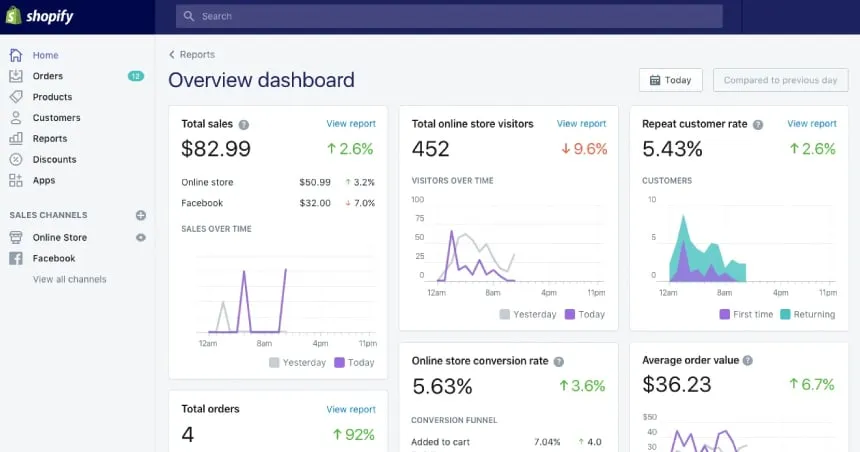
Ecommerce migration timeline acceleration dashboard
Consider the market share erosion. Competitors leveraging modern, agile platforms can out-innovate and out-market you. They launch new features, run sophisticated promotions, and optimize customer journeys faster. This digital lag allows them to capture segments of your target audience that you could otherwise serve, diminishing your long-term market position.
To quantify this, project your expected growth rate on Shopify Plus versus your current platform. Multiply the daily revenue differential by the number of delayed days. Factor in potential gains from improved SEO, site speed, and enhanced customer experiences. This calculation reveals the true financial drain of a drawn-out shopify plus migration time ecommerce.
The Compounding Effect of Delay: Technical Debt & Feature Lag
Operating on an outdated or underperforming platform accrues technical debt at an accelerating rate. This debt manifests as costly maintenance, security vulnerabilities, and a sluggish development cycle. Each custom workaround or patch on an old system saps resources that could be invested in innovation.
![Shopify Plus migration agile planning blueprint - Shopify Plus Migration: Maximize Value, Cut Delays [Expert Guide]](/img/blog/shopify-plus-migration-value-2.webp) Shopify Plus migration agile planning blueprint
Shopify Plus migration agile planning blueprint
The longer you defer a Shopify Plus migration, the further behind you fall in feature parity. Shopify Plus continuously evolves, releasing powerful new capabilities for headless commerce, international expansion, and advanced merchandising. Delaying means you miss out on these immediate competitive advantages, widening the gap between your capabilities and market expectations.
Furthermore, integrating new third-party solutions becomes increasingly complex and expensive on legacy platforms. This feature lag impedes your ability to respond to market trends, personalize customer experiences, and streamline operational workflows, directly impacting profitability and customer satisfaction.
Shifting from "Launch Date" to "Value Velocity" Mindset
A common pitfall in platform migrations is an obsessive focus on the "go-live" date as the sole measure of success. This narrow perspective often overlooks the speed and efficiency with which business value is delivered both during and after the migration. A more strategic approach prioritizes "Value Velocity"—the rate at which new capabilities translate into measurable business outcomes.
Value Velocity emphasizes continuous delivery and iterative improvement, ensuring that every sprint and milestone contributes directly to tangible ROI. This mindset redefines success from merely launching to consistently enhancing the customer experience and operational efficiency. It means embracing an agile methodology that values rapid deployment of features over a single, monolithic launch.
Project managing a Shopify Plus migration for maximal ecommerce value velocity transcends mere technical execution; it fundamentally redefines how an enterprise captures and accelerates digital growth. This means meticulously quantifying the opportunity cost of every delayed day, which can run into five or six figures in lost revenue and market share erosion for mid-market to enterprise merchants. To achieve peak value velocity, a strategic migration framework must integrate aggressive timeline optimization with an agile project methodology, focusing on rapid iteration and continuous delivery of business value. This involves a comprehensive pre-migration audit to mitigate technical debt, a robust data integrity validation process, and an iterative development approach that prioritizes minimal viable products (MVPs). Crucially, post-migration, success is measured not just by a flawless launch but by sustained performance optimization, aggressive post-launch SEO, and an ongoing roadmap for leveraging Shopify Plus's advanced capabilities, driving a measurable increase in conversion rates, average order value, and customer lifetime value.
Strategic Pre-Migration: Laying the Foundation for Accelerated Value Velocity
The success of any Shopify Plus migration hinges critically on meticulous pre-migration planning. This phase is where you establish the architectural and operational blueprints that dictate the speed and efficiency of the entire project. Skipping or rushing these steps inevitably leads to delays, cost overruns, and compromised outcomes.
Comprehensive Discovery & Scope Definition: Avoiding Scope Creep
Begin with an exhaustive discovery phase. This involves a deep dive into your current platform's architecture, business logic, integrations, and operational workflows. Document every aspect, from user roles and permissions to inventory management processes and customer service protocols.
Clearly define the scope of your Shopify Plus migration early on. This includes outlining specific features, functionalities, and integrations that are non-negotiable for launch. Categorize requirements as "must-have," "should-have," and "nice-to-have" to facilitate prioritization. A detailed migration project plan with clear boundaries is your strongest defense against scope creep, which is a primary cause of timeline delays and budget overruns.
- Audit Existing Functionality: Map every feature, custom code, and third-party integration on your current platform.
- Define Business Requirements: Interview key stakeholders across departments (marketing, sales, operations, finance, customer service) to capture their needs.
- Prioritize Features: Use a framework (e.g., MoSCoW method) to determine what is essential for MVP launch versus subsequent phases.
- Document Technical Specifications: Detail API requirements, data models, and integration points for all systems.
Data Migration Strategy: Prioritizing Integrity and Efficiency
Data is the lifeblood of your ecommerce business. A robust data migration strategy is non-negotiable, prioritizing both integrity and efficiency. This involves meticulous planning for the transfer of customer records, order history, product catalogs, content, and any custom data sets.
Start with a comprehensive data audit and cleansing process on your existing platform. Identify duplicate records, incomplete entries, and outdated information. Define clear data mapping rules between your old system and Shopify Plus's data model. Utilize automated tools where possible for extraction, transformation, and loading (ETL).
- Data Audit & Cleansing: Identify and rectify inconsistencies, duplicates, and missing data points pre-migration.
- Data Mapping: Create a detailed map of how each data field from your old platform corresponds to Shopify Plus.
- Validation & Testing: Implement rigorous data integrity validation procedures post-import. This includes spot checks, automated scripts, and reconciliation reports.
- Phased vs. Big-Bang: Determine the most appropriate migration approach (e.g., incremental product data migration vs. a single cutover).
Third-Party App & Integration Audit: Streamlining the Ecosystem
Your current ecommerce ecosystem likely includes numerous third-party applications and custom integrations. A critical pre-migration step is to conduct a thorough audit of each one. Evaluate its necessity, its compatibility with Shopify Plus, and its long-term value to your business.
This is an opportunity to streamline. Identify redundant apps, replace underperforming solutions, or consolidate functionalities. For essential integrations (ERP, CRM, OMS, marketing automation), plan their re-integration meticulously. Prioritize native Shopify Plus apps or those with robust, well-documented APIs to minimize custom development.
- Inventory All Apps & Integrations: Create a comprehensive list of every connected service.
- Assess Necessity & Value: Determine if each app is still required or if its functionality can be replaced by native Shopify Plus features.
- Shopify Plus Compatibility Check: Research existing Shopify Plus app alternatives or direct integrations.
- Integration Strategy: Develop a third-party app integration strategy for essential services, prioritizing API-first solutions.
Technical SEO & UX Audit: Preserving and Enhancing Digital Assets
Your existing website's search engine rankings and user experience are invaluable digital assets. A pre-migration technical SEO and UX audit is crucial to preserve and enhance these. Any misstep here can lead to significant drops in organic traffic and conversion rates post-launch.
Map all current URLs and plan a comprehensive 301 redirect strategy to ensure seamless transitions for search engines and users. Analyze existing site structure, meta data, and content for optimization opportunities. For UX, review current user flows, conversion funnels, and pain points to design an improved experience on Shopify Plus.
- Current SEO Performance Baseline: Document organic traffic, keyword rankings, crawl errors, and indexation status.
- URL Mapping & Redirect Strategy: Create a 1:1 redirect map for all existing URLs to their new Shopify Plus counterparts.
- Content Audit: Identify high-performing content for migration, review for freshness, and plan updates.
- UX Flow Analysis: Map current user journeys and design optimized flows for the new Shopify Plus storefront.
Agile Project Management for Shopify Plus Migrations: Iteration for Velocity
Traditional waterfall methodologies often struggle with the dynamic nature of ecommerce platform migrations. An agile approach, focused on iterative development and continuous feedback, is far more effective for accelerating value velocity and managing shopify plus migration time ecommerce.
Breaking Down the Migration: Sprints, Milestones, and MVPs
Deconstruct the entire migration into manageable, time-boxed sprints. Each sprint should focus on delivering a specific, testable set of features or functionalities. This allows for frequent progress checks and immediate course correction. Prioritize the development of a Minimum Viable Product (MVP) for launch, ensuring that core functionalities are live quickly.
Define clear milestones that mark significant achievements, such as data migration completion, core theme development, or critical integration readiness. This structured approach, characteristic of effective project management, provides transparency and keeps the team focused on incremental progress towards the overall goal.
- Sprint Planning: Organize work into 1-2 week sprints, each with defined objectives and deliverables.
- MVP Definition: Clearly outline the essential features required for a successful initial launch.
- Milestone Tracking: Establish key checkpoints to validate progress and ensure alignment.
- Backlog Prioritization: Continuously refine and prioritize the feature backlog based on business value and dependencies.
Cross-Functional Team Collaboration: Fostering Seamless Handoffs
A successful migration requires seamless collaboration across internal teams (marketing, operations, IT, customer service) and external partners (development agencies, app vendors). Break down silos by establishing a central communication hub and regular cross-functional meetings.
Define clear roles and responsibilities for each team member and stakeholder. Implement shared project management tools (e.g., Jira, Asana, Trello) to maintain transparency on tasks, progress, and dependencies. Proactive communication minimizes misunderstandings and ensures smooth handoffs between different project phases.
- Dedicated Core Team: Assign a cross-functional team with specific roles and decision-making authority.
- Regular Stand-ups/Check-ins: Facilitate daily or weekly meetings to review progress, identify blockers, and plan next steps.
- Shared Project Management Platform: Utilize tools to centralize tasks, documentation, and communication.
- Defined Communication Protocols: Establish how information is shared, decisions are made, and issues are escalated.
Continuous Testing & Feedback Loops: Catching Issues Early
Integrate continuous testing throughout the migration lifecycle, rather than relegating it to a single phase at the end. Implement unit testing, integration testing, and user acceptance testing (UAT) within each sprint. This proactive approach catches bugs and inconsistencies early, significantly reducing the cost and time required for fixes.
Establish rapid feedback loops. Encourage internal teams and a select group of beta users to test functionalities as they are developed. Document feedback systematically and prioritize fixes or enhancements in subsequent sprints. This iterative process is a cornerstone of agile migration methodology and ensures a higher quality outcome.
- Automated Testing: Implement automated tests for critical functionalities to ensure consistency and speed.
- User Acceptance Testing (UAT): Involve end-users early to validate functionality against business requirements.
- Regression Testing: Regularly re-test existing functionalities to ensure new changes haven't introduced regressions.
- Structured Feedback Collection: Use clear channels for bug reporting and feature requests, with a defined prioritization process.
Mitigating Time Sinks & Risks: Proactive Strategies for Timeline Control
Even with meticulous planning, Shopify Plus migrations are complex undertakings prone to unforeseen challenges. Proactive risk identification and mitigation are essential for effective time management and maintaining project velocity.
Common Migration Bottlenecks and How to Preempt Them
Identify and address potential bottlenecks early in your planning. Common culprits include complex data cleansing, intricate custom integrations, lengthy stakeholder approval processes, and delayed user acceptance testing. Each of these can significantly derail your shopify plus migration time ecommerce.
Preempt these issues by allocating dedicated resources for data preparation, breaking down complex integrations into smaller, manageable phases, establishing clear approval matrices with deadlines, and initiating UAT early with well-defined test cases. Proactive problem-solving minimizes reactive firefighting.
- Data Cleansing & Transformation: Start this process well in advance, dedicating resources to ensure data quality.
- Custom Integration Complexity: Prioritize integrations, simplify where possible, and use existing APIs rather than building from scratch.
- Stakeholder Approvals: Define clear approval workflows and deadlines, escalating promptly if delays occur.
- UAT Delays: Begin UAT early, provide clear documentation, and ensure testers are available and engaged.
Vendor Management & SLA Adherence: Keeping Partners Accountable
If you're working with external agencies or technology partners, effective vendor management is crucial. Establish clear Service Level Agreements (SLAs) in your contracts that outline deliverables, timelines, and performance expectations. Regularly review progress against these agreements.
Maintain open lines of communication but also enforce accountability. Conduct regular check-ins, performance reviews, and address any deviations from the plan promptly. A strong partnership built on mutual respect and clear expectations helps prevent delays and ensures high-quality output.
- Detailed Contracts & SLAs: Clearly define scope, deliverables, timelines, and penalties for non-adherence.
- Regular Performance Reviews: Schedule frequent meetings to assess progress against agreed-upon metrics.
- Clear Escalation Paths: Establish a process for resolving issues that cannot be addressed at the project level.
- Defined Communication Cadence: Set expectations for reporting, meetings, and general correspondence.
Contingency Planning: What If Scenarios and Backup Strategies
No migration is entirely free of risks. Develop comprehensive contingency planning by identifying critical path items and potential failure points. Ask "what if" for each major component: What if data migration fails? What if a key integration breaks? What if a critical resource becomes unavailable?
For each identified risk, develop a clear backup strategy. This includes data rollback plans, alternative integration approaches, or contingency resources. Implementing downtime minimization tactics, such as a staged rollout or a dark launch, can also mitigate impact. A robust risk management ecommerce migration strategy provides a safety net and minimizes the impact of unexpected events.
- Risk Identification Matrix: List potential risks, their likelihood, and potential impact.
- Mitigation Strategies: Develop proactive steps to reduce the probability or impact of each risk.
- Fallback Plans: Create detailed plans for recovery in case a risk materializes (e.g., data backups, alternative vendors).
- Disaster Recovery Protocol: Establish clear steps for restoring operations in the event of a major outage or data loss.
Effective Communication & Stakeholder Alignment: Preventing Misunderstandings
Communication is the bedrock of successful project management. Establish a clear and consistent communication plan for all stakeholders, from executive leadership to individual team members and external partners. Transparency about progress, challenges, and decisions prevents misunderstandings and builds trust.
Regularly update stakeholders on project status, key milestones achieved, and any roadblocks encountered. Tailor communications to the audience: executives need high-level summaries and impact assessments, while technical teams require detailed updates. A well-executed stakeholder communication plan ensures everyone is aligned and working towards the same objectives.
- Communication Matrix: Define who needs to know what, when, and through which channels.
- Regular Reporting: Provide consistent updates (e.g., weekly status reports, monthly executive summaries).
- Dedicated Channels: Use specific tools (e.g., Slack channels, project management comments) for different types of communication.
- Feedback & Q&A Sessions: Provide opportunities for stakeholders to ask questions and provide input.
Post-Migration Acceleration: Sustaining and Amplifying Value Velocity
The go-live is not the finish line; it's the starting gun for continuous optimization and value amplification. Post-migration efforts are crucial for sustaining momentum and maximizing the ROI of your Shopify Plus investment.
Performance Monitoring & Optimization: Ensuring Peak Operation
Immediately after launch, implement rigorous performance monitoring. Track key metrics such as site speed (Core Web Vitals), uptime, server response times, and error rates. Utilize tools like Google Analytics, Google Search Console, and third-party monitoring services to gain real-time insights into your site's health.
Establish a routine for continuous performance optimization Shopify Plus. Identify and address any bottlenecks that arise, whether they relate to image optimization, app performance, or theme code. Proactive monitoring ensures your site operates at peak efficiency, delivering a superior user experience and supporting conversion goals.
- Real-time Analytics Dashboards: Monitor traffic, conversions, and technical performance metrics.
- Uptime & Error Tracking: Implement alerts for any dips in availability or increases in server errors.
- Site Speed Audits: Regularly audit Core Web Vitals and address any regressions.
- App Performance Review: Monitor the impact of third-party apps on site speed and stability.
Post-Launch SEO & CRO Audits: Capitalizing on New Capabilities
A critical post-migration task is to conduct thorough post-migration SEO strategy and Conversion Rate Optimization (CRO) audits. Verify that all 301 redirects are functioning correctly, canonical tags are properly implemented, and your site is being indexed by search engines as expected. Monitor organic keyword rankings and traffic to identify any unexpected drops or gains.
For CRO, leverage the enhanced analytics and A/B testing capabilities of Shopify Plus. Analyze user behavior through heatmaps, session recordings, and funnel analysis. Identify areas for improvement in your checkout flow, product pages, and navigation. Continuously test hypotheses to optimize conversion rates and average order value.
- 301 Redirect Validation: Verify all redirects are working as intended to preserve link equity.
- Indexation & Crawl Report Review: Monitor Google Search Console for any issues with indexing or crawling.
- Keyword Ranking & Organic Traffic Monitoring: Track performance against pre-migration baselines.
- A/B Testing & Personalization: Leverage Shopify Plus features to continuously optimize user experience and conversion funnels.
Training & Adoption: Empowering Your Team for New Efficiencies
The full value of Shopify Plus can only be realized if your team is empowered to use its capabilities effectively. Provide comprehensive training for all relevant departments: marketing, customer service, operations, and product management. This includes platform navigation, feature utilization, and best practices.
Develop clear documentation, knowledge base articles, and video tutorials that can serve as ongoing resources. Encourage adoption by showcasing new efficiencies and improved workflows. Empowering your team ensures they can leverage the platform to its fullest, driving operational excellence and customer satisfaction.
- Role-Specific Training Sessions: Tailor training content to the needs of different departments.
- Comprehensive Documentation: Create internal guides, FAQs, and best practice documents.
- Onboarding & Support: Provide ongoing support for new users and complex tasks.
- Feedback & Improvement Loop: Gather team feedback on platform usability and identify areas for further training or optimization.
Iterative Feature Development: Leveraging Shopify Plus Capabilities
Shopify Plus is a dynamic platform designed for continuous growth. Establish an iterative feature development roadmap that goes beyond the initial launch. Prioritize new functionalities and enhancements based on business goals, customer feedback, and market trends. This could involve exploring headless commerce options, expanding into new geographies with multi-store setups, or integrating advanced personalization engines.
Leverage the advanced APIs and extensibility of Shopify Plus to continuously innovate. This approach ensures your ecommerce store remains competitive, agile, and capable of adapting to evolving customer demands. Think of your migration as establishing a foundation, not a finished product.
- Feature Prioritization Roadmap: Plan for future enhancements based on business impact and user feedback.
- A/B Testing for New Features: Validate the impact of new functionalities before full rollout.
- Integration of Advanced Tools: Explore new apps and services that enhance core Shopify Plus capabilities.
- Stay Updated with Shopify Plus Releases: Regularly review new platform features and updates for adoption opportunities.
Measuring Success Beyond Launch: ROI & Value Velocity Metrics
Measuring the true success of your Shopify Plus migration extends far beyond merely going live. It requires a robust framework for quantifying Return on Investment (ROI) and continuously assessing value velocity.
Key Performance Indicators (KPIs) for Migration Success
Define a clear set of KPIs before the migration even begins. These should encompass both direct business outcomes and technical performance. Business KPIs measure the impact on your bottom line, while technical KPIs ensure the platform is functioning optimally.
- Revenue Growth: Track year-over-year revenue, average order value (AOV), and conversion rates.
- Customer Acquisition & Retention: Monitor new customer acquisition cost (CAC), customer lifetime value (CLTV), and repeat purchase rates.
- Operational Efficiency: Measure order fulfillment times, customer service response times, and inventory accuracy.
- Technical Performance: Monitor site speed (Core Web Vitals), uptime, error rates, and page load times.
- SEO Performance: Organic traffic, keyword rankings, and indexation rates.
Calculating the True ROI of Your Shopify Plus Investment
Calculating the true ROI calculation platform migration requires a holistic approach. Quantify direct revenue gains from improved conversion rates, increased AOV, and expanded market reach. Factor in cost savings derived from operational efficiencies, reduced technical debt, and lower maintenance costs of a modern platform.
Don't overlook qualitative benefits that contribute to long-term value. These include improved scalability, enhanced agility in responding to market changes, better brand perception, and increased team productivity. Assign monetary values where possible to these qualitative gains to present a comprehensive ROI picture.
- Direct Revenue Impact: Quantify gains from increased conversion, AOV, and expanded sales channels.
- Cost Savings: Calculate reductions in infrastructure, maintenance, and development costs.
- Operational Efficiencies: Assign value to faster order processing, reduced manual tasks, and improved inventory management.
- Intangible Benefits: Acknowledge and, where possible, quantify benefits like enhanced scalability, brand reputation, and employee satisfaction.
Establishing a Framework for Continuous Value Assessment
A successful migration is not a one-time event; it's the foundation for continuous growth. Establish a framework for ongoing value assessment. This involves regularly reviewing your KPIs against initial business objectives and industry benchmarks. Implement a quarterly or bi-annual review cycle to analyze performance, identify new opportunities, and adjust your strategy.
This continuous assessment framework, deeply rooted in effective project management, ensures that your Shopify Plus platform continues to deliver maximal ecommerce value velocity. It allows for agile adjustments to your roadmap, ensuring your investment remains aligned with evolving business goals and market dynamics.
- Regular KPI Reviews: Schedule consistent meetings to analyze performance against targets.
- Strategic Roadmap Re-evaluation: Adjust your feature development roadmap based on performance data and market shifts.
- Competitive Benchmarking: Compare your performance against industry leaders and direct competitors.
- Feedback Integration: Continuously incorporate internal and external feedback into your value assessment and planning processes.
Related Reading
More articles relevant to this topic:
- Shopify Plus Migration Guide: Timeline, Cost & Risk Checklist
- Shopify Transition: Master Deferred Migration [Pre-Flight]
- Shopify Plus Migration: Predictable Timelines with Agile Timeboxing
- Shopify Migration: Stop Data Drift [Time-Lock Guide]
- Shopify Migration: Master Dual-State Transitions
Shopify Plus Migration Risk Checklist
A Shopify Plus migration should be planned around risk, not only around launch tasks. The most important work is deciding which URLs, templates, analytics events, redirects, integrations, and checkout flows must survive the move without damaging revenue or organic search visibility.
- Map current revenue-driving URLs and search queries before changing templates.
- Validate redirects, canonicals, structured data, and sitemap output before launch.
- Test checkout, payments, analytics, consent, and third-party scripts in a staging flow.
- Measure Core Web Vitals, conversion rate, crawl errors, and revenue after launch.
Phased Shopify Plus Implementation Plan
For many teams, a phased migration is safer than changing every business-critical system at once. Start with the pages and flows that create the highest revenue or SEO risk, then move into secondary templates, automation, and experimentation after the foundation is stable.
Authoritative References
Use these official resources to verify platform-specific claims and implementation details before making commercial or technical decisions.
Frequently Asked Questions
What is "Value Velocity" in the context of a Shopify Plus migration, and why is it crucial?
Value Velocity refers to the speed and efficiency with which new capabilities and features implemented during or after a Shopify Plus migration translate into measurable business outcomes and tangible ROI. Unlike a traditional "launch date" mindset, which solely focuses on the go-live, Value Velocity emphasizes continuous delivery and iterative improvement. It means prioritizing agile development, ensuring every sprint contributes directly to enhancing customer experience, boosting operational efficiency, or increasing profitability. For enterprise merchants, this approach is crucial because it minimizes the opportunity cost of delays, accelerates the realization of benefits from the new platform, and ensures the migration is a foundation for ongoing, rapid digital growth rather than a one-time project. It transforms the migration from a technical task into a strategic lever for sustained competitive advantage.
How can I quantify the financial impact of delaying my Shopify Plus migration?
To quantify the financial impact of delaying a Shopify Plus migration, consider the opportunity cost from lost revenue, foregone conversion rate improvements, and unrealized average order value (AOV) increases. Project the expected daily revenue differential between your current platform and Shopify Plus, then multiply this by the number of delayed days. Factor in potential gains from improved SEO, site speed, and enhanced customer experiences that Shopify Plus offers. Additionally, account for market share erosion as competitors leverage more agile platforms, the compounding effect of technical debt on an outdated system, and the cost of missed features that could drive growth. This comprehensive calculation reveals the true financial drain of a prolonged migration timeline.
What are the critical pre-migration steps to ensure a smooth and fast Shopify Plus transition?
Ensuring a smooth and fast Shopify Plus migration hinges on meticulous pre-migration planning. Key steps include a comprehensive discovery phase to audit existing functionality, business logic, and integrations, followed by a clear scope definition to prevent scope creep. A robust data migration strategy is essential, involving thorough data auditing, cleansing, and mapping, alongside rigorous validation. Conduct a third-party app and integration audit to streamline your ecosystem, identifying redundancies and prioritizing compatible solutions. Finally, a technical SEO and UX audit is crucial to preserve search rankings and optimize user experience post-launch, including a detailed 301 redirect strategy and content review.
How long does a typical Shopify Plus migration take for an enterprise merchant?
The timeline for a Shopify Plus migration for an enterprise merchant can vary significantly, typically ranging from 3 to 9 months. This duration depends on several factors: the complexity of the existing platform, the volume and intricacy of data to be migrated, the number and type of third-party integrations (ERP, CRM, OMS), the extent of custom theme development required, and the internal resources available for project management and testing. A simpler migration with minimal customizations and integrations might be on the shorter end, while a highly complex project involving headless commerce, extensive custom features, or multiple international stores will lean towards the longer end of this spectrum. Meticulous planning and an agile approach can help optimize this timeline.

Ecommerce manager, Shopify & Shopify Plus consultant with 10+ years of experience helping enterprise brands scale their ecommerce operations. Certified Shopify Partner with 130+ successful store migrations.