

- The Unpredictability Paradox: Why Shopify Plus Migrations Often Miss the Mark
- Common Pitfalls: Scope Creep, Resource Bottlenecks, and Underestimated Complexity
- The Cost of Delays: Revenue Loss, Brand Damage, and Team Burnout
- Introducing the Agile Stopwatch: Timeboxing as Your Migration Anchor
- Beyond Traditional Project Management: Why Agile Fits E-commerce Migration
- Defining Timeboxing: Fixed Time, Variable Scope for Predictability
- Phase 1: Strategic Timeboxing for Pre-Migration Discovery & Planning
- Initial Assessment Sprints: Scoping the "Why" and "What" of Your Migration
- Technology Stack Audit Timeboxes: Identifying Integration Complexities (APIs, ERPs, PIMs)
- Data Migration Strategy Sprints: Mapping, Cleansing, and Transformation
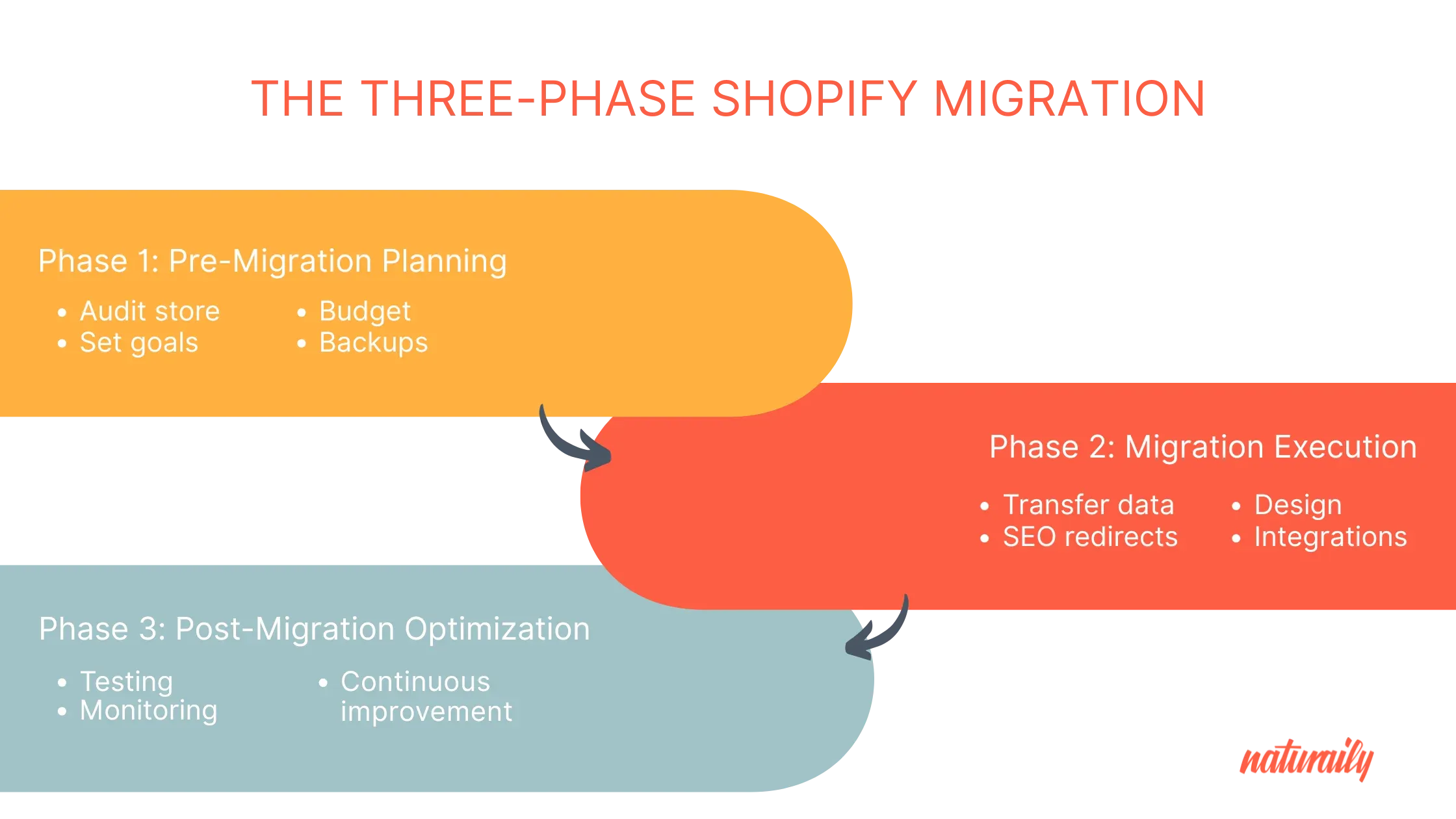
- Phase 2: Execution Sprints – Building, Testing, and Iterating with Precision
- Development Timeboxes: Theme Customization, Feature Implementation, and App Integrations
- QA & User Acceptance Testing (UAT) Sprints: Bug Resolution and Iterative Feedback Loops
- Performance Optimization Timeboxes: Speed, Scalability, and Core Web Vitals Readiness
- Phase 3: Go-Live & Post-Migration Timeboxes: Ensuring a Smooth Transition and Beyond
- Deployment & Cutover Sprints: Minimizing Downtime and Risk
- Hypercare Timeboxes: Rapid Response to Post-Launch Issues and Monitoring
- Iterative Optimization Sprints: Continuous Improvement and Feature Rollout Post-Launch
- Tools & Techniques for Mastering Your Agile Stopwatch
- Project Management Software: Leveraging Jira, Asana, Trello for Timebox Tracking
- Communication Protocols: Daily Stand-ups, Sprint Reviews, and Retrospectives for Alignment
- The Art of Estimation: Story Points, Planning Poker, and Expert Judgment in Timeboxing
- Measuring Success: Key Performance Indicators for Timeboxed Shopify Plus Migrations
- On-Time Delivery Rate & Budget Adherence as Primary Predictability Metrics
- Post-Migration Performance Metrics: Conversion Rate, Page Speed, Uptime, and SEO Health
- Team Velocity & Predictability Score: Quantifying Agile Efficiency
- Case Study Snippets: Real-World Impact of Timeboxed Shopify Plus Migrations
- From Chaos to Clarity: A Retailer's Journey to Predictable Migration
- Scaling with Speed: A D2C Brand's Success Story with Agile Timeboxing
- Related Reading
The Unpredictability Paradox: Why Shopify Plus Migrations Often Miss the Mark
For enterprise merchants and growing D2C brands, a Shopify Plus migration represents a pivotal moment for scaling operations and enhancing customer experience. Yet, the journey often devolves into a quagmire of missed deadlines, budget overruns, and escalating frustration. This unpredictability isn't inherent to the platform; it stems from fundamental project management missteps common in complex ecommerce initiatives.
Common Pitfalls: Scope Creep, Resource Bottlenecks, and Underestimated Complexity
The primary culprits derailing Shopify Plus migrations are well-documented. Scope creep is arguably the most insidious, with "just one more feature" or "a minor integration" snowballing into significant timeline extensions. Initial requirements often lack granular detail, leaving room for late-stage additions that disrupt established plans and inflate costs.
Agile timeboxing Shopify migration dashboard
Resource bottlenecks present another critical challenge. Internal teams—marketing, operations, merchandising—are often pulled into extensive UAT or content migration tasks, diverting them from their core responsibilities. This creates internal friction and slows down critical project phases, as key stakeholders become overextended.
Underestimated complexity, particularly around data migration, API integrations with ERPs or PIMs, and custom theme development, consistently leads to delays. The intricacies of mapping legacy data to Shopify's structure, ensuring data integrity, and building robust, scalable integrations are frequently oversimplified during initial planning stages.
The Cost of Delays: Revenue Loss, Brand Damage, and Team Burnout
The financial impact of a delayed ecommerce migration is immediate and severe. Every week past a planned launch date can translate into significant revenue loss, especially if the delay pushes a launch past peak sales seasons. Lost sales, missed marketing opportunities, and prolonged reliance on an outdated, underperforming platform directly hit the bottom line.
 Predictable Shopify Plus launch sequence
Beyond revenue, brand damage can be substantial. A botched launch, a site riddled with bugs, or a prolonged "under construction" notice erodes customer trust and loyalty. This can lead to negative reviews, decreased customer lifetime value, and a tarnished brand reputation that takes considerable effort to rebuild.
Finally, the human cost is immense. Extended project timelines lead to team burnout, decreased morale, and increased turnover among critical development and project management staff. The relentless pressure of an unpredictable schedule can exhaust even the most dedicated teams, impacting future project efficiency and overall organizational health.
Introducing the Agile Stopwatch: Timeboxing as Your Migration Anchor
Addressing the inherent unpredictability of large-scale ecommerce migration requires a paradigm shift from traditional project management. The "Agile Stopwatch" introduces precision timeboxing, a powerful methodology designed to anchor your Shopify Plus migration to predictable timelines, irrespective of evolving requirements or unforeseen challenges.
Beyond Traditional Project Management: Why Agile Fits E-commerce Migration
Traditional waterfall methodologies, with their rigid, sequential phases, struggle with the dynamic nature of ecommerce. Market trends shift rapidly, new app functionalities emerge, and competitive pressures demand continuous adaptation. A fixed-scope, fixed-time approach often leads to compromise on quality or significant delays when the inevitable "unknowns" surface.
Agile project management, in contrast, thrives on flexibility, iterative development, and continuous feedback. It acknowledges that requirements will evolve and provides a framework for adapting without derailing the entire project. This makes scrum methodology particularly well-suited for Shopify migrations, allowing teams to respond quickly to new information and pivot as needed.
Defining Timeboxing: Fixed Time, Variable Scope for Predictability
Timeboxing is a core agile practice where a fixed, maximum unit of time is allocated for an activity. The key principle is that the timebox is non-negotiable, while the scope of work within that timebox is flexible. This forces prioritization and prevents tasks from expanding indefinitely, a common source of delays in complex projects like a Shopify Plus migration.
Precision timeboxing significantly enhances the predictability of Shopify Plus migration timelines by enforcing fixed-duration sprints with flexible scope. Instead of open-ended tasks, teams commit to delivering specific, prioritized functionalities within a predefined timeframe, typically 1-2 weeks. This structured approach compels rigorous prioritization of the Minimum Viable Product (MVP) and immediate addressing of technical debt. It fosters continuous feedback loops through daily stand-ups and sprint reviews, allowing for rapid adaptation to integration complexities with APIs, ERPs, and PIMs. By breaking down large-scale ecommerce migration into manageable, predictable chunks, stakeholders gain clear visibility into progress, budget adherence, and potential roadblocks. This iterative cycle minimizes the risk of scope creep and resource bottlenecks, enabling enterprise merchants to forecast launch dates with greater confidence and mitigate revenue loss associated with traditional, unpredictable project models.
Applying this to ecommerce migration means breaking down the entire project into a series of short, focused sprints. Each sprint has a clear objective, a defined duration, and a prioritized backlog of tasks. If all planned work cannot be completed within the timebox, the remaining tasks are re-prioritized for future sprints, ensuring the timebox itself is never violated.
Phase 1: Strategic Timeboxing for Pre-Migration Discovery & Planning
The success of any Shopify Plus migration hinges on meticulous planning. Timeboxing transforms this often-ambiguous phase into a structured, predictable series of discovery sprints, laying a solid foundation for the entire project.
Initial Assessment Sprints: Scoping the "Why" and "What" of Your Migration
- Stakeholder Workshops: Facilitate timeboxed sessions with key stakeholders to define project vision, critical success factors, and non-negotiable requirements.
- MVP Definition: Establish a clear Minimum Viable Product (MVP) migration strategy. Identify the absolute core functionalities required for launch, deferring non-essential features for post-launch optimization sprints.
- High-Level Requirements Gathering: Document the primary user stories and functional requirements without getting bogged down in minute details. This sets the initial scope for the entire ecommerce migration.
Technology Stack Audit Timeboxes: Identifying Integration Complexities (APIs, ERPs, PIMs)
Deep-dive into your existing technology landscape with dedicated audit timeboxes. This phase is critical for identifying potential integration complexities and technical debt early on, preventing surprises down the line.
- Current System Mapping: Document all existing systems (ERPs, PIMs, CRMs, OMS, WMS, payment gateways, shipping carriers). Identify their purpose, data flows, and dependencies.
- API Assessment: Evaluate the readiness and capabilities of existing APIs for integration with Shopify Plus. Identify any need for custom connectors or middleware.
- Gap Analysis: Pinpoint areas where the current tech stack will not seamlessly integrate or where new solutions are required. This informs early architectural decisions and resource allocation in ecommerce project planning.
Data Migration Strategy Sprints: Mapping, Cleansing, and Transformation
Data migration is often the most complex and error-prone aspect of an ecommerce migration. Timeboxing this process ensures data integrity and prevents delays caused by unforeseen data issues.
- Data Source Identification: Pinpoint all data sources (customer records, orders, product catalogs, historical data).
- Mapping Timeboxes: Dedicated sprints for meticulously mapping fields from your legacy system to Shopify Plus. This includes product attributes, customer segments, and order statuses.
- Cleansing & Transformation Sprints: Allocate timeboxes for data cleansing (removing duplicates, correcting errors) and transformation (reformatting data to fit Shopify's schema). Automated scripts and manual review are often combined here.
- Validation Protocols: Establish clear validation timeboxes to ensure data accuracy and completeness post-migration.
Phase 2: Execution Sprints – Building, Testing, and Iterating with Precision
With a clear strategy and robust data plan, the execution phase can proceed with the predictable cadence of timeboxed sprints. This ensures continuous progress, early bug detection, and iterative refinement of the Shopify Plus platform.
Development Timeboxes: Theme Customization, Feature Implementation, and App Integrations
This is where the core build takes place. Development timeboxes focus on delivering tangible, working increments of the Shopify Plus store. Each sprint should aim for a deployable, testable piece of functionality.
- Theme Customization Sprints: Iteratively develop and refine the Shopify theme, focusing on UI/UX, brand guidelines, and mobile responsiveness.
- Feature Implementation Sprints: Build out specific functionalities, such as custom product configurators, loyalty programs, or unique checkout experiences.
- App Integration Sprints: Integrate and configure essential Shopify apps (e.g., reviews, subscriptions, marketing automation) within dedicated timeboxes, ensuring proper functionality and data flow.
- Code Reviews: Integrate code review timeboxes within each sprint to maintain code quality and prevent technical debt.
QA & User Acceptance Testing (UAT) Sprints: Bug Resolution and Iterative Feedback Loops
Quality Assurance and User Acceptance Testing are not separate, monolithic phases but integral parts of each sprint. This continuous feedback loop is crucial for an efficient ecommerce migration.
- In-Sprint QA: Developers and QA testers work concurrently within the same timebox to identify and resolve bugs as features are built.
- Stakeholder UAT Timeboxes: Schedule short, focused UAT sessions with business stakeholders at the end of each sprint. This allows for immediate feedback on delivered functionalities and ensures alignment.
- Bug Resolution Sprints: Dedicated timeboxes for addressing critical bugs identified during QA and UAT, prioritizing them based on severity and impact.
- Regression Testing: Integrate regression testing into sprint planning for ecommerce to ensure new features don't break existing functionalities.
Performance Optimization Timeboxes: Speed, Scalability, and Core Web Vitals Readiness
A fast, scalable store is non-negotiable for enterprise ecommerce. Performance Optimization is not a post-launch afterthought but a continuous effort embedded in development sprints.
- Initial Performance Benchmarking: Establish baseline metrics for page load speed, server response times, and Core Web Vitals early in the development process.
- Optimization Sprints: Dedicate timeboxes to specific performance enhancements, such as image optimization, code minification, lazy loading, and efficient asset delivery.
- Load Testing Timeboxes: Conduct load testing within sprints to simulate peak traffic conditions and identify scalability bottlenecks before go-live.
- Monitoring & Reporting: Implement continuous monitoring tools and dedicate timeboxes to analyze performance reports and address any regressions.
Phase 3: Go-Live & Post-Migration Timeboxes: Ensuring a Smooth Transition and Beyond
The go-live moment is the culmination of months of work. Timeboxing extends into this critical phase and beyond, ensuring a smooth transition and setting the stage for continuous improvement.
Deployment & Cutover Sprints: Minimizing Downtime and Risk
The actual launch of your Shopify Plus store requires meticulous planning and execution within tightly controlled timeboxes to minimize disruption and risk.
- Pre-Launch Checklist Sprints: Dedicated timeboxes for final checks: DNS settings, payment gateway configurations, shipping rates, redirects, and content verification.
- Cutover Execution Timeboxes: A highly coordinated, short-duration sprint for the actual deployment, DNS propagation, and final verification. This phase often involves a war room approach.
- Rollback Plan Sprints: Develop and test a comprehensive rollback plan within a timebox, ensuring a safety net in case of unforeseen critical issues post-launch.
Hypercare Timeboxes: Rapid Response to Post-Launch Issues and Monitoring
The period immediately following go-live is critical for stability. Hypercare timeboxes ensure rapid response and proactive monitoring to address any emergent issues.
- Real-Time Monitoring Sprints: Continuous monitoring of site performance, error logs, conversion funnels, and server health.
- Rapid Bug Fix Sprints: Dedicated, short timeboxes for addressing any critical bugs or broken functionalities identified immediately after launch. Prioritization is paramount here.
- Stakeholder Communication: Establish clear stakeholder communication agile protocols for status updates and issue resolution during this intense period.
Iterative Optimization Sprints: Continuous Improvement and Feature Rollout Post-Launch
A Shopify Plus migration is not a finite project; it's the beginning of a new era of growth. Post-migration optimization is an ongoing process, managed through continuous timeboxed sprints.
- Performance Review Sprints: Regularly review post-migration performance metrics (conversion rate, page speed, uptime, SEO health) and identify areas for improvement.
- A/B Testing Sprints: Conduct timeboxed experiments to optimize user experience, product pages, and checkout flows.
- New Feature Rollout Sprints: Introduce additional functionalities or integrations that were deprioritized during the MVP phase, based on business value and user feedback.
- Technical Debt Sprints: Periodically dedicate timeboxes to addressing technical debt prevention and refactoring code to maintain a healthy, scalable codebase.
Tools & Techniques for Mastering Your Agile Stopwatch
Implementing precision timeboxing requires the right tools and a disciplined approach to agile methodologies. These elements combine to create a transparent, efficient, and predictable migration process.
Project Management Software: Leveraging Jira, Asana, Trello for Timebox Tracking
Robust project management software is indispensable for tracking timeboxes, managing backlogs, and visualizing progress. These tools provide the backbone for your agile stopwatch.
- Jira: Ideal for complex Shopify Plus migrations, offering powerful sprint planning, backlog management, and burn-down charts for project tracking. Its flexibility supports detailed task management and custom workflows.
- Asana: Excellent for cross-functional teams, providing intuitive task management, timeline views, and collaboration features that facilitate clear sprint objectives.
- Trello: Simple, visual kanban boards migration solution perfect for smaller teams or specific phases, allowing quick visualization of task progress within a timebox.
- Custom Dashboards: Configure dashboards to display sprint velocity, completed tasks, and remaining work, providing real-time visibility into timebox adherence.
Communication Protocols: Daily Stand-ups, Sprint Reviews, and Retrospectives for Alignment
Effective communication is the lifeblood of agile timeboxing. These structured ceremonies ensure alignment, transparency, and continuous improvement.
- Daily Stand-ups (Scrums): Short, timeboxed daily meetings (15 minutes) where team members quickly share what they did yesterday, what they'll do today, and any impediments. This fosters immediate problem-solving.
- Sprint Reviews: At the end of each timebox, a dedicated session to demonstrate completed work to stakeholders. This provides an opportunity for feedback and ensures the project remains aligned with business goals.
- Sprint Retrospectives: A crucial timeboxed meeting where the team reflects on the past sprint. What went well? What could be improved? This drives continuous process enhancement and addresses any issues with resource allocation in ecommerce projects.
The Art of Estimation: Story Points, Planning Poker, and Expert Judgment in Timeboxing
Accurate estimation is vital for realistic timebox commitments. While inherently challenging, agile techniques help teams arrive at more reliable estimates.
- Story Points: A unit of measure for expressing the overall effort required to implement a user story or backlog item. It's a relative sizing technique, not a direct measure of hours.
- Planning Poker: A consensus-based estimation technique where team members use cards with numerical values (e.g., Fibonacci sequence) to estimate story points for each task. This encourages discussion and avoids anchoring bias.
- Expert Judgment: Combine estimation techniques with the experience of senior developers and architects. Their insights into technical complexities and potential roadblocks are invaluable for refining timebox commitments.
- Regular Re-estimation: Understand that estimates are not fixed. Re-estimate tasks as new information emerges, allowing for flexible scope within the fixed timebox.
Measuring Success: Key Performance Indicators for Timeboxed Shopify Plus Migrations
To truly understand the impact of precision timeboxing, you need to measure its effectiveness. Key Performance Indicators (KPIs) provide the data-driven insights necessary to assess project health and business outcomes.
On-Time Delivery Rate & Budget Adherence as Primary Predictability Metrics
These are the most direct indicators of successful timeboxing and project predictability. They quantify the project's ability to meet its commitments.
- Sprint Completion Rate: The percentage of planned work items (story points or tasks) completed within each timebox. A consistently high rate indicates strong predictability and effective sprint planning for ecommerce.
- Overall Project On-Time Delivery: The ultimate measure of whether the Shopify Plus migration launched on or before the target date.
- Budget Adherence: Tracking actual spend against planned budget within each timebox and for the entire project. Timeboxing helps control costs by limiting scope within a fixed period.
- Scope Deviation Index: A metric to track how much the initial MVP scope changed throughout the project, indicating how well Shopify Plus scope management was maintained.
Post-Migration Performance Metrics: Conversion Rate, Page Speed, Uptime, and SEO Health
While project metrics are important, the true success of an ecommerce migration is reflected in the live store's performance and business impact.
- Conversion Rate: Monitor pre- and post-migration conversion rates to ensure the new platform delivers an improved user experience and sales performance.
- Page Speed & Core Web Vitals: Track critical performance metrics like Largest Contentful Paint (LCP), First Input Delay (FID), and Cumulative Layout Shift (CLS) to ensure optimal user experience and SEO ranking.
- Site Uptime: Maintain high uptime percentages, as any downtime directly impacts revenue and customer trust.
- SEO Health: Monitor organic traffic, keyword rankings, and crawl errors post-migration to ensure SEO integrity was maintained or improved. This includes proper redirect implementation and canonical tag configuration.
Team Velocity & Predictability Score: Quantifying Agile Efficiency
These agile-specific metrics provide insights into team efficiency and help refine future timebox estimations.
- Team Velocity: The average amount of work (e.g., story points) a team completes in a sprint. Tracking velocity helps forecast how much work can realistically be accomplished in future timeboxes.
- Predictability Score: A ratio comparing estimated work vs. actual work completed. A score closer to 1 indicates high predictability, allowing for more confident future planning.
- Bug Escape Rate: The number of bugs found in production that were not caught during QA/UAT sprints. A low rate signifies robust testing within timeboxes.
- Stakeholder Satisfaction: Qualitative feedback gathered through surveys or direct interviews, assessing satisfaction with communication, progress, and the final product.
Case Study Snippets: Real-World Impact of Timeboxed Shopify Plus Migrations
The theoretical benefits of timeboxing become tangible when applied to real-world ecommerce scenarios. These snippets illustrate how enterprise merchants transform their migration process from chaos to predictable success.
From Chaos to Clarity: A Retailer's Journey to Predictable Migration
A national apparel retailer, "FashionForward," faced a looming re-platforming deadline for their outdated Magento 1 store. Previous projects had been plagued by scope creep and perpetual delays, causing significant revenue loss during critical sales periods. Adopting an agile stopwatch approach, they broke their Shopify Plus migration into bi-weekly sprints. Initial assessment sprints clearly defined the MVP, prioritizing core merchandising and checkout functionalities. Technology stack audit timeboxes identified critical ERP integration challenges early, allowing for proactive API development. Development timeboxes focused on iterative theme customization and app integrations, with daily stand-ups ensuring tight alignment. QA & UAT sprints were embedded, catching bugs early. The predictability gained allowed them to launch their new Shopify Plus store two weeks ahead of schedule, just in time for their crucial holiday season, resulting in a 15% increase in Q4 online revenue compared to the previous year, directly attributable to the predictable launch and improved site performance.
Scaling with Speed: A D2C Brand's Success Story with Agile Timeboxing
"EcoEssentials," a rapidly growing D2C brand specializing in sustainable home goods, needed to migrate from a custom-built platform to Shopify Plus to support their aggressive international expansion plans. Their challenge was scaling rapidly without compromising stability or introducing technical debt. They implemented timeboxing across all phases of their ecommerce migration. Strategic timeboxes defined their internationalization strategy and identified region-specific payment gateway requirements. Execution sprints were tightly managed, focusing on headless commerce elements and multi-currency support. They leveraged Jira for timebox tracking and conducted weekly sprint reviews with all stakeholders, ensuring everyone was aligned on progress and scope. Post-migration, hypercare timeboxes ensured a smooth rollout across new markets. This agile approach allowed EcoEssentials to launch in three new countries within six months, a feat that would have been impossible with traditional methods. Their post-migration analysis showed a 25% improvement in site speed and a 10% uplift in international conversion rates within the first quarter, validating the power of agile timeboxing for rapid, predictable scaling.
Frequently Asked Questions
What is precision timeboxing and how does it make Shopify Plus migrations more predictable?
Precision timeboxing significantly enhances the predictability of Shopify Plus migration timelines by enforcing fixed-duration sprints with flexible scope. Instead of open-ended tasks, teams commit to delivering specific, prioritized functionalities within a predefined timeframe, typically 1-2 weeks. This structured approach compels rigorous prioritization of the Minimum Viable Product (MVP) and immediate addressing of technical debt. It fosters continuous feedback loops through daily stand-ups and sprint reviews, allowing for rapid adaptation to integration complexities with APIs, ERPs, and PIMs. By breaking down large-scale ecommerce migration into manageable, predictable chunks, stakeholders gain clear visibility into progress, budget adherence, and potential roadblocks. This iterative cycle minimizes the risk of scope creep and resource bottlenecks, enabling enterprise merchants to forecast launch dates with greater confidence and mitigate revenue loss associated with traditional, unpredictable project models.
How does Agile project management differ from traditional methods for ecommerce migrations?
Traditional waterfall methods are rigid and sequential, struggling with the dynamic nature of ecommerce, leading to delays when requirements shift. Agile, conversely, embraces flexibility, iterative development, and continuous feedback. It allows teams to adapt quickly to evolving market trends, new app functionalities, and competitive pressures, making it ideal for complex Shopify Plus migrations where adaptability is key to success.
What are the main risks of an unpredictable Shopify Plus migration?
Unpredictable Shopify Plus migrations carry significant risks, including substantial revenue loss due to missed launch dates, especially during peak sales seasons. They can also lead to severe brand damage from botched launches or buggy sites, eroding customer trust. Internally, prolonged timelines cause team burnout, decreased morale, and increased turnover, impacting future project efficiency and organizational health.
What tools are essential for implementing timeboxing in a Shopify Plus migration?
Effective timeboxing relies on robust project management software like Jira for complex migrations, Asana for cross-functional teams, or Trello for visual task tracking. These tools facilitate sprint planning, backlog management, and progress visualization. Additionally, disciplined communication protocols such as daily stand-ups, sprint reviews, and retrospectives are crucial for team alignment, transparency, and continuous process improvement within timeboxed sprints.

Ecommerce manager, Shopify & Shopify Plus consultant with 10+ years of experience helping enterprise brands scale their ecommerce operations. Certified Shopify Partner with 130+ successful store migrations.
![Shopify Plus B2B: Empower Your Team for Seamless Operations [Guide]](/img/blog/shopify-plus-b2b-team-empowerment-1.webp)
![Operational Myelin: Master Phased Shopify Plus Migrations [ROI]](/img/blog/operational-myelin-shopify-plus-migrations-1.webp)