
- The Strategic Imperative: Why Phased Shopify Transitions Are Non-Negotiable for Enterprise Agility
- Mitigating Risk and Ensuring Business Continuity
- Capitalizing on Incremental Value Realization
- Deconstructing the Iterative ROI Compass: A Framework for Sustained Value
- Core Principles: Agility, Transparency, and Value-Driven Iteration
- Components: Baseline, Iteration, Measurement, Adaptation
- Phase 1: Discovery & Foundation - Architecting for Future ROI
- Comprehensive Platform Audit and Technical Debt Assessment
- Defining Success: Baseline Metrics and Value Stream Mapping
- Strategic Data Migration and Integration Planning
- Phase 2: Incremental Build & Launch - Agile Sprints to Early Value
- Minimum Viable Product (MVP) Definition and Prioritization
- Sprint Planning and Execution for Core Functionality
- User Acceptance Testing (UAT) and Controlled Soft Launches
- Phase 3: Post-Migration Optimization & Scaling - The Engine of Continuous ROI
- Conversion Rate Optimization (CRO) and A/B Testing Frameworks
- Advanced Performance Monitoring and Analytics Integration
- Feature Rollout and Iterative Enhancement Cycles
- Key Performance Indicators (KPIs) for Each Iteration: Tracking the Compass Needle
- Revenue & Profitability Metrics (e.g., AOV, LTV, Conversion Rate)
- Operational Efficiency Metrics (e.g., Page Load Speed, Uptime, Order Fulfillment Time)
- Customer Experience Metrics (e.g., Bounce Rate, Session Duration, NPS)
- Technical Health Metrics (e.g., Error Rates, API Latency)
- The Agile Project Management Toolkit: Empowering Your Shopify Transition Team
- Project Management Software (e.g., Jira, Asana, Monday.com)
- Analytics & Reporting Platforms (e.g., Google Analytics 4, Looker Studio, Shopify Analytics)
- Collaboration & Communication Tools
- Navigating Challenges: Technical Debt, Scalability, and Stakeholder Alignment
- Proactive Technical Debt Management Strategies
- Ensuring Platform Scalability for Future Growth
- Effective Change Management and Stakeholder Communication
- Forecasting and Demonstrating Long-Term ROI: Beyond the Go-Live Date
- Building Predictive ROI Models for Future Phases
- Post-Launch Reporting and Attribution Modeling
- Cultivating a Culture of Continuous Improvement and Value Delivery
- Further Reading & References
- Related Reading
The Strategic Imperative: Why Phased Shopify Transitions Are Non-Negotiable for Enterprise Agility
Enterprise e-commerce demands a strategic approach to platform evolution. A monolithic "big bang" Shopify migration project plan, while seemingly direct, introduces unacceptable levels of risk and often fails to deliver sustained ROI. A phased implementation plan, conversely, is critical for achieving true enterprise agility.
This methodology transforms a complex replatforming into a series of manageable, value-driven iterations. It allows large organizations to adapt to market shifts, integrate new technologies, and continuously optimize their digital storefronts without disrupting core business operations.
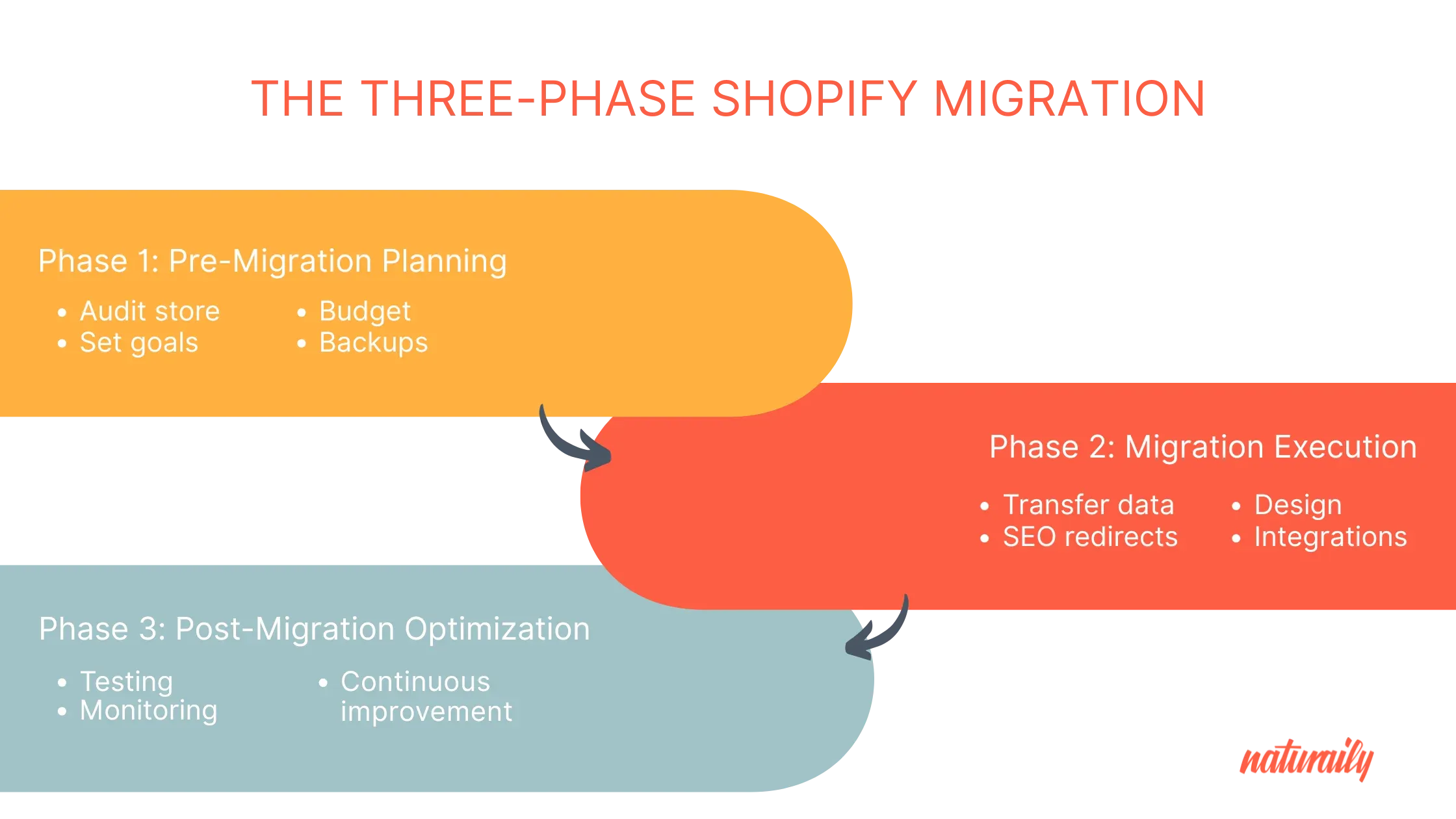
Phased Shopify enterprise migration roadmap
Mitigating Risk and Ensuring Business Continuity
A phased Shopify transition inherently de-risks the entire project lifecycle. By breaking down the complex Shopify migration into smaller, self-contained stages, potential points of failure are isolated and addressed incrementally.
This approach significantly reduces the impact of unforeseen technical challenges or integration issues. Business continuity is maintained as critical operations are migrated and validated in controlled environments, preventing widespread disruption to revenue streams or customer experience during the transition.
Capitalizing on Incremental Value Realization
The core advantage of a phased approach lies in its ability to deliver incremental value. Each completed phase, even a partial one, can go live and begin generating tangible benefits, providing early returns on investment.
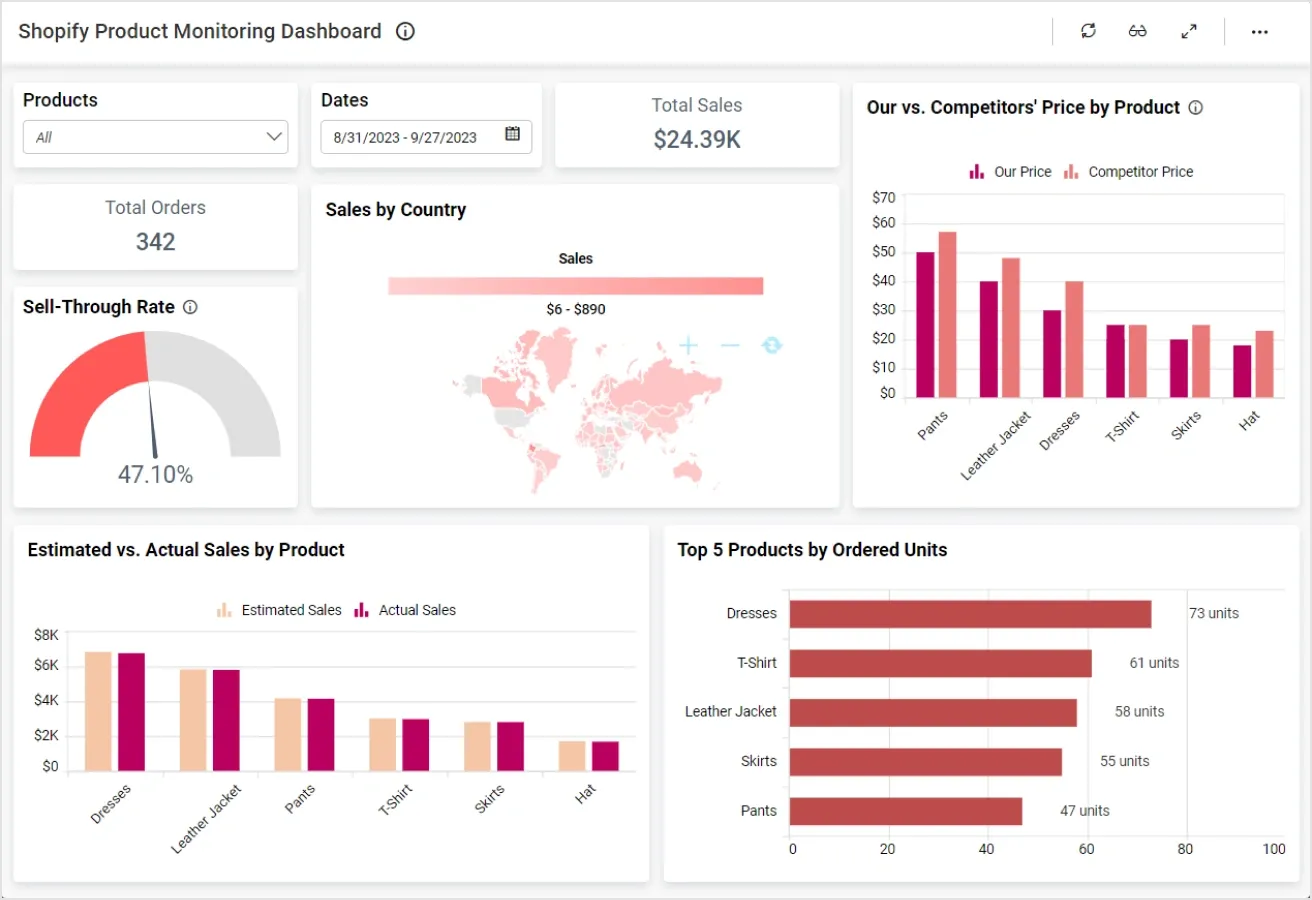 Shopify enterprise ROI agile dashboard
This model allows for real-time feedback and data-driven adjustments, ensuring that subsequent phases are optimized based on actual user behavior and performance metrics. It fosters a continuous improvement e-commerce mindset, where value is not a distant goal but a continuous output.
Deconstructing the Iterative ROI Compass: A Framework for Sustained Value
What is the Iterative ROI Compass? The Iterative ROI Compass is a strategic framework guiding phased Shopify transitions, emphasizing continuous measurement, adaptation, and value realization. It ensures enterprise e-commerce initiatives consistently align with business objectives, mitigating technical debt and driving sustained growth through data-informed decision-making across every project iteration.
This framework is not merely a project management methodology; it's a strategic lens through which every decision, development sprint, and deployment is evaluated. It ensures that every investment in the Shopify transition contributes directly to measurable business outcomes.
Core Principles: Agility, Transparency, and Value-Driven Iteration
The Iterative ROI Compass operates on foundational principles that redefine project execution. Agility allows teams to respond rapidly to market changes and emergent requirements, rather than adhering rigidly to a static plan.
Transparency ensures all stakeholders have clear visibility into progress, challenges, and the evolving value proposition of each phase. Value-driven iteration mandates that every development cycle is directly tied to a quantifiable business benefit, preventing scope creep and resource misallocation.
Components: Baseline, Iteration, Measurement, Adaptation
The framework comprises four cyclical components. The Baseline establishes the current state and defines success metrics. Iteration involves the agile execution of development and deployment sprints for specific functionalities.
Measurement rigorously tracks performance against predefined KPIs. Finally, Adaptation uses insights from measurement to inform and optimize subsequent iterations, ensuring the project remains on course toward sustained ROI.
Phase 1: Discovery & Foundation - Architecting for Future ROI
The initial phase of any robust Shopify migration project plan is foundational. It involves deep analysis and strategic planning, setting the stage for all subsequent development and ensuring architectural soundness for future growth.
This phase is critical for establishing a clear roadmap and mitigating potential technical pitfalls before significant development begins.
Comprehensive Platform Audit and Technical Debt Assessment
Begin with a thorough audit of the existing e-commerce platform, identifying performance bottlenecks, security vulnerabilities, and legacy system dependencies. Document all existing functionalities and their underlying technical complexities.
Crucially, conduct a detailed technical debt assessment. This identifies areas where past development shortcuts or outdated technologies could impede future scalability or increase maintenance costs on Shopify. Proactive technical debt management Shopify is essential from day one.
Defining Success: Baseline Metrics and Value Stream Mapping
Establish clear, quantifiable baseline metrics from your current platform across revenue, operational efficiency, and customer experience. These benchmarks are vital for measuring the impact of the Shopify transition.
Perform value stream mapping e-commerce processes to identify bottlenecks and opportunities for optimization within your current order-to-fulfillment lifecycle. This informs which areas of the new Shopify platform will deliver the most immediate ROI.
Strategic Data Migration and Integration Planning
Develop a meticulous data migration strategy for customer information, order history, product catalogs, and content. Prioritize data integrity and map out transformation rules to fit the Shopify schema.
Concurrently, plan all necessary third-party integrations (ERP, CRM, OMS, PIM, etc.). Define API requirements, authentication protocols, and data synchronization schedules to ensure seamless operation post-migration. For expert guidance on complex platform transitions, consider our Shopify Migration Service.
Phase 2: Incremental Build & Launch - Agile Sprints to Early Value
With a solid foundation in place, Phase 2 shifts into agile execution, focusing on delivering core functionalities in iterative sprints. The goal is to get a functional, value-generating subset of the new platform live as quickly and safely as possible.
This approach embodies the principles of agile project management, allowing for continuous feedback and refinement.
Minimum Viable Product (MVP) Definition and Prioritization
Collaboratively define the Minimum Viable Product (MVP) for your initial Shopify launch. This involves identifying the absolute core functionalities required to transact and deliver value to customers.
Prioritize features based on business impact, technical feasibility, and dependency mapping. The MVP should be robust enough to operate independently but lean enough for rapid deployment.
Sprint Planning and Execution for Core Functionality
Adopt an agile methodology, breaking down the MVP into manageable sprints (typically 2-4 weeks). Each sprint should have clearly defined goals, deliverables, and acceptance criteria.
Regular stand-ups, sprint reviews, and retrospectives are crucial for maintaining momentum and addressing blockers. The focus remains on delivering working software at the end of each iteration.
User Acceptance Testing (UAT) and Controlled Soft Launches
Thorough UAT is paramount before any public release. Involve key business users to test functionalities against real-world scenarios, ensuring the platform meets operational requirements and user expectations.
Implement controlled soft launches, initially targeting a small segment of users or a specific geographic market. This allows for real-world performance monitoring and bug identification in a low-risk environment before a full public launch.
Phase 3: Post-Migration Optimization & Scaling - The Engine of Continuous ROI
The "go-live" date is not the finish line; it's the start of a new phase focused on continuous improvement and scaling. Post-migration optimization strategy is vital for maximizing the long-term ROI of your Shopify investment.
This ongoing process ensures the platform evolves with your business and market demands, embodying the spirit of continuous improvement e-commerce.
Conversion Rate Optimization (CRO) and A/B Testing Frameworks
Immediately implement a robust CRO strategy. Analyze user behavior data, identify drop-off points, and hypothesize improvements to key conversion funnels.
Establish a rigorous A/B testing framework to scientifically validate changes to page layouts, calls-to-action, product descriptions, and checkout flows. Continuously iterate based on statistical significance to drive higher conversion rates.
Advanced Performance Monitoring and Analytics Integration
Integrate advanced performance analytics for Shopify Plus to gain deeper insights into user behavior, site speed, and server response times. Tools like Google Analytics 4, heat mapping software, and session recorders are invaluable.
Set up real-time dashboards to monitor critical KPIs, enabling proactive identification and resolution of performance issues. This data-driven approach is central to the Iterative ROI Compass.
Feature Rollout and Iterative Enhancement Cycles
Following the MVP launch, prioritize and roll out additional features and enhancements in continuous, iterative cycles. Use customer feedback, market trends, and performance data to inform the development roadmap.
Each enhancement should be treated as a mini-project, following a similar build, test, and deploy cycle to ensure sustained value delivery and maintain enterprise agility.
Key Performance Indicators (KPIs) for Each Iteration: Tracking the Compass Needle
Measuring the success of a phased Shopify transition requires a comprehensive set of KPIs. These metrics serve as the "compass needle," guiding adjustments and validating value realization at every stage.
Monitoring these KPIs provides objective data for decision-making and demonstrates tangible ROI to stakeholders.
Revenue & Profitability Metrics (e.g., AOV, LTV, Conversion Rate)
- Average Order Value (AOV): Tracks the average monetary value of each customer order.
- Customer Lifetime Value (LTV): Projects the total revenue a business can expect from a single customer account over their relationship.
- Conversion Rate: Percentage of website visitors who complete a desired action, such as making a purchase.
- Gross Merchandise Volume (GMV): Total value of sales over a given period.
Operational Efficiency Metrics (e.g., Page Load Speed, Uptime, Order Fulfillment Time)
- Page Load Speed: Time taken for a web page to fully load, impacting user experience and SEO.
- Uptime: Percentage of time the e-commerce platform is operational and accessible to users.
- Order Fulfillment Time: Average time from order placement to shipping, reflecting supply chain efficiency.
- Inventory Accuracy: Discrepancy between recorded inventory and actual physical stock.
Customer Experience Metrics (e.g., Bounce Rate, Session Duration, NPS)
- Bounce Rate: Percentage of visitors who leave the site after viewing only one page.
- Session Duration: Average time a user spends on the website during a single visit.
- Net Promoter Score (NPS): Measures customer loyalty and satisfaction, typically through surveys.
- Customer Service Resolution Time: Average time taken to resolve customer inquiries or issues.
Technical Health Metrics (e.g., Error Rates, API Latency)
- Error Rates: Frequency of server errors or application errors impacting site functionality.
- API Latency: Time delay between an API request and response, critical for integrations.
- Security Vulnerabilities: Number and severity of identified security flaws.
- System Resource Utilization: Monitoring CPU, memory, and database usage to predict scalability needs.
The Agile Project Management Toolkit: Empowering Your Shopify Transition Team
Effective project management for a phased Shopify transition relies on a robust set of tools that foster collaboration, track progress, and provide actionable insights. These tools are indispensable for maintaining control and visibility across complex, multi-stakeholder initiatives.
Leveraging the right toolkit empowers teams to execute with precision and adapt with agility.
Project Management Software (e.g., Jira, Asana, Monday.com)
These platforms are central to organizing tasks, managing backlogs, and tracking sprint progress. They provide a centralized hub for all project-related activities, ensuring everyone is aligned on priorities and deadlines.
Key features include task assignment, dependency mapping, Gantt charts, Kanban boards, and burndown charts to visualize sprint velocity and identify potential roadblocks.
Analytics & Reporting Platforms (e.g., Google Analytics 4, Looker Studio, Shopify Analytics)
These tools are critical for monitoring performance, understanding user behavior, and measuring the impact of each iteration. They provide the data necessary to fuel the 'Measurement' component of the Iterative ROI Compass.
Integrating these platforms ensures a holistic view of your e-commerce ecosystem, from traffic acquisition to conversion funnels and post-purchase behavior. For advanced optimization strategies, consider our Shopify CRO Consulting.
Collaboration & Communication Tools
Seamless communication is the bedrock of agile project management. Tools like Slack, Microsoft Teams, or Google Workspace facilitate real-time discussions, document sharing, and remote collaboration.
Establishing clear communication protocols and channels prevents silos and ensures timely decision-making, especially across distributed teams involved in the Shopify transition.
Navigating Challenges: Technical Debt, Scalability, and Stakeholder Alignment
Even with a phased approach, complex enterprise Shopify transitions encounter significant challenges. Proactive strategies are essential to address technical debt, ensure future scalability, and maintain strong stakeholder alignment throughout the journey.
Anticipating and mitigating these hurdles is a hallmark of effective project management.
Proactive Technical Debt Management Strategies
Technical debt, if unmanaged, can cripple enterprise agility and inflate long-term costs. Implement regular code reviews, refactoring sprints, and maintain rigorous documentation standards.
Prioritize addressing critical technical debt items as part of ongoing development cycles, not as an afterthought. This prevents accumulation and ensures the platform remains performant and maintainable.
Ensuring Platform Scalability for Future Growth
Design the Shopify solution with future growth in mind. This involves selecting appropriate Shopify Plus apps, architecting for high traffic volumes, and ensuring integrations can handle increased data loads.
Regularly review infrastructure capacity and conduct load testing before major promotional events. A scalable architecture is non-negotiable for sustained enterprise e-commerce agility.
Effective Change Management and Stakeholder Communication
Digital transformation impacts people as much as technology. Develop a comprehensive change management plan to prepare employees for new processes and systems.
Maintain consistent, transparent stakeholder communication, providing regular updates on progress, challenges, and ROI realization. Proactive communication fosters trust and secures continued buy-in for the phased implementation plan.
Forecasting and Demonstrating Long-Term ROI: Beyond the Go-Live Date
The true value of a phased Shopify transition extends far beyond the initial launch. Demonstrating long-term ROI requires sophisticated forecasting, attribution modeling, and a commitment to continuous improvement.
This strategic perspective ensures that the investment continues to yield dividends for the enterprise.
Building Predictive ROI Models for Future Phases
Develop predictive ROI models for upcoming phases and feature rollouts. Utilize historical data, market benchmarks, and A/B test results to forecast the potential impact of new functionalities on key metrics.
These models provide a data-driven justification for resource allocation and help prioritize initiatives that promise the greatest return on investment.
Post-Launch Reporting and Attribution Modeling
Implement comprehensive post-launch reporting frameworks that clearly articulate the value delivered by each phase. This includes comparing actual performance against baseline metrics and projected ROI.
Utilize advanced attribution modeling to accurately credit various marketing channels and platform enhancements for their contribution to conversions and revenue. This provides a clear picture of what drives value.
Cultivating a Culture of Continuous Improvement and Value Delivery
The Iterative ROI Compass is not a one-time project; it's an ongoing philosophy. Foster an organizational culture that embraces continuous improvement e-commerce, data-driven decision-making, and a relentless focus on value delivery.
Regularly review and refine processes, encourage experimentation, and celebrate incremental successes to sustain momentum and ensure the Shopify platform remains a powerful engine for enterprise growth.
Frequently Asked Questions
What is a phased Shopify transition, and why is it beneficial for enterprises?
A phased Shopify transition is a strategic project management methodology that breaks down a complex e-commerce platform migration into smaller, manageable, and value-driven stages. Instead of a single "big bang" launch, core functionalities are developed, tested, and deployed incrementally. For enterprises, this approach offers several key benefits. Firstly, it significantly de-risks the migration by isolating potential issues to smaller segments, preventing widespread disruption. Secondly, it enables continuous business continuity, as critical operations are migrated and validated without interrupting revenue streams. Thirdly, it allows for incremental value realization, meaning each completed phase can go live and start generating tangible benefits, providing early returns on investment. This iterative process fosters agility, allowing organizations to adapt to market changes, integrate new technologies, and continuously optimize their digital storefront based on real-time feedback and performance metrics, ultimately driving sustained growth and ROI.
How does the Iterative ROI Compass guide Shopify migrations?
The Iterative ROI Compass is a strategic framework that ensures every decision, development sprint, and deployment during a Shopify transition aligns with measurable business outcomes. It operates on principles of agility, transparency, and value-driven iteration, guiding teams through cycles of Baseline establishment, Iteration (agile execution), Measurement (KPI tracking), and Adaptation (optimization based on insights). This framework prevents scope creep and ensures continuous value delivery.
What are the key challenges in a phased Shopify transition?
Key challenges include managing technical debt from legacy systems, ensuring the new Shopify platform is scalable for future growth, and maintaining strong stakeholder alignment. Proactive strategies like regular code reviews, load testing, and comprehensive change management plans are essential to navigate these hurdles successfully.

Ecommerce manager, Shopify & Shopify Plus consultant with 10+ years of experience helping enterprise brands scale their ecommerce operations. Certified Shopify Partner with 130+ successful store migrations.
![The Strategic Debt Dividend: Agile Shopify Transitions [Phased Plan]](/img/blog/strategic-debt-dividend-shopify-transition-1.webp)

![Shopify Replatforming: The Interim Architecture Tax [Hidden Costs]](/img/blog/shopify-interim-architecture-tax-1.webp)