
- Decoding the Invisible Funnel: Beyond Traditional B2B CRO Metrics
- The Shift from Reactive Analytics to Proactive Intent Detection
- Why Standard B2B CRO Fails on Shopify Plus Without Intent Context
- Architecting the Intent Signal Stack for Shopify Plus
- Integrating Technographic & Firmographic Data Sources
- Leveraging On-Site Behavioral Signals (Heatmaps, Session Replays, Exit Intent)
- Off-Site Intent Data: From Third-Party Providers to Social Listening
- The Role of CRM & ERP Data in Enriching Intent Profiles
- From Raw Signals to Actionable Insights: Building Predictive Models
- Setting Up Lead Scoring & Account Prioritization Frameworks on Shopify Plus
- Identifying High-Value Accounts & Purchase Intent Clusters
- Predictive Analytics for Churn Prevention & Upsell Opportunities
- Orchestrating Personalized Experiences Based on B2B Intent
- Dynamic Content & Product Recommendations for Specific Account Segments
- Tailoring Pricing, Promotions, and Payment Gateways by Intent Level
- Streamlining the Quote-to-Order Process for High-Intent Buyers
- Personalizing Post-Purchase Journeys and Re-engagement Triggers
- Measuring the ROI of Intent-Driven Shopify Plus Optimization
- Key Performance Indicators (KPIs) Beyond Conversion Rate: LTV, AOV, Sales Cycle Reduction
- Attribution Modeling for Multi-Touch B2B Journeys
- Case Studies: Quantifiable Gains from Intent Signal Implementation
- Overcoming Technical & Strategic Hurdles in B2B Intent Integration
- Data Privacy & Compliance Considerations (GDPR, CCPA)
- Integrating Disparate Systems: Shopify Plus, CRM, Marketing Automation, Intent Platforms
- Fostering Sales & Marketing Alignment for Unified Intent Activation
- Related Reading
- Shopify Plus Conversion Review Framework
- Authoritative References
Decoding the Invisible Funnel: Beyond Traditional B2B CRO Metrics
B2B Intent Signals are measurable digital footprints indicating a business's likelihood to purchase a product or service. These signals, gathered from various online and offline sources, reveal a company's research activities, content consumption, and engagement patterns, offering a predictive lens into their buying stage and enabling proactive, targeted sales and marketing efforts.
The Shift from Reactive Analytics to Proactive Intent Detection
Traditional B2B Conversion Rate Optimization (CRO) often operates reactively. It analyzes past visitor behavior on a site, then optimizes elements to improve a generic conversion rate.
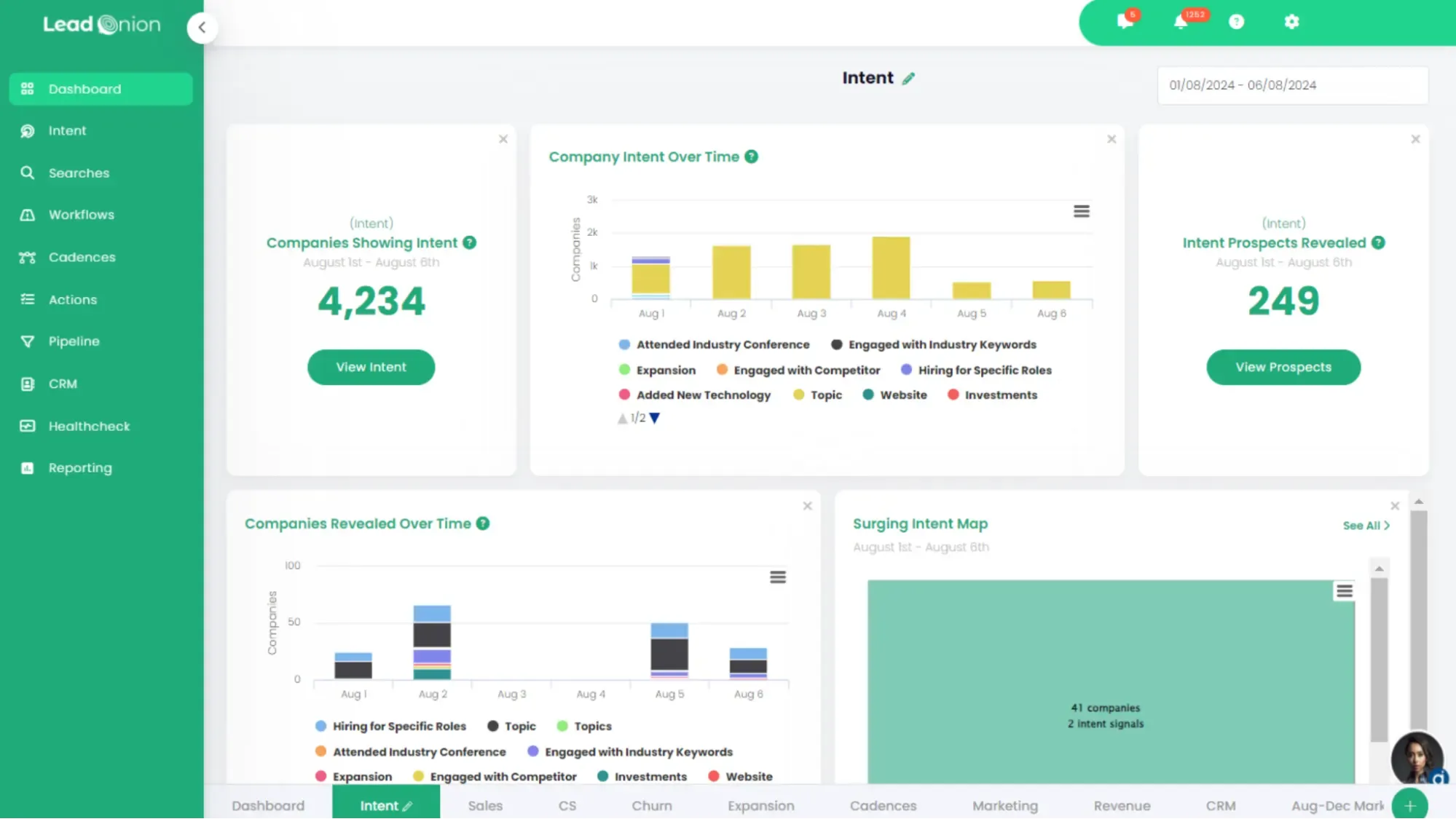
B2B intent signal detection dashboard
This approach falls short for the complex B2B buyer journey. B2B purchases involve multiple stakeholders, longer sales cycles, and significant investment.
Proactive intent detection shifts this paradigm. It involves identifying potential buyers and understanding their needs *before* they explicitly convert, often even before they land on your Shopify Plus store.
This allows for tailored engagement, moving beyond simply improving click-throughs or form submissions to influencing the entire buying journey.
![Shopify Plus intent signal architecture - Crush B2B CRO: Intent Signals for Shopify Plus [Proven]](/img/blog/b2b-intent-signals-shopify-cro-2.webp) Shopify Plus intent signal architecture
Shopify Plus intent signal architecture
Why Standard B2B CRO Fails on Shopify Plus Without Intent Context
Shopify Plus offers robust e-commerce capabilities, but its out-of-the-box CRO tools are often geared towards direct-to-consumer (D2C) models. Standard B2B CRO tactics, like A/B testing button colors, are insufficient.
B2B buyers rarely make impulse purchases. They conduct extensive research, compare solutions, and often require custom pricing or complex logistics.
Without understanding a company's specific intent, industry, or existing tech stack, your Shopify Plus conversion efforts remain generic. You miss opportunities to personalize the experience, offer relevant content, or expedite the sales process for high-value accounts.
Generic optimization neglects the nuanced signals that define B2B purchase intent. It treats all visitors equally, failing to prioritize or nurture the accounts with the highest potential.
Architecting the Intent Signal Stack for Shopify Plus
Integrating Technographic & Firmographic Data Sources
Building a robust intent signal stack begins with foundational data. Technographic data reveals a company's technology stack, indicating compatibility or competitive insights.
Firmographic data provides essential company attributes: industry, size, revenue, location. Sources like ZoomInfo, Clearbit, and BuiltWith offer rich datasets.
Integrating this data into your Shopify Plus environment, often via CRM synchronization or custom app integrations, enriches every visitor profile. This allows you to segment visitors not just by their on-site behavior, but by who they are as a business entity.
For example, knowing a visitor uses a specific ERP system might indicate a need for compatible integrations, informing product recommendations or content delivery.
Leveraging On-Site Behavioral Signals (Heatmaps, Session Replays, Exit Intent)
On-site behavioral analytics provide deep insights into how B2B buyers interact with your Shopify Plus store. Tools like Hotjar or FullStory capture critical engagement patterns.
Heatmaps reveal areas of interest or confusion on product pages, while session replays offer a granular view of complex research processes.
Exit-intent pop-ups, when triggered with contextual offers, can capture valuable information or re-engage abandoning high-intent visitors. This data, when linked to firmographic profiles, paints a vivid picture of account-level engagement.
Analyzing these signals allows you to understand specific pain points or areas of high interest for different B2B segments, informing your Shopify CRO strategy directly.
Off-Site Intent Data: From Third-Party Providers to Social Listening
B2B intent isn't confined to your website. Off-site intent data, gathered from various external sources, provides crucial pre-acquisition insights.
Third-party intent data providers like Bombora or G2 track content consumption and research activities across the web, indicating specific topics or solutions a company is actively exploring.
Social listening tools monitor mentions and discussions on platforms like LinkedIn or industry forums. This reveals early-stage interest or pain points expressed by decision-makers.
Correlating this external activity with your internal data creates a holistic view of a company's buying journey, allowing you to intercept them with relevant messaging on your Shopify Plus store.
The Role of CRM & ERP Data in Enriching Intent Profiles
Your existing CRM (e.g., Salesforce, HubSpot) and ERP (e.g., NetSuite, SAP) systems are goldmines of B2B intent data. They hold historical purchase data, support interactions, and sales conversations.
Integrating these systems with your Shopify Plus store is paramount. This ensures that every customer touchpoint contributes to a unified intent profile.
For current customers, CRM data helps identify upsell or cross-sell opportunities. For prospects, it validates intent signals by cross-referencing past interactions or associated companies.
A unified data architecture ensures your sales and marketing teams operate from a single source of truth, optimizing all B2B ecommerce optimization efforts.
From Raw Signals to Actionable Insights: Building Predictive Models
Setting Up Lead Scoring & Account Prioritization Frameworks on Shopify Plus
Transforming raw intent signals into actionable insights requires robust scoring models. This moves beyond simple lead scores to comprehensive Account-Based Experience (ABX) frameworks.
Here’s how to set up an effective lead scoring and account prioritization framework:
- Define Intent Tiers: Categorize intent signals into low, medium, and high-value actions. High-value actions might include viewing pricing pages, downloading a product spec sheet, or repeatedly visiting specific solution pages.
- Assign Weighted Scores: Assign points to each intent signal based on its predictive power. Firmographic fit (e.g., industry, company size) should also contribute to the overall account score.
- Integrate Data Sources: Connect your Shopify Plus store, CRM, marketing automation platform, and intent data providers to feed real-time data into your scoring model.
- Establish Account Tiers: Based on combined scores, segment accounts into tiers (e.g., "Hot Accounts," "Warm Prospects," "Nurture Leads"). This prioritizes sales and marketing efforts.
- Automate Scoring Updates: Implement automation to continuously update scores as new signals emerge. This ensures your prioritization remains dynamic and relevant.
This framework allows your team to focus resources on the accounts most likely to convert, significantly improving B2B CRO effectiveness.
Identifying High-Value Accounts & Purchase Intent Clusters
Beyond individual lead scores, B2B intent analysis focuses on identifying high-value accounts. These are companies that exhibit a strong combination of firmographic fit and active intent signals.
Purchase intent clusters emerge when multiple stakeholders within an account display similar behavioral patterns or content consumption. This indicates a collective buying journey.
Leveraging analytics and potentially AI/ML algorithms helps uncover these clusters. You can then tailor your outreach to the entire buying group, not just an individual contact.
This allows for precise targeting, ensuring your marketing spend and sales efforts are directed at the most promising opportunities for your Shopify Plus store.
Predictive Analytics for Churn Prevention & Upsell Opportunities
Intent signals aren't just for new acquisitions; they are powerful tools for customer retention and growth. Predictive analytics can identify potential churn risks long before they materialize.
Decreased engagement with product updates, reduced frequency of visits to support documentation, or increased competitor research can all signal churn intent. Conversely, increased usage of specific features or browsing related products can indicate upsell potential.
Integrating this data with your Shopify Plus purchase history allows for proactive interventions. You can trigger targeted re-engagement campaigns or personalized upsell offers.
This approach maximizes Customer Lifetime Value (CLV) B2B by nurturing existing relationships and addressing needs before they become problems.
Orchestrating Personalized Experiences Based on B2B Intent
Dynamic Content & Product Recommendations for Specific Account Segments
Personalization is the cornerstone of intent-driven B2B CRO. Once you understand an account's intent, your Shopify Plus store can dynamically adapt.
For example, visitors from a manufacturing firm might see case studies relevant to their industry. A high-intent account researching a specific product could be shown complementary solutions.
Personalization Engines Shopify Plus integrations (like Nosto or Klevu) allow for real-time adjustments to product recommendations, banners, and even landing page content. This ensures every interaction is relevant and impactful.
This level of tailored experience significantly reduces friction and accelerates the buyer's journey on your B2B ecommerce optimization platform.
Tailoring Pricing, Promotions, and Payment Gateways by Intent Level
B2B sales often involve custom pricing, negotiated terms, and specific payment methods. Shopify Plus, when augmented with intent data, can automate or streamline these processes.
High-intent accounts, identified through your predictive models, could automatically gain access to tiered pricing, volume discounts, or even a direct quote request form.
Payment gateways can be configured to offer options like Net 30 terms or purchase orders for verified enterprise accounts. This removes common B2B hurdles.
Such tailored offers reduce negotiation time and enhance the perceived value, driving higher Average Order Value (AOV) and faster conversions.
Streamlining the Quote-to-Order Process for High-Intent Buyers
For complex B2B transactions, the quote-to-order process can be a bottleneck. Intent signals allow you to streamline this for high-value, high-intent buyers.
Instead of a generic inquiry form, a visitor from a prioritized account could be directed to a pre-filled quote request, or even connected directly with a dedicated sales representative.
You can pre-populate forms with known firmographic data, reducing manual input and accelerating the path to purchase. This is a critical element of advanced Shopify Plus Consulting.
Removing friction at this crucial stage dramatically improves conversion rates and the overall customer experience on your Shopify Plus store.
Personalizing Post-Purchase Journeys and Re-engagement Triggers
The intent journey doesn't end at conversion. Post-purchase personalization is vital for retention and expansion. Intent signals continue to play a role.
Based on product usage data, support interactions, or browsing behavior, you can trigger personalized onboarding sequences, training materials, or proactive support outreach.
For example, if a customer is frequently visiting a specific feature's help documentation, you might send them a tutorial video or offer a quick support call. Re-engagement triggers for inactive accounts can be based on declining usage or lack of recent activity.
This proactive, personalized post-purchase journey strengthens customer relationships and fosters loyalty, leading to repeat business and positive referrals.
Measuring the ROI of Intent-Driven Shopify Plus Optimization
Key Performance Indicators (KPIs) Beyond Conversion Rate: LTV, AOV, Sales Cycle Reduction
Measuring the impact of intent-driven optimization goes beyond simple conversion rates. B2B success demands a focus on more strategic KPIs.
Key metrics include: Customer Lifetime Value (CLV) B2B, reflecting the total revenue generated from an account over its lifespan. Average Order Value (AOV), indicating the value of each transaction.
Crucially, track Sales Cycle Reduction – the time it takes from initial engagement to closed deal. Intent signals demonstrably shorten this cycle by focusing efforts effectively.
Other KPIs include lead-to-opportunity conversion rates, opportunity-to-win rates, and churn reduction, all directly influenced by effective intent signal implementation.
Attribution Modeling for Multi-Touch B2B Journeys
B2B buyer journeys are rarely linear. Multiple touchpoints, both online and offline, contribute to a conversion. Accurate attribution modeling is essential to understand the ROI of your intent signals.
Traditional last-click attribution is insufficient. Multi-touch models (e.g., W-shaped, time decay, or custom models) distribute credit across various touchpoints, including intent data platforms, content interactions, and sales engagements.
This provides a clearer picture of which intent signals and marketing efforts are truly influencing B2B Shopify Plus conversions. It helps optimize budget allocation and strategy.
Understanding the full journey allows you to refine your intent signal stack and personalization strategies for maximum impact.
Case Studies: Quantifiable Gains from Intent Signal Implementation
The real power of intent-driven optimization is evident in measurable results. While specific company names remain confidential, patterns of success are clear.
Enterprises implementing intent signals on Shopify Plus often report a 20-30% reduction in sales cycle length. This is achieved by rapidly identifying and prioritizing high-intent accounts.
Many see a 15-25% increase in Average Order Value (AOV) due to personalized product recommendations and tailored pricing. Furthermore, lead-to-opportunity conversion rates can improve by up to 40%.
These quantifiable gains demonstrate the tangible ROI of moving beyond generic B2B CRO to a sophisticated, intent-based approach for Shopify Plus.
Overcoming Technical & Strategic Hurdles in B2B Intent Integration
Data Privacy & Compliance Considerations (GDPR, CCPA)
Integrating diverse data sources, especially those tracking user behavior, necessitates strict adherence to data privacy regulations. GDPR, CCPA, and other regional laws are non-negotiable.
Ensure your intent data collection and usage practices are transparent. Implement robust consent management mechanisms on your Shopify Plus store and throughout your data stack.
Prioritize data anonymization and secure storage. Partner with intent data providers who are also compliant. Proactive data governance prevents costly penalties and maintains customer trust.
Legal compliance is not just a checkbox; it's a foundational element of ethical and sustainable growth hacking.
Integrating Disparate Systems: Shopify Plus, CRM, Marketing Automation, Intent Platforms
The biggest technical hurdle is often integrating the various systems that form your intent signal stack. Shopify Plus, your CRM, marketing automation platform, and intent data providers must communicate seamlessly.
This often requires custom API integrations, webhooks, or middleware solutions like Zapier or Workato. A well-architected integration strategy ensures data flows freely and accurately between platforms.
Invest in a robust integration plan to avoid data silos and ensure real-time synchronization. This is where expert guidance, potentially from a Shopify CRO Consulting specialist, becomes invaluable.
A unified data ecosystem is critical for building accurate intent profiles and activating personalized experiences at scale.
Fostering Sales & Marketing Alignment for Unified Intent Activation
Even with the best technology stack, a lack of alignment between sales and marketing teams can derail intent-driven efforts. Both departments must share a common understanding of intent signals and their application.
Establish shared KPIs and a unified definition of a "qualified account." Implement regular feedback loops where sales provides insights on intent signal accuracy, and marketing refines targeting.
Joint training sessions can bridge knowledge gaps and foster a collaborative environment. This ensures that intent data isn't just collected, but actively used by both teams to drive B2B Shopify Plus conversion.
True Sales-Marketing Alignment transforms intent data into a powerful, coordinated growth engine.
Related Reading
More articles relevant to this topic:
- Shopify Plus B2B: Unlock 5X Conversions with Intent-Driven UX
- 10 Ways to Slash B2B Cognitive Load & Boost Shopify Plus CRO
- Shopify Plus B2B Audit: Expose Competitor Blind Spots [Guide]
- Shopify B2B Guardrails: Unlock Plus Innovation & Slash Tech Debt
- Shopify Plus B2B: Reps Become Strategic Advisors [New Playbook]
Shopify Plus Conversion Review Framework
Conversion work on Shopify Plus should connect user experience, technical performance, merchandising, checkout behavior, and measurement quality. A redesign alone rarely fixes conversion if the page is slow, the offer is unclear, or analytics cannot explain where users hesitate.
- Review PDP clarity, trust signals, product discovery, and mobile usability.
- Audit app and script impact on Core Web Vitals and checkout flow.
- Compare conversion drop-offs by device, traffic source, product type, and landing page.
- Turn findings into a prioritized CRO backlog with measurable hypotheses.
Authoritative References
Use these official resources to verify platform-specific claims and implementation details before making commercial or technical decisions.
- Shopify Plus overview
- Shopify B2B documentation
- Shopify Functions documentation
- Checkout Extensibility documentation
Frequently Asked Questions
What are B2B intent signals and why are they crucial for Shopify Plus conversion optimization?
B2B intent signals are measurable digital footprints that indicate a business's likelihood to purchase a product or service. These signals, derived from various online and offline sources like content consumption, website visits, social media engagement, and third-party data, offer a predictive lens into a company's buying stage. For Shopify Plus conversion optimization, these signals are crucial because traditional B2B CRO often falls short in addressing the complex, multi-stakeholder B2B buyer journey. Unlike direct-to-consumer (D2C) models, B2B purchases involve extensive research, longer sales cycles, and significant investment. By leveraging intent signals, Shopify Plus merchants can move beyond generic optimization to personalize experiences, tailor product recommendations, offer custom pricing, and streamline the quote-to-order process for high-value accounts. This proactive approach ensures marketing and sales efforts are directed at the most promising opportunities, significantly boosting conversion rates, average order value, and customer lifetime value.
How do intent signals improve B2B CRO on Shopify Plus specifically?
Intent signals enhance B2B CRO on Shopify Plus by enabling hyper-personalization. They allow merchants to dynamically adapt content, product recommendations, and pricing based on a company's specific needs and buying stage. This reduces friction, accelerates the sales cycle, and ensures resources are focused on high-value accounts, leading to higher conversion rates and increased average order value compared to generic D2C-focused strategies.
What types of data are used to build a B2B intent signal stack?
A comprehensive B2B intent signal stack integrates several data types: firmographic data (industry, size, revenue), technographic data (tech stack), on-site behavioral signals (heatmaps, session replays, exit intent), off-site intent data (third-party providers, social listening), and internal CRM/ERP data (purchase history, support interactions). Combining these creates a holistic view of buyer intent.
How can sales and marketing teams align using intent data?
Sales and marketing teams can achieve powerful alignment by sharing a unified understanding of intent signals. This involves establishing common KPIs, defining "qualified accounts" jointly, and implementing feedback loops where sales validates intent signal accuracy. Joint training and collaborative strategies ensure intent data is actively used by both teams to prioritize outreach, personalize messaging, and drive coordinated B2B Shopify Plus conversion efforts.

Ecommerce manager, Shopify & Shopify Plus consultant with 10+ years of experience helping enterprise brands scale their ecommerce operations. Certified Shopify Partner with 130+ successful store migrations.

![Fix How CRO Platforms Impact Shopify Plus Site Speed [Guide]](/img/blog/ai-false-positive-shopify-plus-cro-2.webp)