
- The Limitations of Traditional Clickstream Data in a Post-Cookie World
- Why "What" Users Do Doesn't Always Explain "Why" They Do It
- The Data Voids: Unpacking Implicit Intent and Cognitive Friction
- Decoding the Brain: An Introduction to BCI for UX Research
- How BCIs Capture Non-Conscious User Signals (EEG, fNIRS, etc.)
- Bridging the Gap: From Brainwaves to Actionable UX Insights
- Redefining Conversion Metrics: BCI-Driven Indicators for CRO
- Measuring True Engagement: Beyond Time-on-Page and Scroll Depth
- Quantifying Cognitive Load and Decision Fatigue in the Purchase Journey
- Identifying Subconscious Barriers: The "Why Not Convert" Through Neuro-Data
- Practical Applications: Integrating BCI Insights into E-commerce CRO
- Optimizing Product Pages for Attentional Bias and Emotional Resonance
- Streamlining Checkout Flows by Minimizing Cognitive Friction
- Personalization at a Deeper Level: Predicting Intent Before the Click
- Methodologies and Tools: Setting Up BCI UX Studies for Shopify Plus
- Selecting the Right BCI Hardware and Software for E-commerce Contexts
- Designing Experiments: From Lab Settings to Remote BCI Testing
- Data Analysis and Interpretation: Translating Neuro-Signals into CRO Strategies
- Ethical Considerations and Future Outlook for BCI in E-commerce
- Navigating Privacy, Consent, and Data Security in Neuro-UX
- The Promise of Predictive UX: Anticipating User Needs and Pain Points
- The Evolution of the CRO Specialist: From Analytics to Neuro-Strategist
- Related Reading
The Limitations of Traditional Clickstream Data in a Post-Cookie World
Clickstream data refers to the digital footprints users leave behind as they navigate websites or applications. It captures sequential actions like page views, clicks, and session duration, providing quantitative insights into user paths and popular content. For years, this data has been the bedrock of digital analytics and conversion rate optimization (CRO), informing A/B tests and funnel analysis by meticulously tracking user journeys and identifying drop-off points.
While this quantitative approach has yielded significant lifts, the post-cookie landscape, coupled with evolving user expectations, reveals fundamental limitations. Relying solely on "what" users do, without understanding "why," is increasingly insufficient for sophisticated CRO strategies. We are operating with significant data voids that impact our ability to truly optimize.
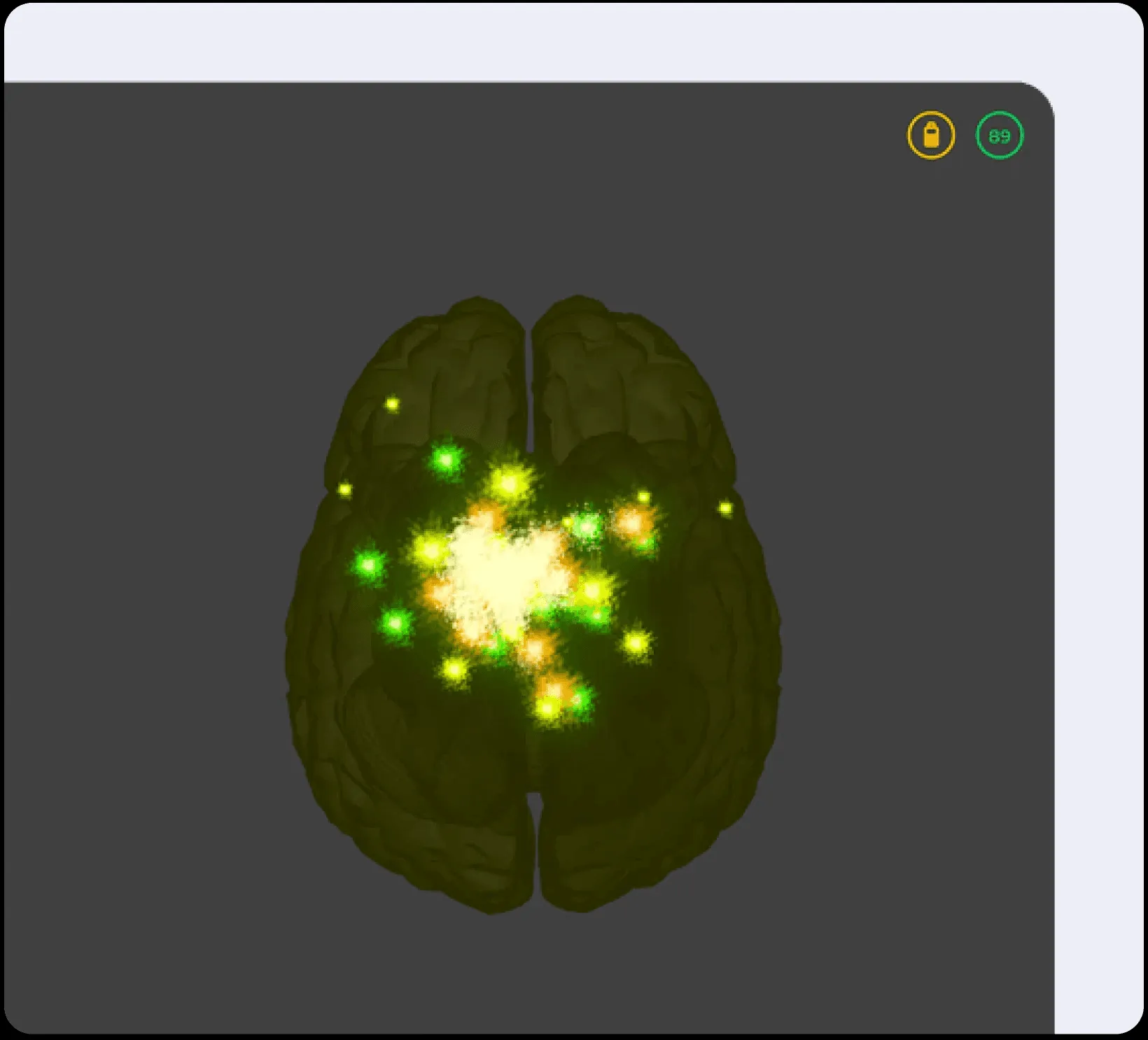
BCI headset brain activity data visualization
Why "What" Users Do Doesn't Always Explain "Why" They Do It
Traditional analytics platforms excel at showing us the journey: which pages were visited, which buttons were clicked, and where users exited. This offers a superficial view of user behavior. It's akin to observing someone walk into a store, pick up an item, and put it back, without knowing their thoughts or feelings.
The critical missing piece is intent and motivation. A user might scroll extensively on a product page, indicating engagement by traditional metrics, yet still not convert. Was the information confusing? Did they feel overwhelmed by options? Clickstream data cannot answer these pivotal questions.
This gap forces CRO professionals to make educated guesses or rely heavily on post-hoc surveys, which often suffer from recall bias. We need to move beyond correlation to causation, understanding the cognitive and emotional underpinnings of user decisions.
 Neuroscience data unlocking hidden user insights
The Data Voids: Unpacking Implicit Intent and Cognitive Friction
The real challenge lies in the realm of implicit intent. Users often make decisions, or fail to make them, based on non-conscious factors. These subconscious biases, emotional responses, and cognitive processes are invisible to standard analytics tools.
Consider cognitive friction – the mental effort required to process information or complete a task. High cognitive load, often undetectable by clickstream data, can lead to decision fatigue and abandonment, even if the user is technically progressing through the funnel. They might click through, but their brain is screaming "too hard."
These data voids represent missed optimization opportunities. Without understanding the subtle, often subconscious, barriers to conversion, our A/B tests risk optimizing for symptoms rather than root causes. It's time to augment our data stack with deeper insights.
Decoding the Brain: An Introduction to BCI for UX Research
Brain-Computer Interfaces (BCIs) offer a direct conduit to the user's non-conscious mind, providing unparalleled insights into cognitive and emotional states. This represents a paradigm shift for UX research and, by extension, CRO. We are moving from inferring intent to measuring it directly.
Neuro-UX, the application of neuroscience methods to user experience research, is emerging as a critical discipline. It allows us to bypass self-reported data and observe the brain's genuine reaction to digital interfaces. This objective data source provides a powerful new lens for understanding user behavior.
How BCIs Capture Non-Conscious User Signals (EEG, fNIRS, etc.)
BCIs work by measuring brain activity, primarily through non-invasive techniques. Electroencephalography (EEG) is the most common method, detecting electrical activity on the scalp. It excels at capturing the timing of brain responses, revealing attention, engagement, and emotional valence in milliseconds.
Functional Near-Infrared Spectroscopy (fNIRS) measures changes in blood oxygenation in the brain, correlating with neural activity. fNIRS provides better spatial resolution than EEG, pinpointing activity to specific brain regions associated with tasks like decision-making or problem-solving. These tools capture the implicit user feedback that clickstream data misses.
These brainwave data interpretation methods are often combined with other physiological data streams. Eye-tracking reveals attentional bias, Galvanic Skin Response (GSR) indicates arousal, and heart rate variability reflects stress. Together, they form a comprehensive picture of subconscious user behavior, offering rich data for analysis.
Bridging the Gap: From Brainwaves to Actionable UX Insights
The raw data from BCI devices — often complex waveforms and signal fluctuations — must be processed and interpreted. Specialized software algorithms translate these neuro-signals into quantifiable metrics. These metrics include sustained attention levels, moments of cognitive load, positive or negative emotional responses, and decision-making latency.
For a CRO expert, these brainwave data interpretations translate directly into actionable UX insights. For example, a spike in cognitive load during a form field suggests redesign is needed. A dip in positive emotional response when a specific product image appears indicates a problem with visual appeal or messaging.
By correlating these non-conscious signals with specific elements of the user journey, we can pinpoint exact friction points. We can identify what truly resonates and what causes subconscious barriers, providing a granular understanding far beyond what traditional A/B testing alone can achieve.
Redefining Conversion Metrics: BCI-Driven Indicators for CRO
The traditional CRO toolkit relies on post-event metrics. We measure conversions, bounce rates, and average order values after the user has acted. BCI allows us to introduce pre-emptive and in-the-moment indicators, fundamentally redefining how we measure conversion success. We shift from purely behavioral observation to cognitive and emotional state assessment.
Measuring True Engagement: Beyond Time-on-Page and Scroll Depth
Traditional metrics like time-on-page or scroll depth are proxies for engagement, not direct measures. A user might spend five minutes on a page because they are confused, not engaged. BCI offers direct quantification of true engagement.
We can measure sustained attention, identifying precisely where users are truly focused and for how long. Furthermore, BCI allows for the measurement of emotional response measurement, distinguishing between positive, neutral, and negative affect. A high attention score coupled with positive emotional resonance indicates genuine interest and connection, a far more powerful indicator than mere presence on a page. This helps optimize for attentional bias in e-commerce.
By understanding what truly captivates and delights users at a non-conscious level, we can optimize content, visual hierarchy, and messaging with unprecedented precision. This goes beyond simply keeping users on the page; it's about keeping them emotionally invested.
Quantifying Cognitive Load and Decision Fatigue in the Purchase Journey
Cognitive load is a silent conversion killer. When users have to expend too much mental effort to understand an offer, navigate a site, or complete a form, decision fatigue sets in, leading to abandonment. Traditional analytics cannot directly measure this.
BCI, however, can provide real-time quantification of cognitive load. We can map cognitive spikes to specific interactions within the purchase journey – for instance, during complex product configurators, overwhelming choice sets, or lengthy checkout forms. This allows us to identify and mitigate points of high mental effort.
Pinpointing these moments of cognitive friction allows for targeted optimization. Simplifying language, reducing choices, or breaking down complex steps can directly reduce cognitive load, smoothing the path to conversion. This is a crucial aspect of understanding non-conscious decision making.
Identifying Subconscious Barriers: The "Why Not Convert" Through Neuro-Data
The elusive "why not convert" question often stumps CRO experts. Surveys might offer rationalizations, but BCI can uncover the subconscious barriers. It reveals moments of confusion, frustration, or even subtle aversion that users themselves might not consciously register or articulate.
For example, a specific image might evoke a negative emotional response, or a particular piece of copy might cause a spike in cognitive load, leading to a mental block. These are the implicit deterrents that prevent conversion, even if the user's conscious mind is leaning towards a purchase.
By identifying these subconscious barriers through neuro-data, we gain a powerful diagnostic tool. We can then optimize specific design elements, messaging, or user flows to alleviate these hidden friction points, directly impacting conversion rates.
Practical Applications: Integrating BCI Insights into E-commerce CRO
Integrating BCI insights into e-commerce CRO is not a theoretical exercise; it's a strategic imperative for enterprise merchants and agencies seeking a competitive edge. These methodologies provide actionable intelligence to refine every stage of the customer journey.
Optimizing Product Pages for Attentional Bias and Emotional Resonance
Optimizing product pages is critical for e-commerce success. BCI offers a direct path to understanding how users non-consciously engage with these pages.
- Define Test Objectives: Identify specific elements to test, such as primary product images, video content, call-to-action (CTA) button designs, or key benefit statements.
- Design BCI Study: Create user tasks that involve browsing and interacting with product pages. Use BCI hardware (e.g., EEG headsets) to record brain activity while users perform these tasks.
- Measure Attentional Bias: Analyze EEG data to identify which visual elements capture and sustain user attention most effectively. Are users fixating on the price, the product features, or customer reviews?
- Quantify Emotional Resonance: Assess emotional valence (positive/negative affect) in response to different images, videos, or copy. Does a lifestyle shot evoke more positive emotion than a plain product shot?
- Identify Cognitive Load Spikes: Pinpoint sections where users experience increased mental effort, such as complex specification tables or confusing configurators.
- Formulate CRO Hypotheses: Based on neuro-data, develop specific hypotheses for A/B testing. For example, "Changing the hero image to one with higher positive emotional resonance will increase add-to-cart rates."
- Iterate and Optimize: Implement changes informed by BCI data and validate them with traditional A/B tests. This iterative process ensures continuous improvement.
These insights allow us to craft pages that naturally guide user attention to high-value information and evoke positive emotions, driving higher engagement and conversion rates. For advanced strategies in optimizing your e-commerce platform, consider our Shopify Theme Optimization services.
Streamlining Checkout Flows by Minimizing Cognitive Friction
Checkout abandonment is a persistent problem. BCI provides the tools to surgically remove cognitive friction from the checkout process. We can test every step, from cart review to payment processing.
By monitoring cognitive load, we can identify exactly where users hesitate or experience mental effort. This might be a confusing shipping option selector, a poorly designed form field, or an unexpected upsell. Any point that causes a spike in cognitive load is a potential abandonment trigger.
Optimizing checkout flows based on BCI data means creating a seamless, low-effort experience. This could involve simplifying language, reducing the number of form fields, or strategically placing trust signals to alleviate anxiety. The goal is to make the path to purchase feel effortless, even at a subconscious level.
Personalization at a Deeper Level: Predicting Intent Before the Click
Current personalization often relies on past behavior or demographic data. BCI offers the potential for personalization based on a user's real-time cognitive and emotional state. Imagine an e-commerce site that adapts its content based on your current level of attention or emotional receptiveness.
While still an emerging field, the promise of predictive UX is immense. By understanding individual attentional biases and emotional responses, we could theoretically tailor product recommendations, promotional offers, or even the layout of a page to anticipate user needs before they explicitly click. This moves beyond reactive personalization to proactive, non-conscious intent prediction.
Methodologies and Tools: Setting Up BCI UX Studies for Shopify Plus
Implementing BCI UX research requires a systematic approach, from hardware selection to data interpretation. For enterprise-level e-commerce platforms like Shopify Plus, the stakes are high, demanding robust methodologies and clear ROI.
Selecting the Right BCI Hardware and Software for E-commerce Contexts
Choosing the correct BCI hardware is paramount. For e-commerce UX studies, non-invasive, relatively portable EEG or fNIRS devices are ideal. Research-grade systems offer higher data quality but can be complex and costly. Consumer-grade devices are more accessible but may require careful validation of data reliability.
Consider factors like ease of setup, comfort for participants, and battery life for remote studies. Software for data acquisition, real-time visualization, and post-processing is equally critical. It must be capable of handling large datasets and integrating with other physiological sensors like eye-trackers. The goal is a system that can reliably capture and interpret neuro-signals in the context of an e-commerce user journey.
Designing Experiments: From Lab Settings to Remote BCI Testing
BCI UX studies can be conducted in controlled lab environments for precise measurements, or increasingly, through remote testing. For Shopify Plus merchants, a hybrid approach might be most effective.
- Lab Studies: Ideal for granular testing of specific page elements (e.g., A/B testing two different product image sets). Participants are brought into a controlled environment, equipped with BCI devices, and given specific tasks to complete on a test version of the e-commerce site. This allows for meticulous control over variables.
- Remote BCI Testing: Emerging platforms allow users to participate from their own environments using consumer-grade BCI devices. This scales recruitment and provides more ecologically valid data, reflecting real-world browsing conditions. Challenges include ensuring data quality and managing participant setup.
Regardless of the setting, experiment design must be meticulous. Define clear hypotheses, create specific tasks that mimic real user journeys (e.g., "Find a specific product," "Add to cart," "Complete checkout"), and ensure sufficient participant numbers for statistical significance. For guidance on scaling your e-commerce operations, our Shopify Plus Consulting services can provide strategic insights.
Data Analysis and Interpretation: Translating Neuro-Signals into CRO Strategies
The raw BCI data requires significant processing. This involves artifact removal (filtering out noise from muscle movements, eye blinks), signal processing, and feature extraction. Specialized algorithms identify patterns corresponding to attention, cognitive load, and emotional states.
The interpretation phase is where the CRO expertise becomes critical. Neuro-signals are correlated with specific user interactions and interface elements. For example, a consistent dip in attention when a user encounters a pop-up, or a spike in cognitive load during a complex form, provides direct evidence of friction.
Translating these neuro-insights into CRO strategies involves:
- Identifying specific UX elements causing negative cognitive or emotional responses.
- Formulating data-backed hypotheses for A/B tests.
- Prioritizing optimization efforts based on the severity and frequency of detected friction.
- Integrating BCI data with traditional analytics and qualitative feedback for a holistic view.
This systematic approach ensures that neuro-data directly informs and elevates your conversion optimization efforts.
Ethical Considerations and Future Outlook for BCI in E-commerce
As BCI technology becomes more accessible, the ethical implications, particularly concerning data privacy and consent, become paramount. The future of BCI in e-commerce is bright, but it requires responsible development and deployment.
Navigating Privacy, Consent, and Data Security in Neuro-UX
The collection of brain data is inherently sensitive. CRO professionals and researchers utilizing BCI must adhere to the highest ethical standards. This means ensuring fully informed consent from participants, clearly outlining what data is collected, how it will be used, and how it will be protected.
Data anonymization and robust security protocols are non-negotiable. Building trust with users is crucial; any perception of intrusive data collection could severely undermine adoption. Regulatory frameworks for neuro-data are still evolving, necessitating proactive self-regulation and transparency from the industry. Ethical implications of BCI in marketing must be considered from the outset.
The Promise of Predictive UX: Anticipating User Needs and Pain Points
The long-term vision for BCI in e-commerce is truly transformative: predictive UX. Imagine interfaces that can anticipate a user's needs or pain points before they become conscious. By monitoring subtle neuro-signals, a website could proactively simplify complex information, offer relevant support, or even adjust its layout to match a user's current cognitive state.
This moves CRO from reactive optimization to proactive design. It's about creating deeply empathetic user experiences that adapt in real-time to individual cognitive and emotional states, minimizing friction and maximizing delight on a non-conscious level.
The Evolution of the CRO Specialist: From Analytics to Neuro-Strategist
The advent of BCI and Neuro-UX signals an evolution for the CRO specialist. While traditional analytics skills remain vital, future leaders in this field will need to become neuro-strategists. This involves a foundational understanding of cognitive neuroscience for e-commerce, the ability to interpret physiological data analysis for CRO, and expertise in integrating diverse data streams.
The CRO specialist will be at the forefront of human-centered design, leveraging the deepest insights into human cognition and emotion to architect truly optimized digital experiences. This shift represents not just a new tool, but a new mindset, pushing the boundaries of what conversion optimization can achieve.
Frequently Asked Questions
What are Brain-Computer Interfaces (BCI) and how do they apply to UX research?
Brain-Computer Interfaces (BCIs) are revolutionary technologies that establish a direct communication pathway between the brain and an external device. In UX research, non-invasive BCIs, primarily Electroencephalography (EEG) and Functional Near-Infrared Spectroscopy (fNIRS), are employed to measure real-time brain activity. EEG detects electrical signals on the scalp, revealing attention levels, emotional valence, and cognitive engagement with millisecond precision. fNIRS, conversely, measures changes in blood oxygenation, pinpointing activity in specific brain regions associated with decision-making or problem-solving. By capturing these implicit, non-conscious user signals, BCI allows researchers to move beyond self-reported data and inferring intent. This provides objective insights into cognitive load, emotional responses, and true engagement, offering a profound understanding of how users genuinely interact with digital interfaces. This neuro-data is invaluable for identifying friction points and optimizing user experiences at a subconscious level.
How do BCIs enhance Conversion Rate Optimization (CRO)?
BCIs enhance CRO by providing direct, non-conscious insights into user behavior that traditional analytics miss. They quantify true engagement, cognitive load, and emotional responses in real-time. This allows CRO specialists to identify exact friction points, such as confusing form fields or emotionally negative imagery, before users consciously register them. By optimizing based on these deep neuro-insights, businesses can reduce decision fatigue, streamline user journeys, and ultimately boost conversion rates more effectively than with behavioral data alone.
What are the primary ethical concerns surrounding BCI use in e-commerce?
The primary ethical concerns for BCI in e-commerce revolve around data privacy, informed consent, and security of highly sensitive neuro-data. Companies must ensure transparent data collection practices, clearly communicate how brain data will be used, and implement robust anonymization and security protocols. There's also the risk of intrusive data collection perceptions and the potential for manipulation if not handled responsibly. Proactive self-regulation and adherence to evolving regulatory frameworks are crucial to building user trust.

Ecommerce manager, Shopify & Shopify Plus consultant with 10+ years of experience helping enterprise brands scale their ecommerce operations. Certified Shopify Partner with 130+ successful store migrations.

![Invisible Interface: BCI & Shopify Plus [JS Blueprint 2026]](/img/blog/bci-shopify-plus-javascript-2026-1.webp)
![BCI & CRO: 5 Trust Principles for Neural E-commerce [2026]](/img/blog/bci-cro-ux-trust-research-2.webp)