- Beyond Aesthetics: The Intersection of Shopify Checkout CRO and Fraud Prevention
- Leveraging Shopify Checkout Extensibility for Defensive UX
- The Psychology of 'Friendly Fraud' and How UX Can Neutralize It
- Technical Implementation: Using Shopify Functions to Filter High-Risk Behavior
- Measuring the ROI of Defensive CRO: Balancing Conversion vs. Chargeback Rate
Beyond Aesthetics: The Intersection of Shopify Checkout CRO and Fraud Prevention
What is Shopify Checkout CRO? Shopify Checkout CRO (Conversion Rate Optimization) is the systematic process of refining the final purchase journey to increase the percentage of completed transactions while simultaneously reducing operational risks. It utilizes data-driven design, technical logic, and behavioral psychology to balance user convenience with high-security standards, specifically targeting the reduction of cart abandonment and fraudulent chargebacks.
For high-volume Shopify Plus merchants, the checkout is no longer a static utility. It is a dynamic environment where Shopify checkout cro strategies must reconcile two opposing forces: the desire for a frictionless path to purchase and the necessity of preventing fraudulent Card-Not-Present (CNP) transactions.
shopify checkout extensibility security interface
Standard fraud prevention often happens in the background, post-transaction, leading to high cancellation rates and wasted fulfillment labor. Shifting this logic forward into the UI/UX layer allows you to stop bad actors before they hit the "Pay Now" button, preserving your merchant account health and lowering your chargeback rate.
Why 'Frictionless' is a Myth: Implementing Strategic Friction as a Security Feature
The industry obsession with 'frictionless' checkout often ignores the reality that zero friction is a vulnerability. Strategic friction is the intentional placement of verification hurdles that deter bots and fraudsters without alienating legitimate high-intent customers.
Implementing 3D Secure 2.0 (3DS2) is the gold standard for strategic friction. By utilizing Frictionless Authentication, 3DS2 allows the issuer to verify the customer’s identity via background data sharing, only prompting for a password or biometric check if the risk score exceeds a specific threshold.
![ecommerce order verification security popup - Shopify Checkout CRO: Stop Fraud & Boost Revenue [2024]](/img/blog/shopify-checkout-cro-fraud-prevention-2.webp) ecommerce order verification security popup
ecommerce order verification security popup
Incorporating these elements requires a deep understanding of Shopify Plus consulting to ensure that security protocols do not negatively impact the mobile user experience. When done correctly, these "speed bumps" act as a psychological deterrent for low-level fraudsters while providing a sense of security for genuine buyers.
Leveraging Shopify Checkout Extensibility for Defensive UX
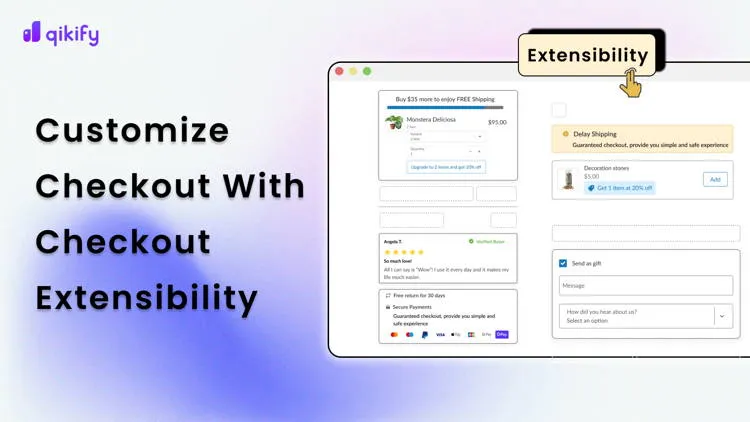
Shopify Checkout Extensibility has fundamentally changed how we approach Shopify CRO. By moving away from the legacy checkout.liquid file, developers can now build modular, upgrade-safe components that integrate directly into the checkout flow using Checkout UI Extensions and Shopify Functions.
Defensive UX is the practice of designing checkout components that proactively collect cleaner data and set clearer expectations. This reduces the likelihood of "I didn't receive my item" or "I don't recognize this charge" disputes, which constitute the bulk of friendly fraud mitigation efforts.
By using the Shopify Branding API and UI Extensions, you can ensure that the checkout environment remains consistent with your brand identity. This consistency reduces "cart shock" and prevents users from feeling they have been redirected to a third-party site, which is a common trigger for abandonment among security-conscious shoppers.
Real-time Address Validation: Reducing Shipping-Related Chargebacks via API Integration
Shipping errors are a leading cause of chargebacks. If a package is delivered to a non-existent address or an incorrect zip code, the merchant almost always loses the dispute. Address Verification Service (AVS) checks are essential, but they are often reactive rather than proactive.
Integrating a real-time address validation API (such as Google Maps or Loqate) via a Checkout UI Extension ensures that only verified addresses enter your fulfillment pipeline. This prevents "Item Not Received" (INR) claims that stem from simple typos or intentional address manipulation by fraudsters.
- Install the Shopify UI Extension CLI and initialize a new project targeting the
shipping_addressextension point. - Connect your preferred Address Validation API key to a protected environment variable.
- Implement a listener on the address input fields to trigger an API call after the user stops typing (debouncing).
- Display a list of suggested, verified addresses in a dropdown format for the user to select.
- Force a validation check that prevents the user from proceeding to the payment step if the address is flagged as "undeliverable" or "high-risk."
Customizing Checkout UI Extensions for Transparent Billing Disclosures
Many chargebacks occur because the customer does not recognize the merchant's name on their bank statement. This is a UX failure. You can solve this by adding a "Billing Disclosure" component directly above the payment button using Checkout UI Extensions.
This component should explicitly state: "Your statement will show as [YOUR BRAND NAME]." This simple addition dramatically reduces friendly fraud caused by confusion. Furthermore, you can use conditional logic to show different disclosures based on the payment method selected, such as clarifying how "Buy Now, Pay Later" (BNPL) installments will appear.
Transparency extends to delivery timelines. Use UI extensions to pull real-time data from your shipping carrier and display a clear delivery window. When customers know exactly when to expect their package, they are less likely to initiate a "service not as described" or "late delivery" dispute with their bank.
The Psychology of 'Friendly Fraud' and How UX Can Neutralize It
Friendly fraud is not always malicious; it is often a byproduct of poor communication. A customer might forget they placed an order, or a family member might use their card without permission. Effective Shopify CRO consulting focuses on creating a "paper trail" within the UI that makes it difficult for a customer to claim they were unaware of the transaction.
Neutralizing this behavior requires a design that emphasizes accountability. This includes clear checkboxes for Terms of Service, visible refund policies, and a summary of the order that is impossible to ignore. By forcing the user to interact with these elements, you create a stronger evidentiary package for potential dispute re-presentment.
The goal is to shift the user's mindset from a passive observer to an active participant in the contract of sale. When the UI demands attention, the likelihood of impulsive "buyer's remorse" disputes decreases significantly.
Optimizing the Order Confirmation Page to Prevent 'Buyer's Remorse' Disputes
The "Thank You" page is the most underutilized asset in Shopify checkout cro. This is the moment to reinforce the value of the purchase and provide immediate avenues for support, which prevents the customer from calling their bank if they have a change of heart.
- Direct Support Access: Include a "Need to cancel or change your order?" link that directs to a live chat or high-priority ticket form.
- Detailed Order Summary: Show high-resolution images of the products purchased to remind the customer of what they are excited to receive.
- Statement Reminder: Reiterate the billing descriptor that will appear on their credit card statement.
- Shipping Tracking: Provide a clear path to track the order, even if the tracking number hasn't been generated yet (e.g., "We're preparing your order").
By providing these tools immediately, you manage the post-purchase anxiety that often leads to chargebacks. A customer who can easily contact you to cancel an order is a customer who won't call their bank to report a "fraudulent" charge.
Technical Implementation: Using Shopify Functions to Filter High-Risk Behavior
Shopify Functions allow developers to write custom backend logic that executes during the checkout process. This is a massive leap forward for Shopify CRO because it allows for server-side security checks that cannot be bypassed by manipulating the frontend DOM.
Specifically, the Payment Customization API can be used to hide or reorder payment methods based on the attributes of the cart, the customer's history, or their geographic location. This is "Payment Gateway Logic" at its most sophisticated.
For example, if a cart contains high-value items and the shipping address is in a known high-fraud region, you can programmatically hide "Guest Checkout" or specific "Card-Not-Present" methods, forcing the user to use a more secure method like Shop Pay or PayPal which have built-in buyer/seller protections.
Logic-Based Payment Method Gating for High-Risk Geo-Locations
To implement payment gating, you must create a Shopify Function that intercepts the payment_methods list. This logic should be data-driven, utilizing your store's historical fraud data to identify patterns.
- Create a new Shopify Function using the
payment_customizationtemplate. - Define your logic in
run.graphqlto fetch the shipping country, cart total, and customer tags. - In the
run.rs(Rust) orrun.jsfile, write a conditional statement: If the shipping country matches your high-risk list AND the cart total exceeds $500, trigger a "hide" operation. - Target the specific payment method IDs (e.g., standard credit card entry) and remove them from the available options.
- Deploy the function and use the Shopify Admin to create a "Rule" that activates this logic for your live store.
This approach ensures that you are not banning entire countries—which would hurt conversion—but rather filtering the specific transactions that carry the highest risk profile. This is the essence of defensive Shopify CRO.
Measuring the ROI of Defensive CRO: Balancing Conversion vs. Chargeback Rate
The ultimate goal of Shopify checkout cro is to maximize "Clean Revenue." Clean Revenue is your Total Revenue minus the costs of fraud, chargeback fees, and lost inventory. A 5% increase in conversion rate is meaningless if it is accompanied by a 6% increase in chargebacks.
When performing a Shopify migration service, it is critical to benchmark your baseline fraud metrics. This allows you to measure the impact of your new defensive UX features. You should look for a "sweet spot" where your conversion rate remains stable or grows, while your dispute rate trends downward.
Remember that every chargeback carries a "hidden cost" including the original shipping fee, the wholesale cost of the lost product, and the $15-$50 fee charged by the processor. Reducing chargebacks by even 0.5% can result in tens of thousands of dollars in annual bottom-line savings for Plus-level merchants.
Key Performance Indicators for the Security-Conscious Shopify Merchant
To effectively manage the balance between conversion and security, you must track specific KPIs that go beyond the standard "Conversion Rate" metric found in the Shopify dashboard.
- Dispute-to-Transaction Ratio: The percentage of total orders that result in a chargeback. Aim for under 0.5% to stay out of "High Risk" processing programs.
- Address Validation Success Rate: The percentage of users who successfully use the suggested address vs. those who manually override it.
- 3DS2 Challenge Rate: How often your customers are prompted for extra verification and the subsequent drop-off rate at that step.
- False Positive Rate: The number of legitimate orders flagged as fraud. This is often measured by reviewing manually canceled orders that later turn out to be valid.
- Customer Lifetime Value (CLV) of Verified Users: Tracking whether customers who pass through "strategic friction" steps have higher retention than those who use guest checkout.
By monitoring these metrics, you can fine-tune your Shopify CRO efforts. If the 3DS2 challenge rate is causing a significant drop-off, you may need to adjust your risk thresholds. If the dispute rate is climbing, it's time to add more defensive UI components to your checkout flow.
In the world of enterprise e-commerce, the checkout is your last line of defense. By treating it as a security asset rather than just a conversion funnel, you build a resilient business capable of scaling without the weight of mounting fraud losses.
Frequently Asked Questions
What is Shopify Checkout CRO?
Shopify Checkout CRO (Conversion Rate Optimization) is the process of optimizing the final steps of the buyer journey to increase completed sales while reducing operational risks like cart abandonment and fraud.
How does address validation reduce chargebacks?
Real-time address validation ensures that shipping data is accurate at the point of entry, preventing 'Item Not Received' disputes caused by typos or intentional address manipulation by fraudsters.
What is strategic friction in e-commerce?
Strategic friction in e-commerce refers to the intentional implementation of user experience hurdles designed to verify customer identity and intent without disrupting the journey for legitimate buyers. Unlike traditional friction, which is often accidental or technical, strategic friction serves as a security layer. For Shopify Plus merchants, this often involves deploying 3D Secure 2.0 (3DS2) protocols, which utilize background data sharing to authenticate transactions. If a transaction risk score exceeds a specific threshold, the system triggers a "challenge"—such as a biometric scan or a one-time passcode. This targeted approach ensures that 95% of customers experience a frictionless path, while high-risk actors face verification barriers. By integrating these "speed bumps" through Shopify Checkout Extensibility and Functions, brands can proactively deter bots and professional fraudsters. This methodology effectively balances conversion rate optimization (CRO) with risk mitigation, ensuring that the pursuit of a seamless checkout does not inadvertently open the door to costly Card-Not-Present (CNP) fraud and subsequent chargeback disputes.

Ecommerce manager, Shopify & Shopify Plus consultant with 10+ years of experience helping enterprise brands scale their ecommerce operations. Certified Shopify Partner with 130+ successful store migrations.


