
- The Hidden Interplay: Merchandising Blind Spots Inflating Shipping Abandonment
- Beyond the Cart: The Pre-Purchase Perception of Shipping Costs
- Data Disconnect: Why Merchandising Teams Miss Shipping-Related CRO Opportunities
- Blind Spot #1: Product Page Shipping Clarity & Context (The "Surprise" Factor)
- Dynamic Shipping Calculators: Integrating Real-Time Rates Before Checkout
- Geo-Targeted Shipping Promos: Leveraging Location for Conversion
- Visual Cues: Icons & Badges for Shipping Speed & Free Shipping Eligibility
- Blind Spot #2: AOV & Free Shipping Thresholds (The "Value" Perception Gap)
- Intelligent Product Bundling: Merchandising for Free Shipping Qualification
- Progress Bars & Micro-Interactions: Gamifying the Path to Free Shipping
- Strategic Upsells/Cross-sells: Products That Bridge the Shipping Gap
- Blind Spot #3: Returns & Exchange Policies (The "Risk" Factor)
- Merchandising Return Policy Highlights: Building Trust Early
- Shopify Apps for Streamlined Returns: Reducing Post-Purchase Friction
- The "Try Before You Buy" Model: Mitigating Shipping-Related Returns
- Blind Spot #4: Inventory & Fulfillment Transparency (The "Wait Time" Anxiety)
- Real-Time Stock Levels & Expected Delivery Dates on Product Pages
- Backorder Merchandising: Managing Expectations & Offering Alternatives
- Multi-Warehouse Logic: Optimizing Shipping Routes & Displaying Options
- Blind Spot #5: Mobile-First Shipping Experience (The "Friction" Factor)
- Accelerated Checkout Integrations & Shipping Pre-fills
- Mobile-Optimized Shipping Option Selectors
- Micro-copy & UI for Shipping Information on Small Screens
- Implementing a Holistic Shopify CRO Strategy for Merchandising & Shipping
- A/B Testing Shipping Displays & Merchandising Tactics
- Leveraging Shopify Analytics & Heatmaps for Shipping Funnel Insights
- Integrating Merchandising & Shipping Data for Continuous Optimization
- Related Reading
The Hidden Interplay: Merchandising Blind Spots Inflating Shipping Abandonment
Shipping cart abandonment remains a persistent challenge for Shopify merchants, often mistakenly viewed as a problem isolated to the checkout flow. Seasoned ecommerce managers understand a deeper truth: many abandonment triggers are cultivated long before a customer reaches the final payment step. The decisions made by merchandising teams—from product page content to promotional strategies—profoundly influence a customer's perception of shipping costs and value.
This article dissects how often-overlooked merchandising strategies directly contribute to shipping-related cart abandonment on Shopify. We'll provide actionable tactics to bridge this critical gap, optimizing your Shopify shipping strategy and boosting your ecommerce shipping CRO.
shopify product page hidden shipping cost
Beyond the Cart: The Pre-Purchase Perception of Shipping Costs
Customers form strong expectations about shipping costs and delivery times the moment they land on a product page, or even earlier. These perceptions are heavily influenced by the information (or lack thereof) presented alongside the product itself. Failing to address these expectations proactively creates significant friction.
A sudden revelation of high shipping costs at checkout, or an unexpectedly long delivery window, triggers buyer's remorse and prompts abandonment. Merchandising must take ownership of shaping these initial perceptions transparently, setting realistic expectations from the outset.
Data Disconnect: Why Merchandising Teams Miss Shipping-Related CRO Opportunities
Organizational silos often hinder effective Shopify CRO. Merchandising focuses on product presentation, marketing drives traffic, and operations manage fulfillment. Shipping abandonment, then, becomes a cross-functional orphan, with no single team directly owning its upstream causes.
![shopify free shipping threshold customer value - Shopify CRO: 5 Merchandising Blind Spots Killing Sales [2024]](/img/blog/shopify-cro-merchandising-abandonment-2.webp) shopify free shipping threshold customer value
shopify free shipping threshold customer value
This disconnect means valuable insights from checkout analytics often fail to inform merchandising strategies. The opportunity to optimize shipping options and presentation earlier in the funnel is frequently missed, perpetuating high abandonment rates.
Many ecommerce operations mistakenly view shipping abandonment as solely a checkout-funnel issue, disconnected from upstream merchandising. This perspective overlooks the profound impact of product page design, promotional messaging, and inventory display on customer shipping expectations and perceived value. When merchandising fails to proactively address potential shipping costs, delivery timelines, or return complexities, it creates an information vacuum. This vacuum is often filled by customer anxiety, leading to a 'surprise' at checkout that triggers abandonment. For instance, unclear free shipping thresholds on product pages, a lack of dynamic shipping rate calculators, or opaque return policies directly contribute to customers feeling misled or uncertain about the total cost and risk of their purchase. These merchandising oversights manifest as inflated shipping abandonment rates, even before a customer enters the final stages of the checkout process, making the problem appear to originate later than it actually does.
Blind Spot #1: Product Page Shipping Clarity & Context (The "Surprise" Factor)
The product page is the frontline of your merchandising efforts. It's where customers evaluate value, and critically, where their shipping expectations begin to solidify. Ambiguity here is a direct contributor to the "surprise" factor at checkout, leading to abandonment.
Proactively displaying shipping information reduces uncertainty, building trust. This strategic placement helps customers make informed decisions, mitigating the shock of unexpected costs or timelines later on.
Dynamic Shipping Calculators: Integrating Real-Time Rates Before Checkout
- Utilize Shopify apps like "Advanced Shipping Rules" or "Shipping Rates Calculator" to display real-time rates based on customer location, product weight, and dimensions.
- Ensure the calculator is easily accessible but not intrusive, perhaps within an expandable section or a clear link near the price.
- This transparency dramatically reduces the perceived risk and provides immediate clarity on the total potential cost of an order.
Geo-Targeted Shipping Promos: Leveraging Location for Conversion
- Implement geo-location detection to show messages like "Free shipping to [Customer's State/Region] on orders over $X!" or "Expected delivery by [Date] for your area."
- Shopify apps and custom code can help tailor these messages. This leverages geo-location-based shipping offers to make shipping feel more accessible and personalized.
- Highlighting faster delivery options or local pickup availability based on proximity can also mitigate shipping anxiety.
Visual Cues: Icons & Badges for Shipping Speed & Free Shipping Eligibility
- Prominently display badges for "Free Shipping Eligible," "Ships Today," or "2-Day Delivery."
- Ensure these visuals are consistent with your brand and placed near the "Add to Cart" button or product price.
- This reinforces the value proposition and helps customers quickly understand shipping advantages without reading lengthy text.
Blind Spot #2: AOV & Free Shipping Thresholds (The "Value" Perception Gap)
Free shipping is a powerful conversion driver, but its effectiveness hinges on how merchandising guides customers toward achieving the threshold. An unoptimized free shipping threshold can leave customers feeling just short of value, increasing abandonment.
Strategic merchandising can turn a free shipping threshold into an opportunity for increased AOV. By intelligently presenting additional products or gamifying the path to free shipping, merchants can bridge the value perception gap and boost sales.
Intelligent Product Bundling: Merchandising for Free Shipping Qualification
- Create pre-defined bundles or "kits" that are priced just above or at your free shipping minimum.
- Highlight the free shipping benefit explicitly on these bundled product pages, e.g., "Buy this bundle and get free shipping!"
- Shopify apps like 'Bold Bundles' or 'Upsell & Cross-Sell' can automate bundle creation and display, improving your merchandising strategies for shipping.
Progress Bars & Micro-Interactions: Gamifying the Path to Free Shipping
- Implement a dynamic progress bar in the mini-cart or cart page that shows "You're $X away from free shipping!"
- As items are added, the bar fills, and the message updates. Shopify themes and apps offer this functionality, enhancing free shipping threshold optimization.
- Consider micro-interactions like celebratory animations when the threshold is met, reinforcing positive purchasing behavior.
Strategic Upsells/Cross-sells: Products That Bridge the Shipping Gap
- On the cart page, suggest "Customers often add..." or "Complete your order with..." sections featuring products that help hit the free shipping goal.
- Ensure these upsells/cross-sells are genuinely relevant to items already in the cart, improving the likelihood of conversion. This is a key aspect of post-purchase upsell shipping strategies.
- Utilize Shopify's native recommendation engine or dedicated apps to display these strategically.
Blind Spot #3: Returns & Exchange Policies (The "Risk" Factor)
Customers evaluate not just the purchase, but also the potential for a hassle-free return. Opaque or inconvenient return policies, especially regarding shipping costs for returns, introduce a significant "risk" factor that can deter initial purchases.
Merchandising must proactively address return policy concerns to build trust and reduce perceived risk. Clear communication about return shipping, restocking fees, and the overall process can significantly impact conversion rates.
Merchandising Return Policy Highlights: Building Trust Early
- Use concise bullet points or icons to highlight customer-friendly aspects like "Free Returns," "30-Day Money-Back Guarantee," or "Easy Exchanges."
- Place these highlights near the "Add to Cart" button or within an expandable section on the product page.
- This pre-emptively addresses buyer concerns about commitment and reduces anxiety related to shipping an item back if it doesn't meet expectations.
Shopify Apps for Streamlined Returns: Reducing Post-Purchase Friction
- Shopify apps like "Returnly" or "Loop Returns" create a self-service returns portal, making the process effortless for customers.
- Highlight the ease of your return process ("Hassle-free returns managed through our easy online portal") as a selling point.
- This transparency reduces the perceived risk of a purchase, knowing that the entire transaction, including potential returns, is well-managed.
The "Try Before You Buy" Model: Mitigating Shipping-Related Returns
- Implement this model using Shopify apps or custom integrations, clearly explaining the process on product pages.
- This strategy effectively shifts the initial shipping cost burden and risk away from the customer, mitigating abandonment driven by uncertainty about fit or suitability.
- By reducing the need for actual returns, it also optimizes your overall Shopify shipping cost optimization.
Blind Spot #4: Inventory & Fulfillment Transparency (The "Wait Time" Anxiety)
Beyond cost, delivery speed is a critical factor in purchase decisions. Customers want to know when they can expect their order. Lack of transparency regarding stock levels and delivery timelines creates anxiety, leading to abandonment.
Merchandising plays a crucial role in managing these expectations. Providing clear, real-time information about product availability and expected delivery dates builds confidence and reduces "wait time" anxiety.
Real-Time Stock Levels & Expected Delivery Dates on Product Pages
- Integrate your inventory management system with Shopify to display real-time stock counts (e.g., "Only 3 left in stock!").
- Provide estimated delivery dates based on the customer's location and your shipping capabilities (e.g., "Order within X hours for delivery by Y date").
- Shopify apps like "Delivery Date & Time Picker" or custom API integrations can facilitate this, offering crucial product page shipping information.
Backorder Merchandising: Managing Expectations & Offering Alternatives
- Clearly label backordered items and provide an estimated restock date or delivery window.
- Offer options like "Notify Me When Available" or allow pre-orders with clear communication about expected shipping.
- Suggest alternative, in-stock products on the same page, ensuring customers don't navigate away without a viable option.
Multi-Warehouse Logic: Optimizing Shipping Routes & Displaying Options
- Display which warehouse an item will ship from, and the resulting optimized delivery estimate, based on the customer's location.
- Offer tiered shipping options, clearly articulating the delivery speed associated with each. This helps customers select based on their urgency.
- This level of transparency, often managed by advanced Shopify apps or custom logistics integrations, significantly reduces delivery anxiety and enhances the perceived value of your optimized shipping options.
Blind Spot #5: Mobile-First Shipping Experience (The "Friction" Factor)
Mobile commerce now dominates, yet many Shopify stores still present a clunky shipping experience on small screens. The "friction" introduced by non-optimized forms, unclear options, or excessive typing is a major abandonment driver.
A seamless, intuitive mobile shipping experience is non-negotiable for high conversion rates. Merchandising and UX design must collaborate to streamline every touchpoint on mobile devices.
Accelerated Checkout Integrations & Shipping Pre-fills
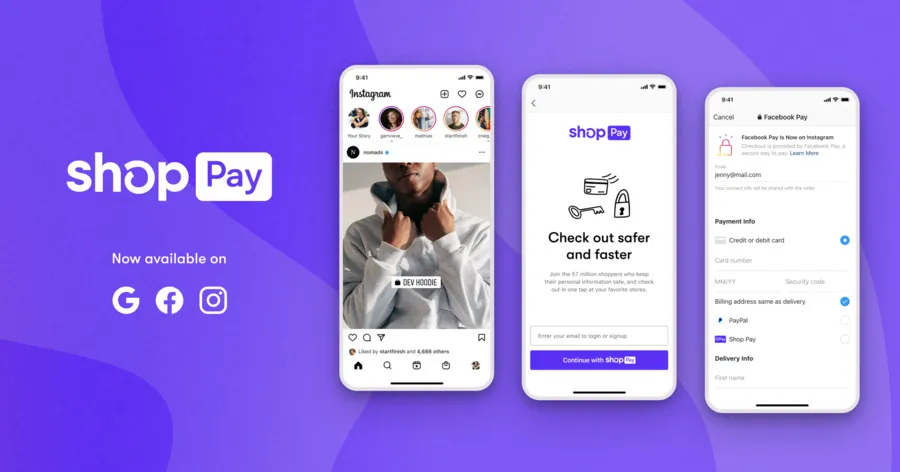
- Ensure full integration with Shopify Payments, Shop Pay, Apple Pay, Google Pay, and other one-click checkout solutions.
- These platforms store customer shipping details, significantly reducing manual input and speeding up the checkout funnel optimization process.
- Highlight the availability of these options early in the checkout flow to encourage their use.
Mobile-Optimized Shipping Option Selectors
- Use large, tappable radio buttons or clear dropdown menus for shipping method selection.
- Clearly display the shipping cost and estimated delivery time alongside each option.
- Avoid complex tables or excessive text that require zooming or horizontal scrolling, which are major friction points.
Micro-copy & UI for Shipping Information on Small Screens
- Use short, descriptive labels for shipping fields and clear error messages.
- Ensure shipping policy links are easily accessible but don't clutter the main checkout path.
- Prioritize essential information. For instance, clearly state "Free Standard Shipping" at the top if applicable, rather than burying it in a list. This ensures transparent shipping policies are always visible.
Implementing a Holistic Shopify CRO Strategy for Merchandising & Shipping
Addressing merchandising blind spots requires a holistic approach that integrates data, testing, and cross-functional collaboration. A successful Shopify CRO strategy treats shipping as an integral part of the customer journey, not merely a checkout formality.
By continuously analyzing, testing, and optimizing the interplay between your product presentation and shipping options, you can significantly reduce cart abandonment and drive sustainable growth.
A/B Testing Shipping Displays & Merchandising Tactics
- Test different placements and prominence of shipping information on product pages (e.g., above "Add to Cart," in a pop-up, or in a tab).
- Experiment with varying free shipping thresholds and the messaging used to promote them.
- A/B test different visual cues (icons, badges) for shipping benefits. Utilize Shopify's native A/B testing features or integrate with platforms like VWO or Optimizely.
Leveraging Shopify Analytics & Heatmaps for Shipping Funnel Insights
- Track your checkout funnel completion rates in Shopify Analytics, paying close attention to the step where shipping information is entered or selected.
- Use heat mapping tools (e.g., Hotjar, Crazy Egg) to see where customers click, scroll, and hesitate on product pages and during the shipping selection process.
- Identify specific friction points where customers abandon before or during shipping selection, guiding your optimization efforts.
Integrating Merchandising & Shipping Data for Continuous Optimization
- Regularly review shipping abandonment rates in conjunction with product page performance metrics (e.g., view-to-add-to-cart rates, AOV).
- Use insights from shipping cost optimization efforts to inform future product bundling or pricing strategies.
- Establish cross-functional meetings where merchandising, marketing, and operations teams collaboratively review data and plan integrated CRO initiatives. This continuous feedback loop ensures your Shopify shipping strategy evolves with customer expectations.
Frequently Asked Questions
How do merchandising decisions impact shipping cart abandonment on Shopify?
Merchandising decisions significantly influence shipping cart abandonment by shaping customer expectations about costs, delivery times, and return policies long before checkout. For instance, a lack of transparent shipping information on product pages, such as dynamic calculators or geo-targeted promotions, can lead to "surprise" shipping costs at checkout, triggering abandonment. Similarly, failing to strategically merchandise free shipping thresholds or clearly communicate return policies can create perceived value gaps or risk factors. When product pages don't provide clear stock levels or estimated delivery dates, customers experience "wait time" anxiety. These merchandising blind spots create friction and uncertainty, making customers hesitant to complete their purchase, even if the actual shipping options are competitive. By proactively addressing these issues, Shopify merchants can build trust, manage expectations, and reduce abandonment rates.
What is a "geo-location based shipping offer" and how can it reduce cart abandonment for Shopify stores?
A geo-location-based shipping offer is a personalized promotion or display of shipping information tailored to a customer's specific geographic location, such as their state, region, or even city. Shopify stores can implement this by using geo-detection technology to identify a visitor's location and then dynamically present relevant shipping benefits directly on product pages or in the cart. For example, a customer in New York might see "Free shipping to NY on orders over $50!" or "Expected delivery by Tuesday for your area," while a customer in California sees a different, equally relevant offer. This strategy significantly reduces cart abandonment by pre-emptively addressing shipping concerns. It eliminates the "surprise" factor of shipping costs at checkout, as customers see localized, transparent information early in their journey. Furthermore, it builds trust and enhances the perceived value of the purchase by making shipping feel more accessible, personalized, and immediate. Highlighting faster delivery options or local pickup availability based on proximity also mitigates shipping anxiety, directly contributing to higher conversion rates and a smoother customer experience.
How can Shopify merchants use product bundling to reduce cart abandonment related to shipping costs?
Shopify merchants can strategically use product bundling to help customers reach free shipping thresholds, thereby reducing abandonment. By creating pre-defined bundles or "kits" that are priced just above or at the free shipping minimum, merchants can incentivize customers to add more items to their cart. Highlighting the free shipping benefit explicitly on these bundled product pages, such as "Buy this bundle and get free shipping!", makes the value proposition clear. This approach not only increases Average Order Value (AOV) but also transforms a potential friction point (shipping cost) into a conversion driver. Apps like 'Bold Bundles' or 'Upsell & Cross-Sell' can automate this process, making it easier to implement and manage.
What role does mobile optimization play in reducing shipping-related cart abandonment on Shopify?
Mobile optimization is crucial because a significant portion of e-commerce traffic comes from mobile devices. A clunky or non-optimized mobile shipping experience creates friction, leading to high abandonment rates. Key strategies include integrating accelerated checkout options (Shop Pay, Apple Pay) that pre-fill shipping details, minimizing manual input. Mobile-optimized shipping option selectors, using large, tappable radio buttons and clear cost/delivery estimates, prevent frustration. Concise micro-copy and a clean UI for shipping information on small screens ensure essential details are visible without clutter. A seamless mobile experience reduces effort, builds confidence, and directly impacts conversion rates by making the shipping process quick and intuitive.

Ecommerce manager, Shopify & Shopify Plus consultant with 10+ years of experience helping enterprise brands scale their ecommerce operations. Certified Shopify Partner with 130+ successful store migrations.
![Shopify Plus Shipping: Unlock 2X Profit & Cut Abandonment [Guide]](/img/blog/shopify-plus-shipping-merchandising-1.webp)