

- The Illusion of 'Set-and-Forget': Why Traditional CRO Misses Shopify's Deepest Levers
- Beyond A/B Tests: Uncovering Systemic Performance Bottlenecks
- The Interdependence of Technical Health and User Behavior
- Deconstructing Shopify's Architecture: Identifying Technical SEO's CRO Touchpoints
- Liquid Template Optimization: The Unseen Impact on Page Speed & Rendering
- Theme & App Integration Audits: Mitigating Performance Degradation
- Server-Side Rendering (SSR) & Pre-rendering Strategies for Shopify Plus
- The Core Web Vitals Nexus: Translating Technical Metrics into Conversion Gains
- LCP, FID, CLS: Benchmarking and Optimizing for E-commerce User Flow
- The Psychological Impact of Perceived Performance on Purchase Intent
- Prioritizing Critical Resources: Above-the-Fold Optimization
- Schema Markup & Entity Salience: Guiding Google (and Users) to Conversion-Ready Content
- Product, Review, & FAQ Schema: Enhancing SERP Visibility & Click-Through Rates
- Local Business Schema for Brick-and-Mortar Shopify Stores
- Leveraging Knowledge Graph Integration for Brand Authority
- Architecting for Continuous Growth: Building a Technical SEO-Driven CRO Feedback Loop
- Implementing Proactive Monitoring & Alert Systems for Performance Shifts
- Integrating Technical SEO Insights into Your CRO Roadmap
- The Iterative Cycle: Test, Measure, Optimize, Repeat (with a Technical Lens)
- Case Study Snippets: Real-World Shopify Stores Leveraging Technical SEO for CRO Wins
- Reducing Bounce Rate through Image Optimization & Lazy Loading
- Boosting Conversion with Enhanced Mobile Responsiveness & Core Web Vitals
- Future-Proofing Your Shopify Store: Preparing for the Next Wave of Search & User Expectations
- The Rise of Headless Commerce: SEO & CRO Implications
- AI-Powered Personalization & Its Technical SEO Underpinnings
- Related Reading
The Illusion of 'Set-and-Forget': Why Traditional CRO Misses Shopify's Deepest Levers
Many enterprise Shopify merchants approach Conversion Rate Optimization (CRO) with a focus on A/B testing superficial UI elements or refining copy. While valuable, this often creates an illusion of 'set-and-forget' optimization. The reality for high-growth Shopify Plus stores is that sustained CRO requires a deeper, architectural understanding of the platform's technical underpinnings. Without this foundation, even well-executed A/B tests can yield marginal gains or, worse, mask systemic issues hindering true growth.
Beyond A/B Tests: Uncovering Systemic Performance Bottlenecks
Traditional CRO often identifies symptoms rather than root causes. An A/B test might reveal a button color change boosts conversions by 0.5%, but it won't tell you if your entire checkout flow is experiencing a 3-second delay due to inefficient Liquid rendering or excessive third-party scripts. These are systemic performance bottlenecks that an effective Shopify Technical SEO / CRO strategy uncovers.
Shopify technical architecture blueprint layers
- Identify slow-loading assets impacting critical user journeys.
- Analyze server response times and CDN efficiency.
- Pinpoint render-blocking resources that delay content display.
- Evaluate the cumulative impact of app integrations on overall site speed.
True continuous optimization on Shopify involves going beyond surface-level changes to address the core technical health of the storefront, impacting everything from crawlability to user engagement.
The Interdependence of Technical Health and User Behavior
The technical health of your Shopify store directly correlates with user behavior and, consequently, conversion rates. A slow-loading page, for instance, doesn't just annoy users; it signals to search engines that your site might offer a poor experience, impacting rankings. This creates a vicious cycle where poor shopify performance leads to higher bounce rates, lower time on site, reduced organic visibility, and ultimately, fewer conversions.
Technical SEO ensures that search engine crawlers can efficiently access, understand, and index your product catalog. Simultaneously, it optimizes the actual delivery of content to the user, directly influencing crucial user experience (UX) signals. A technically robust site loads faster, renders smoothly, and provides a seamless journey, fostering trust and reducing friction points in the conversion funnel.
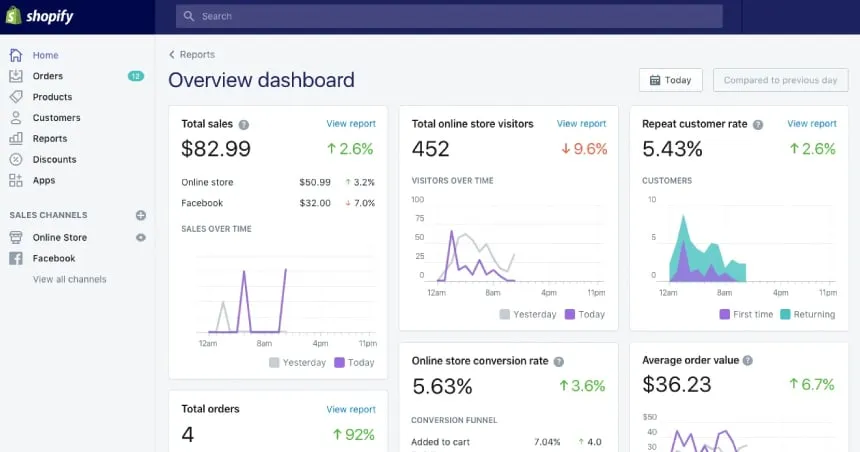
![Shopify Core Web Vitals conversion dashboard - Shopify CRO: The 7 Technical SEO Levers for 3X Growth [2024]](/img/blog/shopify-technical-seo-cro-growth-2.webp) Shopify Core Web Vitals conversion dashboard
Shopify Core Web Vitals conversion dashboard
Deconstructing Shopify's Architecture: Identifying Technical SEO's CRO Touchpoints
To leverage technical SEO for CRO, one must understand Shopify's architecture. It's a platform designed for merchant ease, but its abstraction layers can obscure critical optimization opportunities for developers. Peeling back these layers reveals numerous touchpoints where technical interventions directly translate to conversion improvements.
Technical SEO on Shopify Plus serves as the invisible architectural framework driving continuous, systemic conversion rate optimization and sustainable growth. By meticulously optimizing the platform's underlying technical components—including Liquid templates, theme integrations, server-side rendering, and structured data implementation—merchants can dramatically enhance site performance, improve crawlability, and elevate user experience. This holistic approach ensures that every user interaction, from initial search to final purchase, is frictionless and efficient, directly translating technical health into tangible conversion gains and compounding ROI over time. It's not merely about ranking higher; it's about building a technically resilient storefront that consistently converts visitors into customers by providing an inherently superior digital experience.
Liquid Template Optimization: The Unseen Impact on Page Speed & Rendering
Liquid is Shopify's templating language, powering everything from product pages to checkout flows. Inefficient Liquid code can be a significant drag on shopify performance. Overly complex loops, redundant queries, or unoptimized filters can dramatically increase server response times and delay page rendering, directly impacting the Core Web Vitals Shopify metrics.
Strategies for Shopify Liquid optimization include:
- Minimizing database calls: Cache product data where possible, avoid fetching unnecessary collections.
- Conditional rendering: Load components only when needed, especially for device-specific content.
- Efficient iteration: Optimize loops, use `limit` and `offset` filters judiciously.
- Removing unused snippets: Prune old or disabled app code that might still be rendering.
- Inlining critical CSS: Reduce render-blocking requests by embedding essential styles directly into the HTML for above-the-fold content.
Regular audits of your theme's Liquid files are crucial for maintaining optimal page load speeds and ensuring a smooth user experience.
Theme & App Integration Audits: Mitigating Performance Degradation
The allure of Shopify's app ecosystem and pre-built themes is undeniable, but each integration adds potential overhead. Unoptimized themes or poorly coded apps can inject excessive JavaScript, CSS, and network requests, leading to significant performance degradation. A comprehensive site speed audit Shopify must include a deep dive into these third-party elements.
Actionable steps:
- Dependency Management: Scrutinize every app for its impact on page weight and load time. Prioritize apps with minimal footprint or those that load asynchronously.
- Code Splitting: Ensure app scripts are not universally loaded if only needed on specific pages.
- Theme Bloat: Evaluate your theme for unused features, excessive animations, or large assets that can be removed or optimized. Consider a lightweight base theme.
- Regular Pruning: Periodically review and remove unused apps. Even disabled apps can leave behind residual code.
This proactive approach prevents common pitfalls that undermine shopify performance and hinder CRO efforts.
Server-Side Rendering (SSR) & Pre-rendering Strategies for Shopify Plus
For highly customized or headless Shopify Plus storefronts, Server-side rendering (SSR) Shopify and pre-rendering become critical for both SEO and CRO. While standard Shopify themes are largely server-rendered, custom storefronts built with frameworks like React or Vue often default to client-side rendering (CSR).
- SSR Benefits: Improves initial page load times (LCP), provides fully rendered HTML to search engine bots, and enhances perceived performance. This is crucial for complex product pages or dynamic content.
- Pre-rendering: For less dynamic pages, pre-generating static HTML files can offer similar benefits to SSR without the server overhead, improving crawlability and initial render.
- Hydration: When using SSR with a client-side framework, ensure efficient hydration strategies to make the page interactive quickly without re-rendering the entire DOM.
Implementing these strategies ensures faster content delivery, better indexability, and a superior user experience, directly contributing to a healthier Conversion Rate Optimization (CRO) Funnel.
The Core Web Vitals Nexus: Translating Technical Metrics into Conversion Gains
Google's Core Web Vitals (CWV) are no longer just SEO metrics; they are direct proxies for user experience, and thus, critical indicators for CRO. Optimizing these metrics on Shopify isn't just about pleasing search engines; it's about creating an inherently better user journey that encourages engagement and conversion.
LCP, FID, CLS: Benchmarking and Optimizing for E-commerce User Flow
Understanding and optimizing Core Web Vitals Shopify is paramount:
- Largest Contentful Paint (LCP): Measures perceived load speed. For e-commerce, this is typically the main product image, hero banner, or product description. Optimize by using efficient image formats (WebP), preloading critical images, optimizing server response times, and minimizing render-blocking resources.
- First Input Delay (FID): Measures interactivity. A high FID means the browser is busy parsing JavaScript, preventing users from clicking buttons or interacting with forms. Optimize by deferring non-critical JavaScript, breaking up long tasks, and ensuring efficient third-party script loading.
- Cumulative Layout Shift (CLS): Measures visual stability. Unexpected layout shifts are frustrating and can lead to misclicks, especially on mobile. Optimize by reserving space for images and ads, defining dimensions for embedded content, and avoiding dynamically injected content without proper space allocation.
Benchmarking these against competitors and continuously striving for 'Good' scores directly impacts user patience and their likelihood to proceed through the CRO funnel.
The Psychological Impact of Perceived Performance on Purchase Intent
Perceived performance is often more important than actual performance. A site that *feels* fast, even if technically it's not the absolute fastest, can significantly boost user satisfaction and purchase intent. Delays, jankiness, or sudden layout shifts create cognitive load and erode trust, leading to abandonment. This is where user experience (UX) signals become critical.
- Instant feedback for user actions (e.g., add-to-cart animations).
- Smooth scrolling and transitions.
- Minimal loading spinners or skeleton screens for content.
- Consistent visual stability, preventing frustrating misclicks.
A technically optimized Shopify store provides a frictionless experience, fostering a sense of control and reliability that directly translates into higher conversion rates and customer loyalty.
Prioritizing Critical Resources: Above-the-Fold Optimization
The content visible to the user immediately upon page load (above the fold) is the most critical. Optimizing these resources ensures the user can interact with meaningful content without delay. This is a core tenet of shopify performance optimization.
Key strategies:
- Critical CSS Inlining: Embed the CSS required for above-the-fold content directly into the HTML to avoid an additional network request.
- Lazy Loading: Defer loading of images, videos, and iframes that are below the fold until the user scrolls them into view.
- Preload & Preconnect: Use <link rel="preload"> for critical fonts, images, and scripts, and <link rel="preconnect"> for third-party domains to establish early connections.
- Efficient Asset Delivery: Ensure your CDN is configured optimally for global asset delivery, reducing latency for all users.
By prioritizing the critical rendering path, you significantly improve LCP and overall perceived speed, driving immediate engagement.
Schema Markup & Entity Salience: Guiding Google (and Users) to Conversion-Ready Content
Structured data, implemented via Schema Markup E-commerce, is a powerful yet often underutilized technical SEO lever for CRO on Shopify. It doesn't directly influence rankings but significantly enhances how your content appears in SERPs, improving visibility, click-through rates (CTR), and establishing entity salience.
Product, Review, & FAQ Schema: Enhancing SERP Visibility & Click-Through Rates
Implementing specific schema types for your Shopify store directly informs search engines about your conversion-ready content:
- Product Schema (`Product`): Provides details like price, availability, brand, and SKU directly in search results, giving users crucial buying information upfront. This can include `offers` (with `priceCurrency`, `price`, `availability`), `aggregateRating`, and `review` properties.
- Review Schema (`Review` / `AggregateRating`): Displays star ratings and review counts, building trust and social proof directly on the SERP, significantly increasing CTR.
- FAQ Schema (`FAQPage`): Presents common questions and answers directly in rich results, helping users quickly find information and driving qualified traffic to your product or category pages.
Correctly implemented schema helps you dominate SERP real estate, reducing bounce rates from unqualified clicks and guiding users directly to conversion points within your CRO funnel.
Local Business Schema for Brick-and-Mortar Shopify Stores
For Shopify merchants with physical retail locations, integrating Local Business Schema is crucial. This technical SEO tactic helps search engines understand your local presence and connect it with your online store. This is particularly vital for stores offering local pickup or looking to drive foot traffic.
Key properties to include:
- `name`, `address`, `telephone`, `url`, `openingHours`.
- `geo` coordinates (latitude, longitude) for precise location mapping.
- `hasMap` linking to your Google Maps listing.
- `servesArea` if applicable.
This enhances your visibility in local search results, Google Maps, and the Knowledge Panel, bridging the gap between online discovery and offline conversion.
Leveraging Knowledge Graph Integration for Brand Authority
Beyond individual product attributes, establishing your brand's presence in Google's Knowledge Graph builds significant authority and trust. This involves a broader technical SEO strategy that connects various entity types associated with your brand.
- Organization Schema: Define your company's name, logo, URL, social profiles, and official contact information.
- Person Schema: If key individuals are public-facing, link them to your brand.
- Connecting Entities: Ensure all relevant schema types (Product, Article, FAQ, LocalBusiness) consistently reference your `Organization` entity.
This robust entity salience helps search engines understand your brand as a reputable, authoritative source, indirectly boosting trust signals that influence user perception and, consequently, conversion rates.
Architecting for Continuous Growth: Building a Technical SEO-Driven CRO Feedback Loop
The goal isn't a one-time audit but establishing a system for continuous optimization. A technical SEO-driven CRO feedback loop ensures your Shopify store remains performant, discoverable, and conversion-ready as it scales and market dynamics shift.
Implementing Proactive Monitoring & Alert Systems for Performance Shifts
Waiting for complaints or a drop in conversions is a reactive, costly approach. Proactive monitoring is essential for maintaining optimal shopify performance. Implement tools that track key technical metrics continuously.
- Core Web Vitals Monitoring: Use Google Search Console, Lighthouse CI, and real user monitoring (RUM) tools to track LCP, FID, CLS over time.
- Uptime & Response Time: Monitor server response times and overall site availability.
- Error Tracking: Implement error logging for JavaScript errors, broken links, and broken images.
- Crawler Activity: Monitor Google Search Console for crawl errors, index coverage issues, and changes in crawl budget optimization Shopify.
Set up automated alerts for significant dips in performance or increases in errors. This allows your team to address issues before they impact the CRO funnel.
Integrating Technical SEO Insights into Your CRO Roadmap
For a truly effective technical seo strategy, insights from technical audits must inform your broader CRO roadmap. This means moving beyond siloed teams and fostering collaboration between SEOs, developers, and CRO specialists.
- Prioritization Matrix: Evaluate technical issues based on their potential impact on conversions and their implementation complexity.
- A/B Testing Technical SEO Changes: While direct A/B testing of technical changes can be complex, you can test the *impact* of technical improvements (e.g., faster page load times) on user behavior metrics within your CRO experiments. This is a form of A/B testing technical SEO outcomes.
- Shared KPIs: Align on shared Key Performance Indicators (KPIs) like conversion rate, bounce rate, time on page, and Core Web Vitals, demonstrating how technical improvements contribute to business goals.
This integration ensures that technical fixes are not treated as isolated tasks but as foundational elements driving conversion growth.
The Iterative Cycle: Test, Measure, Optimize, Repeat (with a Technical Lens)
The core of continuous optimization is an iterative cycle. For Shopify Plus, this cycle must incorporate a strong technical lens.
- Test (Technical Hypothesis): Propose technical changes (e.g., image compression, Liquid refactoring, new schema implementation).
- Measure (Impact): Track the impact on Core Web Vitals, page speed, index coverage, organic visibility, and critically, conversion metrics (e.g., add-to-cart rate, checkout completion).
- Optimize (Refine): Based on data, refine your technical implementation or identify new areas for improvement.
- Repeat: This ongoing process ensures your Shopify store adapts to algorithm changes, user expectations, and platform updates.
This systematic approach, driven by a deep understanding of Shopify Technical SEO / CRO, ensures sustained growth and competitive advantage.
Case Study Snippets: Real-World Shopify Stores Leveraging Technical SEO for CRO Wins
These examples illustrate how specific technical SEO interventions on Shopify translate into measurable CRO improvements.
Reducing Bounce Rate through Image Optimization & Lazy Loading
A Shopify Plus merchant selling high-resolution apparel images faced a significant bounce rate, especially on mobile. A technical audit revealed large image file sizes and a lack of lazy loading. By implementing a robust image optimization strategy—converting images to WebP format, serving responsive images via Shopify's CDN, and enabling native lazy loading—the store saw a 15% reduction in mobile bounce rate and a 7% increase in product page conversion rate within three months. The faster loading images improved LCP and overall perceived speed, keeping users engaged.
Boosting Conversion with Enhanced Mobile Responsiveness & Core Web Vitals
An international Shopify store experienced lower conversion rates on mobile devices compared to desktop, despite significant mobile traffic. Analysis showed poor Core Web Vitals Shopify scores on mobile, particularly high FID and CLS, indicating a janky, unresponsive experience. The technical team addressed this by refactoring critical JavaScript to execute asynchronously, optimizing third-party script loading, and implementing explicit height/width attributes for all images and embedded content to eliminate layout shifts. The result was a 20% uplift in mobile conversion rate and a dramatic improvement in all Core Web Vitals, demonstrating the direct link between technical performance and mobile commerce success.
Future-Proofing Your Shopify Store: Preparing for the Next Wave of Search & User Expectations
The digital landscape is constantly evolving. Future-proofing your Shopify store with a proactive technical seo strategy is essential for maintaining competitive edge and sustained continuous optimization.
The Rise of Headless Commerce: SEO & CRO Implications
Headless commerce SEO benefits are becoming increasingly apparent for enterprise Shopify Plus merchants. Decoupling the front-end presentation layer (e.g., React, Vue, Next.js) from Shopify's back-end allows for unparalleled customization, flexibility, and performance. However, this architectural shift introduces new technical SEO complexities:
- SSR/SSG Importance: Client-side rendering alone can hinder crawlability and initial page load. Server-Side Rendering (SSR) or Static Site Generation (SSG) becomes crucial for SEO.
- API Optimization: Efficient data fetching from Shopify's Storefront API and other third-party APIs is vital for performance.
- Routing & Canonicalization: Managing URL structures, redirects, and canonical tags across decoupled front-ends requires meticulous planning.
- Frontend Performance: Optimizing the chosen frontend framework for Core Web Vitals is paramount.
Embracing headless requires a strong technical team to navigate these nuances and maximize both SEO and CRO potential.
AI-Powered Personalization & Its Technical SEO Underpinnings
The future of e-commerce is deeply intertwined with AI-powered personalization. While personalization often seems like a marketing or UX challenge, its effectiveness relies heavily on robust technical SEO underpinnings. AI models need high-quality, well-structured data to deliver relevant recommendations and experiences.
- Structured Data as Fuel: Rich Schema Markup E-commerce provides AI with a clearer understanding of your products, categories, and user intent, enabling more precise personalization.
- Fast Data Retrieval: Personalized experiences often involve dynamic content loading. A performant backend and efficient API calls are technically crucial to deliver these experiences without latency.
- Crawlability for AI: Ensuring all product variants and dynamically generated content are discoverable by search engines (and thus, by data-gathering AI) is a technical SEO task.
By architecting your Shopify store with a strong technical foundation, you not only optimize for today's search engines and users but also lay the groundwork for seamless integration with the AI-driven experiences of tomorrow, driving the next wave of Shopify Technical SEO / CRO.
Frequently Asked Questions
What is the "invisible CRO lever" on Shopify?
The "invisible CRO lever" on Shopify refers to the deep, architectural technical SEO strategies that drive continuous conversion rate optimization (CRO) beyond superficial A/B testing. While traditional CRO often focuses on UI/UX elements, the invisible lever addresses underlying technical health, such as Liquid template efficiency, server response times, Core Web Vitals, and structured data implementation. By optimizing these foundational technical aspects, merchants can resolve systemic performance bottlenecks, enhance crawlability, improve user experience, and create a frictionless path to purchase. This approach ensures sustainable growth by building a technically resilient storefront that consistently converts visitors into customers through an inherently superior digital experience.
How do Core Web Vitals impact Shopify conversion rates?
Core Web Vitals (LCP, FID, CLS) are direct proxies for user experience. Poor scores lead to higher bounce rates, lower engagement, and reduced trust, directly hindering conversions. Optimizing CWV ensures faster loads, smoother interactions, and visual stability, encouraging users to complete purchases.
Why is Schema Markup important for Shopify CRO?
Schema Markup (structured data) enhances how your Shopify products and content appear in search results, improving visibility and click-through rates (CTR). By providing rich snippets like product prices, availability, and star ratings, it gives users crucial buying information upfront, attracting more qualified traffic and guiding them directly into your conversion funnel.
What are the SEO implications of headless Shopify commerce?
Headless Shopify offers customization and performance benefits but introduces SEO complexities. Server-Side Rendering (SSR) or Static Site Generation (SSG) becomes critical for crawlability and initial page load. Efficient API optimization, meticulous URL management (routing, canonicalization), and strong frontend performance optimization are essential to maximize SEO and CRO potential in a decoupled architecture.

Ecommerce manager, Shopify & Shopify Plus consultant with 10+ years of experience helping enterprise brands scale their ecommerce operations. Certified Shopify Partner with 130+ successful store migrations.
![Shopify Plus: SimGym's [Deep Dive] for 20% CRO & SEO Gains](/img/blog/shopify-simgym-seo-cro-deep-dive-1.webp)
![Shopify Plus SEO: Deconstruct Technical Debt [20x Organic Growth]](/img/blog/shopify-plus-technical-seo-debt-1.webp)