![Shopify Plus Blueprint: 7 Pillars for Enterprise Performance [UX, SEO, PM] Cover Image](/img/blog/shopify-plus-enterprise-blueprint-1.webp)
- What is a Shopify Plus enterprise architecture blueprint?
- Enterprise Architecture Control Map
- The Foundational Pillars: Deconstructing Shopify Plus Architecture for Scalability & Resilience
- Core Shopify Plus Capabilities: Beyond the Standard Plan for Enterprise Needs
- Headless vs. Monolithic: Strategic Architectural Decisions for Enterprise Performance
- Leveraging Shopify's API-First Approach for Customization & Third-Party Integration
- Elevating User Experience: Architecting Intuitive Journeys for Global Audiences
- Advanced UX Research Methodologies for Enterprise E-commerce (Quantitative & Qualitative)
- Personalization at Scale: Dynamic Content & AI-Driven Recommendation Engines
- Performance UX: Speed, Responsiveness, and Core Web Vitals Optimization Strategies
- Accessibility (A11y) & Inclusive Design Principles for Diverse User Bases
- SEO as an Architectural Imperative: Building for Discoverability from the Ground Up
- Technical SEO Deep Dive: Schema Markup, Hreflang, and Indexability for Shopify Plus
- Content Strategy & Topical Authority: Mapping the Digital Nomad's Customer Journey
- International SEO: Expanding Reach with Multi-Currency & Multi-Language Setups
- Advanced Monitoring & Analytics: Granular SEO Performance Tracking & Reporting
- Synchronizing Success: Agile Project Management for Shopify Plus Deployments
- The Digital Nomad's PM Toolkit: Remote Collaboration & Workflow Optimization
- Iterative Development & Continuous Improvement Cycles for Enterprise E-commerce
- Stakeholder Management & Cross-Functional Team Synergy in Distributed Environments
- Risk Mitigation & Contingency Planning in Large-Scale E-commerce Projects
- The Synergy Engine: Unlocking Holistic Performance Through Interconnected Strategies
- Data Flow & Analytics Integration: Connecting UX, SEO, and PM Insights for Unified KPIs
- Automated Workflows & AI-Powered Optimizations Across the Enterprise Stack
- Measuring ROI: A Unified Performance Dashboard for Enterprise Success
- Future-Proofing Your Enterprise: Emerging Trends & The Next Evolution of Shopify Plus
- Composable Commerce & Microservices: The Path Towards Ultimate Flexibility
- Web3 & Metaverse Integration: Preparing for the Decentralized Future of Commerce
- Sustainable E-commerce Practices & Ethical AI in Digital Operations
- Related Reading
What is a Shopify Plus enterprise architecture blueprint?
A Shopify Plus enterprise architecture blueprint defines how checkout, apps, themes, ERP, PIM, analytics, B2B workflows, markets, and SEO controls work together before teams start building. It prevents isolated vendor decisions from becoming platform debt and gives leadership a clear operating model for scale.
Enterprise Architecture Control Map
| Layer | Blueprint decision | Failure avoided |
|---|---|---|
| Commerce core | Define native Shopify vs custom logic boundaries. | Over-customization and vendor lock-in. |
| Data model | Map metafields, metaobjects, ERP, PIM, and analytics ownership. | Inconsistent catalog and reporting data. |
| Growth layer | Connect CRO, SEO, speed, and B2B requirements to the roadmap. | Expensive redesigns that do not improve revenue. |
Architecture path: Start with Shopify Plus consulting, validate migration dependencies through the Shopify Migration Service, and use a Shopify Plus tech-stack audit before approving new apps.
The Foundational Pillars: Deconstructing Shopify Plus Architecture for Scalability & Resilience
Core Shopify Plus Capabilities: Beyond the Standard Plan for Enterprise Needs
Shopify Plus transcends the standard platform with enterprise-grade features engineered for high-volume, global merchants. Its core architecture is built for scalability, processing millions of transactions reliably.
Key differentiators include significantly higher API call limits, enabling deeper integrations without throttling issues. Shopify Flow provides robust automation for complex workflows, from fraud prevention to inventory management. Launchpad facilitates scheduled event management for product drops and sales, ensuring seamless execution during peak traffic.
Shopify Plus architectural blueprint 3D
The platform also offers a dedicated wholesale channel, customizable checkout capabilities, and advanced user permissions. These features are critical for managing the intricate operations of a large-scale enterprise, providing the necessary controls and performance headroom.
Headless vs. Monolithic: Strategic Architectural Decisions for Enterprise Performance
Enterprise merchants on Shopify Plus face a pivotal architectural choice: monolithic or headless commerce. A monolithic (Liquid-based) architecture offers rapid deployment and ease of management, leveraging Shopify's integrated theme engine.
This approach is excellent for businesses prioritizing speed-to-market and a unified admin experience. However, it tightly couples the front-end presentation with the back-end logic, potentially limiting extreme customization or multi-channel delivery.
![Global e-commerce user journey map - Shopify Plus Blueprint: 7 Pillars for Enterprise Performance [UX, SEO, PM]](/img/blog/shopify-plus-enterprise-blueprint-2.webp) Global e-commerce user journey map
Global e-commerce user journey map
Headless commerce, powered by Shopify's Storefront API and frameworks like Hydrogen, decouples the front-end. This provides ultimate flexibility for custom user experiences, progressive web applications (PWAs), and integration with diverse digital touchpoints. While it introduces greater development complexity and cost, headless unlocks unparalleled performance optimization and brand control, crucial for competitive enterprise web design.
Leveraging Shopify's API-First Approach for Customization & Third-Party Integration
Shopify Plus's API-first design is fundamental to its extensibility and integration capabilities. The Admin API allows comprehensive programmatic control over store data, from products and orders to customers and inventory.
The Storefront API enables custom front-ends, while the Payments and Fulfillment APIs facilitate seamless integration with external payment gateways and logistics providers. This rich API ecosystem supports a vast array of third-party integrations, essential for enterprise performance optimization.
Through custom app development and webhooks, merchants can connect Shopify Plus with critical business systems like ERP, CRM, PIM, and WMS. This ensures accurate data synchronization and streamlines operations across the entire enterprise stack, fostering a truly connected commerce experience.
Elevating User Experience: Architecting Intuitive Journeys for Global Audiences
Advanced UX Research Methodologies for Enterprise E-commerce (Quantitative & Qualitative)
Architecting an intuitive user experience on Shopify Plus requires a robust research foundation. Quantitative UX research involves analyzing large datasets to identify patterns and validate hypotheses.
Tools like Google Analytics 4 (GA4), heatmaps (e.g., Hotjar), and session recordings provide insights into user behavior, conversion funnels, and drop-off points. A/B testing platforms enable data-driven decisions on design elements and feature implementations, directly impacting conversion rate optimization (CRO).
Qualitative methods, such as user interviews, usability testing, and focus groups, uncover the "why" behind user actions. Developing detailed customer personas and journey maps helps understand diverse global audiences, ensuring design choices resonate and address specific pain points. This dual approach provides a holistic view, informing strategic UX design principles.
Personalization at Scale: Dynamic Content & AI-Driven Recommendation Engines
Personalization is no longer a luxury but an expectation for enterprise e-commerce. Shopify Plus facilitates this at scale through dynamic content delivery based on user segments, browsing history, and purchase behavior.
Utilizing Shopify's native segmentation or integrating with advanced Customer Data Platforms (CDPs) allows for tailored storefront experiences. AI-driven recommendation engines, such as Nosto or Klevu, leverage machine learning to suggest relevant products, enhancing discovery and average order value.
Implementing dynamic content blocks based on geolocation, past purchases, or loyalty status creates a highly relevant shopping journey. This proactive approach significantly boosts engagement and conversion rates, adapting the digital storefront to individual user preferences.
Performance UX: Speed, Responsiveness, and Core Web Vitals Optimization Strategies
Performance UX directly impacts user satisfaction and search engine rankings. Core Web Vitals (CWV) – Largest Contentful Paint (LCP), First Input Delay (FID), and Cumulative Layout Shift (CLS) – are critical metrics for enterprise web design.
Optimizing LCP involves prioritizing critical CSS, lazy loading images and videos, and serving appropriately sized, modern formats like WebP. FID can be improved by minimizing JavaScript execution time and leveraging browser caching strategies. CLS is mitigated through explicit image and video dimensions, preloading fonts, and avoiding injecting content above existing elements.
For headless setups, server-side rendering (SSR) or static site generation (SSG) can dramatically improve initial load times. Utilizing a robust Content Delivery Network (CDN) ensures fast asset delivery globally, providing a consistently snappy experience across all devices and regions.
Accessibility (A11y) & Inclusive Design Principles for Diverse User Bases
Inclusive design is an ethical and legal imperative for enterprise e-commerce. Adhering to Web Content Accessibility Guidelines (WCAG) ensures your Shopify Plus store is usable by individuals with disabilities.
This involves implementing semantic HTML, ensuring proper keyboard navigation, and providing descriptive alt text for images. Maintaining sufficient color contrast, using ARIA attributes for dynamic content, and offering clear form labels are also crucial.
An accessible website broadens your potential customer base and improves overall usability for everyone. Proactively integrating A11y from the design phase reduces costly retrofits and demonstrates a commitment to diverse user bases, reflecting strong user experience design principles.
SEO as an Architectural Imperative: Building for Discoverability from the Ground Up
Technical SEO Deep Dive: Schema Markup, Hreflang, and Indexability for Shopify Plus
Technical SEO for e-commerce is foundational for organic visibility. Shopify Plus provides robust capabilities, but requires expert configuration. Implementing structured data, particularly Product, Organization, and BreadcrumbList schema markup, helps search engines understand content context.
Proper use of canonical tags prevents duplicate content issues, especially with filtered collections. Optimizing robots.txt and sitemaps ensures efficient crawling and indexability of all relevant pages. For international stores, accurate hreflang implementation is vital to direct users to the correct language and regional versions of content.
Customizing Liquid templates allows for fine-grained control over meta titles, descriptions, and header tags, which are crucial for on-page optimization. A clean URL structure and fast loading speeds further support strong technical SEO strategy.
Content Strategy & Topical Authority: Mapping the Digital Nomad's Customer Journey
Building topical authority is key to long-term SEO success on Shopify Plus. This involves developing a comprehensive content strategy that addresses every stage of the digital nomad's customer journey.
Pillar pages and topic clusters establish expertise around core product categories and relevant themes. Long-form content, such as guides and tutorials, answers user queries and demonstrates authority. Strategic keyword research, focusing on user intent (informational, navigational, transactional), guides content creation.
Mapping content to awareness, consideration, and decision stages ensures a holistic approach, guiding potential customers from initial interest to conversion. This thoughtful content architecture fuels organic traffic and positions the brand as a leader in its niche.
International SEO: Expanding Reach with Multi-Currency & Multi-Language Setups
For global enterprises, effective Internationalization (I18n) & localization (L10n) are non-negotiable. Shopify Plus, particularly with Shopify Markets, streamlines multi-currency and multi-language setups.
Properly configured subdomains or subdirectories for different regions are essential for geo-targeting. Accurate hreflang tags must be implemented across all localized versions to prevent search engine confusion and ensure users land on the most relevant store view.
Beyond language, localization extends to pricing, payment methods, shipping options, and culturally relevant content. This meticulous approach ensures maximum discoverability and relevance in diverse international markets, significantly expanding global reach.
Advanced Monitoring & Analytics: Granular SEO Performance Tracking & Reporting
Continuous monitoring and data-driven insights are vital for optimizing SEO strategy. Integrating Google Analytics 4 (GA4) provides a unified view of user behavior across devices and platforms.
Google Search Console offers critical data on organic search performance, including keyword rankings, impressions, clicks, and index coverage. Tools like SEMrush or Ahrefs provide competitive analysis, backlink monitoring, and advanced keyword research capabilities.
Custom dashboards, built with tools like Looker Studio, consolidate these metrics into actionable reports. Granular tracking of organic traffic, conversion rates, and revenue attribution allows for precise adjustments and demonstrates the ROI of SEO initiatives, driving continuous improvement.
Synchronizing Success: Agile Project Management for Shopify Plus Deployments
The Digital Nomad's PM Toolkit: Remote Collaboration & Workflow Optimization
Managing Shopify Plus deployments for a globally distributed "digital nomad" operation demands a specialized PM toolkit. Platforms like Jira, Asana, or Trello facilitate task management, sprint planning, and progress tracking across time zones.
Communication hubs like Slack or Microsoft Teams ensure real-time collaboration, while asynchronous tools like Loom or Notion support detailed documentation and knowledge sharing. Virtual whiteboards (Miro, Mural) enable remote brainstorming and design sessions.
Establishing clear communication protocols, defined meeting cadences (e.g., daily stand-ups, weekly syncs), and transparent documentation practices are paramount. This optimized workflow ensures project velocity and alignment within distributed teams, critical for agile project management in e-commerce.
Iterative Development & Continuous Improvement Cycles for Enterprise E-commerce
Agile methodologies, particularly Scrum or Kanban, are ideal for large-scale Shopify Plus projects. Iterative development cycles, typically two-week sprints, allow for rapid prototyping, deployment, and feedback.
Focusing on Minimum Viable Products (MVPs) for new features or sections ensures value delivery early and often. Continuous Integration/Continuous Deployment (CI/CD) pipelines automate testing and deployment processes, minimizing errors and accelerating time-to-market.
Regular retrospectives provide opportunities for teams to reflect and adapt, fostering a culture of continuous improvement. This iterative approach allows enterprises to respond quickly to market changes and user feedback, maintaining competitive advantage and driving enterprise performance optimization.
Stakeholder Management & Cross-Functional Team Synergy in Distributed Environments
Effective stakeholder management is crucial for complex Shopify Plus projects, especially with distributed teams. Clear communication plans, regular progress updates, and managing expectations across diverse departments are essential.
Establishing a single source of truth for project documentation and decisions prevents miscommunication. Fostering cross-functional team synergy involves regular collaboration sessions between development, marketing, sales, and operations teams.
This integrated approach ensures all perspectives are considered, preventing silos and promoting a unified vision for the project. Transparent communication and shared goals are vital for navigating the complexities of large-scale e-commerce projects in distributed environments.
Risk Mitigation & Contingency Planning in Large-Scale E-commerce Projects
Large-scale Shopify Plus deployments inherently carry risks that require proactive mitigation. Comprehensive security audits, regular penetration testing, and adherence to PCI DSS compliance are non-negotiable.
Implementing robust backup and disaster recovery plans ensures business continuity in unforeseen circumstances. Performance testing, including load and stress tests, must be conducted prior to major launches to identify and address bottlenecks.
Vendor management, including clear SLAs and communication channels with app providers and integration partners, is also critical. Developing detailed rollback strategies for deployments and having contingency budgets are essential components of a resilient project management framework.
The Synergy Engine: Unlocking Holistic Performance Through Interconnected Strategies
Data Flow & Analytics Integration: Connecting UX, SEO, and PM Insights for Unified KPIs
Architecting Shopify Plus for holistic performance necessitates a unified data strategy, seamlessly connecting UX, SEO, and Project Management insights. This integration creates a powerful "synergy engine," translating disparate data points into actionable intelligence for enterprise decision-makers. By centralizing data from Google Analytics 4, Search Console, CRM, and A/B testing platforms into a common data lake or Customer Data Platform (CDP), organizations gain a single source of truth. This allows for the calculation of unified Key Performance Indicators (KPIs) such as customer lifetime value (LTV) influenced by organic search, conversion rates post-UX enhancements, and project velocity impacting feature deployment. Connecting these data streams enables a comprehensive understanding of how specific UX improvements or technical SEO adjustments, managed through agile PM cycles, directly contribute to overall business objectives and revenue growth. This interconnected approach ensures every optimization effort is aligned with overarching strategic goals, driving superior enterprise performance.
Automated Workflows & AI-Powered Optimizations Across the Enterprise Stack
Automation and AI are transformative for enhancing enterprise performance optimization. Shopify Flow can automate internal operational tasks, from tagging customers based on purchase behavior to managing inventory alerts.
Beyond Shopify, integrating marketing automation platforms streamlines email campaigns, SMS notifications, and customer segmentation. AI-powered tools provide sophisticated inventory forecasting, optimizing stock levels and reducing carrying costs.
Customer service chatbots leverage AI to handle routine inquiries, freeing up human agents for complex issues. AI also plays a crucial role in fraud detection, improving security and reducing chargebacks. These automated workflows and AI optimizations streamline operations across the entire enterprise stack, driving efficiency and profitability.
Measuring ROI: A Unified Performance Dashboard for Enterprise Success
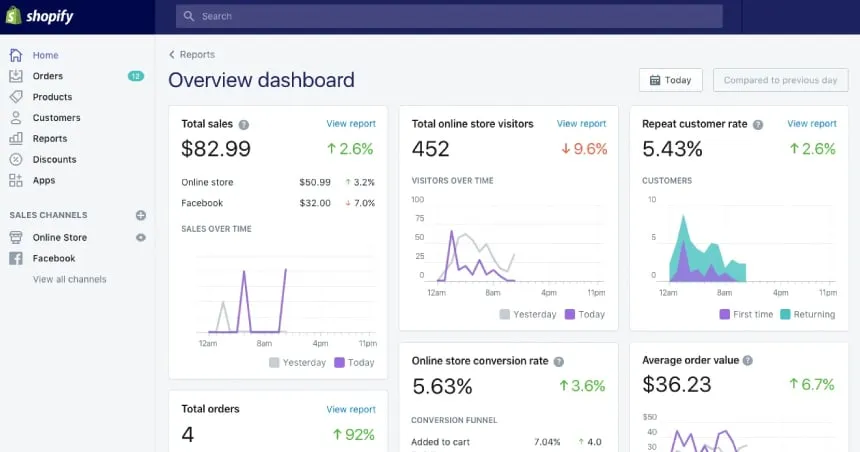
Demonstrating the return on investment (ROI) of intertwined UX, SEO, and PM initiatives requires a unified performance dashboard. Custom dashboards built with tools like Looker Studio, Power BI, or Google Data Studio consolidate key metrics from all integrated platforms.
These dashboards visualize holistic KPIs, such as customer acquisition cost (CAC) for organic channels, conversion rate by user segment, and project delivery timelines versus business impact. They enable attribution modeling to understand how different touchpoints contribute to conversions.
By presenting a clear, real-time view of performance across all strategic pillars, enterprise leaders can make informed, data-driven decisions. This unified approach ensures accountability and validates the effectiveness of the entire digital commerce strategy.
Future-Proofing Your Enterprise: Emerging Trends & The Next Evolution of Shopify Plus
Composable Commerce & Microservices: The Path Towards Ultimate Flexibility
The future of enterprise e-commerce is increasingly composable. Composable commerce, built on a MACH (Microservices, API-first, Cloud-native, Headless) architecture, offers unparalleled flexibility and agility.
This approach breaks down monolithic applications into smaller, independent microservices, each responsible for a specific business capability. Shopify Plus, with its robust APIs, serves as a powerful commerce engine within a composable stack.
Enterprises can integrate best-of-breed solutions for PIM, CMS, search, and other functions, rather than relying on a single vendor for everything. This modularity allows for rapid innovation, easier upgrades, and enhanced scalability, providing ultimate control over the digital experience.
Web3 & Metaverse Integration: Preparing for the Decentralized Future of Commerce
The convergence of Web3 and the Metaverse represents a significant paradigm shift for digital commerce. Shopify Plus merchants are already exploring these frontiers, preparing for a decentralized future.
Non-Fungible Tokens (NFTs) can serve as digital collectibles, loyalty rewards, or exclusive access passes for products and experiences. Blockchain technology offers enhanced transparency in supply chains and secure digital asset ownership.
The Metaverse presents opportunities for immersive virtual storefronts, augmented reality (AR) shopping experiences, and new avenues for customer engagement. Enterprises must experiment with these technologies to stay ahead, transforming digital transformation strategy.
Sustainable E-commerce Practices & Ethical AI in Digital Operations
Sustainability and ethical considerations are becoming paramount for modern enterprises. Implementing sustainable e-commerce practices involves minimizing environmental impact across the entire value chain.
This includes opting for green hosting solutions, optimizing logistics for reduced carbon emissions, and promoting sustainable product sourcing. Consumers increasingly demand transparency and ethical operations from brands.
Ethical AI in digital operations focuses on fair, transparent, and accountable use of AI technologies. This involves addressing algorithmic bias, ensuring data privacy, and clearly communicating AI's role in customer interactions. Integrating these principles into Shopify Plus operations builds brand trust and aligns with evolving consumer values.
Frequently Asked Questions
What makes Shopify Plus the ideal platform for enterprise-level e-commerce?
Shopify Plus offers enterprise-grade features like higher API limits, Shopify Flow for automation, Launchpad for event management, and a dedicated wholesale channel. These capabilities support high-volume transactions, complex integrations, and global operations, providing the scalability and control necessary for large-scale businesses to thrive in competitive digital markets.
What are the key considerations when choosing between a headless and monolithic architecture for Shopify Plus?
Choosing between headless and monolithic (Liquid-based) architecture on Shopify Plus involves balancing flexibility, development complexity, and speed-to-market. A monolithic architecture leverages Shopify's integrated theme engine, offering rapid deployment and a unified admin experience, ideal for businesses prioritizing quick launches and simpler management. However, it tightly couples the front-end with back-end logic, potentially limiting extreme customization or multi-channel delivery. In contrast, headless commerce, powered by Shopify's Storefront API and frameworks like Hydrogen, decouples the front-end. This provides ultimate flexibility for custom user experiences, progressive web applications (PWAs), and integration with diverse digital touchpoints. While it introduces greater development complexity and cost, headless unlocks unparalleled performance optimization and brand control, crucial for competitive enterprise web design requiring bespoke interfaces or integration with non-Shopify front-ends. The decision hinges on specific business needs for customization, performance, and development resources.
How does Shopify Plus support international SEO and global expansion?
Shopify Plus, especially with Shopify Markets, facilitates international SEO through multi-currency and multi-language setups. It supports proper hreflang implementation for geo-targeting, allowing businesses to serve localized content to specific regions. Beyond language, it enables localization of pricing, payment methods, and shipping, ensuring maximum discoverability and relevance in diverse international markets.
What project management methodologies are best suited for Shopify Plus deployments?
Agile methodologies, such as Scrum or Kanban, are highly effective for Shopify Plus deployments due to their iterative nature. These approaches allow for rapid prototyping, continuous feedback, and quick adaptation to market changes. Tools like Jira, Asana, or Trello, combined with clear communication protocols, are essential for managing distributed teams and ensuring project velocity in large-scale e-commerce initiatives.

Ecommerce manager, Shopify & Shopify Plus consultant with 10+ years of experience helping enterprise brands scale their ecommerce operations. Certified Shopify Partner with 130+ successful store migrations.