![Master Shopify Plus CRO: 5 Subconscious Triggers [Boost Conversions] Cover Image](/img/blog/shopify-plus-subconscious-cro-1.webp)
- Beyond Clicks: Mapping the Emotional & Cognitive Path
- The "System 1" Shopper: Fast Thinking & Intuitive Decisions
- Behavioral Economics for E-commerce: Decoding the Shopify Plus Brain
- Scarcity & Urgency: Crafting Irresistible Offers with Dynamic Content
- Social Proof & Authority: Leveraging User-Generated Content & Expert Endorsements
- Anchoring & Framing: Guiding Perception with Strategic Pricing & Product Presentation
- Neuromarketing in Action: Hypnotic CRO Triggers for Shopify Plus
- The Power of Priming: Setting the Stage for Conversion
- Visual Hierarchy & Foveal Vision: Directing Attention to High-Impact Zones
- Emotional Design: Building Trust and Desire Through Aesthetics & Micro-interactions
- Personalization at Scale: Tailoring the Subconscious Experience on Shopify Plus
- Dynamic Content & Product Recommendations: Anticipating Needs Before They're Conscious
- Segmented Journeys: Crafting Unique Paths Based on Behavioral Data
- AI-Powered Personalization: Leveraging Machine Learning for Predictive CRO
- A/B Testing the Unseen: Validating Subconscious Triggers on Shopify Plus
- Measuring Emotional Response: Beyond Traditional Conversion Metrics
- Multivariate Testing for Complex Psychological Hypotheses
- Iterative Optimization: Continuously Refining the Hypnotic Funnel
- Architecting the Future: Full-Funnel Optimization with Subconscious Insights
- From Awareness to Advocacy: Integrating Psychological Principles Across All Touchpoints
- The Ethical Imperative: Persuasion vs. Manipulation in E-commerce
- Future Trends: AI, VR/AR, and the Evolution of the Subconscious Journey
- Related Reading
In the relentless pursuit of conversion rate optimization (CRO), many merchants remain focused on explicit actions: clicks, add-to-carts, and completed purchases. Yet, the true battle for conversion is often waged in the unseen theater of the customer's subconscious mind.
For enterprise-level Shopify Plus stores, understanding and influencing this invisible journey represents the next frontier in maximizing revenue and fostering deep brand loyalty.
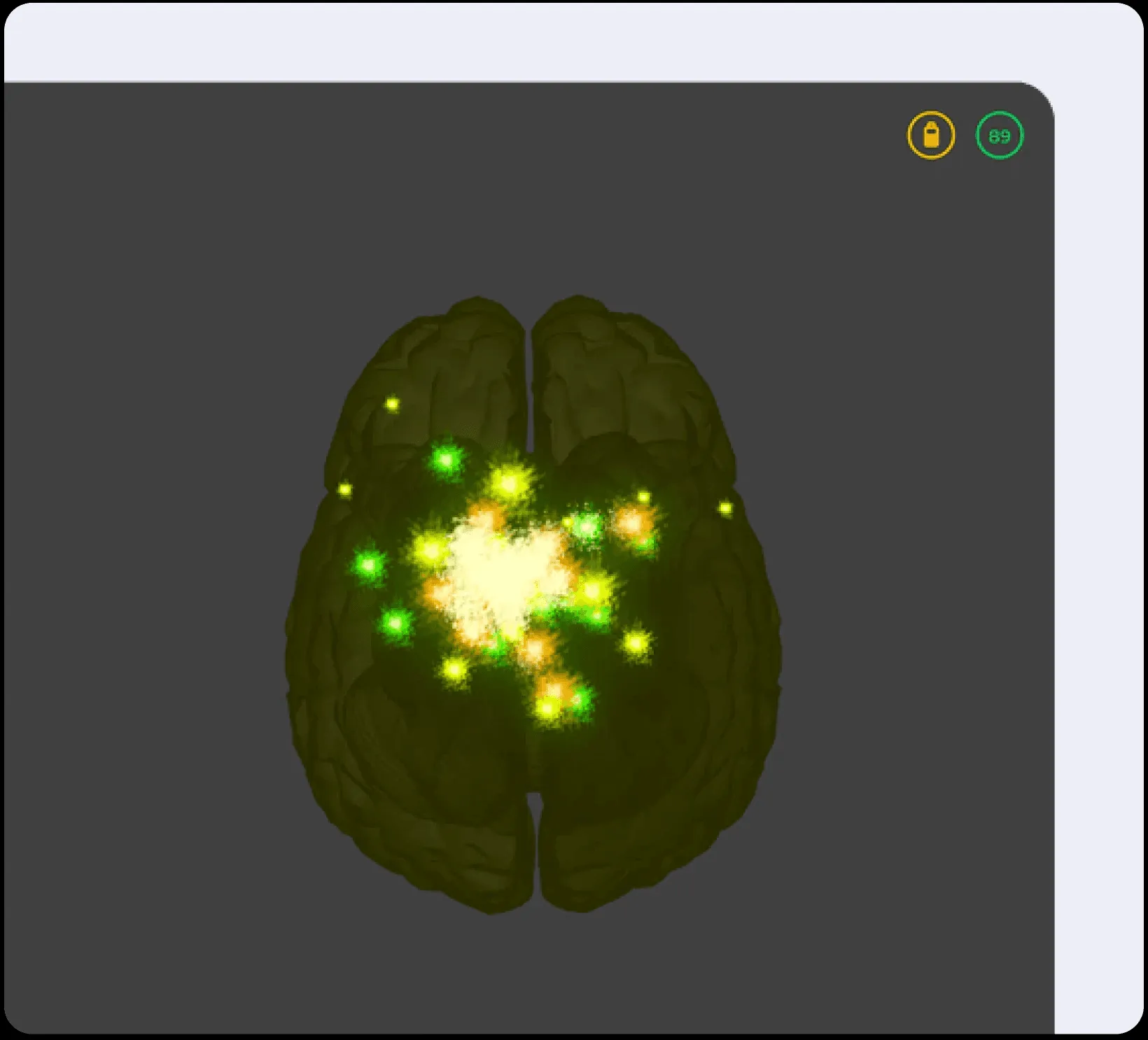
Neuromarketing Shopify Plus customer brain
Beyond Clicks: Mapping the Emotional & Cognitive Path
The traditional ecommerce customer journey map details touchpoints and user flows. A deeper understanding, however, requires mapping the emotional and cognitive path each shopper traverses.
This involves recognizing the cognitive biases in purchasing decisions that shape choices long before a click occurs. It's a customer journey mapping advanced approach, focusing on psychological states rather than just navigational steps.
For Shopify Plus, this means analyzing not just where users go, but why they hesitate, what emotions a product page evokes, and how subtle cues influence their perception of value and trust.
The "System 1" Shopper: Fast Thinking & Intuitive Decisions
Nobel laureate Daniel Kahneman introduced the concepts of System 1 and System 2 thinking. System 1 is fast, intuitive, emotional, and largely subconscious; System 2 is slow, deliberate, and logical.
The majority of online purchasing decisions, particularly for lower-cost or repeat items, are driven by the System 1 shopper. They rely on heuristics, shortcuts, and emotional resonance rather than exhaustive comparison.
A successful Shopify CRO strategy taps into this System 1 thinking, deploying psychological triggers in sales that resonate instantly. This minimizes cognitive load and friction, paving a smoother path through the shopify plus conversion funnel.
Behavioral Economics for E-commerce: Decoding the Shopify Plus Brain
Behavioral economics in e-commerce provides a robust framework for understanding these subconscious drivers. It moves beyond rational choice theory, acknowledging that human decisions are often irrational, predictable, and heavily influenced by context.
Shopify Plus merchants can systematically apply these principles to sculpt an environment conducive to conversion.
Scarcity & Urgency: Crafting Irresistible Offers with Dynamic Content
The principles of scarcity and urgency are powerful psychological triggers in sales. Humans instinctively value what is rare or time-limited, fearing the loss of an opportunity.
- Scarcity: Displaying "Only X left in stock" or "Limited edition" creates perceived rarity.
- Urgency: Implementing countdown timers for sales, "Offer ends in X hours," or limited-time free shipping prompts immediate action.
On Shopify Plus, these can be implemented using apps that sync with inventory levels or through custom code for dynamic content blocks. This ensures messaging is always accurate and compelling, directly influencing the ecommerce customer journey.
Social Proof & Authority: Leveraging User-Generated Content & Expert Endorsements
People are inherently social creatures, heavily influenced by the actions and opinions of others. Social proof validates purchasing decisions and builds trust.
- User-Generated Content (UGC): Showcase product reviews, star ratings, customer photos/videos, and testimonials prominently on product pages and throughout the shopify plus conversion funnel.
- Popularity Indicators: "X people bought this recently" or "Most popular item" subtly nudge shoppers.
- Authority: Integrate expert endorsements, media mentions, trust badges (e.g., "As seen in Forbes"), and certifications to establish credibility.
Shopify Plus apps for reviews (e.g., Yotpo, Loox) and influencer marketing platforms are essential for harnessing this potent neuromarketing principles for online retail strategy.
Anchoring & Framing: Guiding Perception with Strategic Pricing & Product Presentation
Anchoring refers to the cognitive bias where an initial piece of information (the "anchor") influences subsequent judgments. Framing involves presenting information in a way that sways perception.
- Anchoring in Pricing: Displaying a higher original price alongside a discounted price (e.g., "$100 now $70") makes the deal seem more attractive. Presenting a premium product first can make subsequent options appear more affordable.
- Framing Benefits: Instead of "contains 1% fat," frame it as "99% fat-free." Highlight benefits over features. For subscription models, frame cost as "less than a coffee a day."
Shopify Plus allows for flexible product and pricing strategies implementation, enabling merchants to strategically anchor and frame offers. This guides the shopper's subconscious valuation and enhances Shopify CRO efforts.
Neuromarketing in Action: Hypnotic CRO Triggers for Shopify Plus
Neuromarketing principles for online retail delve deeper, using insights from neuroscience to understand how the brain responds to marketing stimuli. This allows for the creation of truly 'hypnotic' persuasion architecture Shopify Plus.
The core of achieving 'hypnotic' CRO on Shopify Plus lies in understanding and strategically influencing the subconscious customer journey. This means moving beyond surface-level analytics to decode the cognitive biases in purchasing decisions and emotional drivers that truly compel action. Shopify Plus, with its robust API and extensive app ecosystem, provides the ideal platform for implementing behavioral economics in e-commerce and neuromarketing principles for online retail. By leveraging dynamic content, AI-powered personalization, and sophisticated A/B testing psychological impact methodologies, merchants can architect a persuasion architecture Shopify Plus that anticipates needs, mitigates friction, and subtly guides shoppers toward conversion. This approach focuses on optimizing micro-conversions optimization Shopify across the entire shopify plus conversion funnel, ensuring every interaction is designed to resonate deeply with the shopper's intuitive System 1 thinking.
The Power of Priming: Setting the Stage for Conversion
Priming involves exposing users to specific stimuli that subconsciously influence their subsequent thoughts or actions. It sets a mental stage before the main act.
- Visual Priming: Subtle imagery on a landing page (e.g., people smiling, aspirational lifestyle shots) can evoke positive emotions or associations before a product is even presented.
- Verbal Priming: Using words like "exclusive," "trusted," or "effortless" in early stages of the ecommerce customer journey can precondition shoppers.
- Experiential Priming: A smooth, fast loading speed or intuitive navigation primes a user for a positive experience with the brand.
On Shopify Plus, priming can be implemented through strategic landing page design, pre-purchase email sequences, and consistent brand messaging across all touchpoints. This subtly influences the shopify plus conversion funnel from the outset.
Visual Hierarchy & Foveal Vision: Directing Attention to High-Impact Zones
Our eyes scan web pages in predictable patterns (F-patterns, Z-patterns). Foveal vision is the small central part of our visual field, responsible for sharp, detailed vision. Directing this attention is paramount.
- Contrast & Size: Use high contrast colors for CTAs (e.g., "Add to Cart") and make them sufficiently large. Important information should stand out.
- Whitespace: Strategic use of negative space draws attention to core elements, preventing cognitive overload.
- Directional Cues: Arrows, lines, or even gazes from people in images can subtly guide the eye toward a desired action or piece of information.
Optimizing visual hierarchy on Shopify Plus themes and product pages ensures key conversion elements are seen, understood, and acted upon. This is a critical component of emotional design for e-commerce.
Emotional Design: Building Trust and Desire Through Aesthetics & Micro-interactions
Emotional design for e-commerce goes beyond usability; it aims to evoke specific feelings that drive conversion and loyalty. Emotions are intrinsically linked to System 1 decisions.
- Aesthetics: High-quality imagery, consistent branding, and a visually pleasing layout create a sense of professionalism and trustworthiness.
- Color Psychology: Specific colors evoke different emotions (e.g., blue for trust, green for growth, red for urgency).
- Micro-interactions: Subtle animations on hover, satisfying click feedback, or progress bars during checkout reduce friction and create a delightful experience, reinforcing positive feelings.
Shopify Plus themes offer extensive customization, allowing merchants to craft an emotionally resonant brand experience. Every detail contributes to the overall persuasion architecture Shopify Plus.
Personalization at Scale: Tailoring the Subconscious Experience on Shopify Plus
Personalization, when done right, is the ultimate neuromarketing principles for online retail strategy. It anticipates needs and desires before they are consciously articulated, creating an experience that feels uniquely tailored.
Shopify Plus provides the infrastructure to implement Shopify Plus personalization strategies at an enterprise scale.
Dynamic Content & Product Recommendations: Anticipating Needs Before They're Conscious
Dynamic content adapts based on user behavior, location, or other data points, making the shopping experience feel intuitive and predictive.
- Behavioral Recommendations: "Customers who viewed this also viewed..." or "Recommended for you based on your browsing history" leverage past actions.
- Contextual Offers: Displaying specific promotions or product bundles relevant to a user's current page or recent search query.
- Personalized Messaging: Adapting headlines or value propositions based on user segments.
Shopify Plus apps for product recommendations (e.g., ReConvert, Nosto) and native Shopify Functions allow for sophisticated dynamic content delivery, subtly guiding the ecommerce customer journey.
Segmented Journeys: Crafting Unique Paths Based on Behavioral Data
Not all customers are the same, and their ecommerce customer journey should reflect that. Segmentation allows for the creation of distinct, optimized paths for different user groups.
- New vs. Returning Customers: Offer incentives to new visitors, streamline checkout for repeat buyers.
- High-Value Segments: Identify and provide exclusive experiences or early access to loyal customers.
- Abandoned Cart Segments: Target users with specific reminders or incentives based on the items left behind.
Shopify Plus's robust customer data and integration capabilities enable merchants to segment audiences precisely and tailor the shopify plus conversion funnel for maximum impact, driving full funnel optimization.
AI-Powered Personalization: Leveraging Machine Learning for Predictive CRO
Artificial Intelligence and Machine Learning are transforming Shopify CRO by enabling predictive CRO. AI can analyze vast datasets to identify patterns and predict future behavior with remarkable accuracy.
- Real-time Optimization: AI can dynamically adjust product sorting, promotions, or even pricing in real-time based on a user's current session and historical data.
- Anticipatory Merchandising: Machine learning algorithms can predict which products a customer is most likely to purchase next, proactively presenting them.
- Churn Prediction: Identify customers at risk of leaving and trigger targeted retention efforts.
Integrating AI-powered personalization platforms with Shopify Plus allows for a level of granular optimization that was previously impossible, making the subconscious journey incredibly responsive and conversion-focused.
A/B Testing the Unseen: Validating Subconscious Triggers on Shopify Plus
While subconscious triggers operate below conscious awareness, their impact can and must be measured. A/B testing psychological impact is crucial for validating hypotheses and refining neuromarketing principles for online retail applications.
For Shopify Plus, this means moving beyond simple button color tests to more complex psychological experiments.
Measuring Emotional Response: Beyond Traditional Conversion Metrics
Traditional Shopify CRO focuses on hard conversions. To test subconscious triggers, a broader set of metrics is required.
- Engagement Metrics: Time on page, scroll depth, session duration, and bounce rate can indicate subconscious interest or friction.
- Heatmaps & Session Recordings: Visualize where users look, click, and hesitate, revealing intuitive responses.
- Micro-conversions: Track small, positive actions like adding to wishlist, viewing a video, or signing up for a newsletter as indicators of progress through the ecommerce customer journey.
Tools integrated with Shopify Plus can provide these deeper insights, allowing merchants to measure the efficacy of emotional design for e-commerce elements and psychological triggers in sales.
Multivariate Testing for Complex Psychological Hypotheses
When multiple elements on a page are interacting to influence a subconscious response, multivariate testing (MVT) becomes essential. It allows for simultaneous testing of various combinations of elements (e.g., headline, image, CTA text, social proof placement).
For instance, testing how a specific scarcity message (A) combined with a particular social proof element (B) impacts conversion, compared to other combinations. This helps isolate the most effective persuasion architecture Shopify Plus.
Shopify Plus merchants can leverage advanced testing platforms that integrate seamlessly, enabling them to explore complex cognitive biases in purchasing decisions and their synergistic effects.
Iterative Optimization: Continuously Refining the Hypnotic Funnel
Shopify CRO is not a one-time project; it's an ongoing, iterative process, especially when dealing with subconscious drivers. The goal is micro-conversions optimization Shopify across every stage.
- Hypothesize: Based on behavioral economics and neuromarketing principles, formulate clear hypotheses about what will influence subconscious behavior.
- Test: Implement A/B or MVT experiments on Shopify Plus.
- Analyze: Evaluate results, looking beyond direct conversion for deeper behavioral shifts.
- Implement & Iterate: Roll out winning variations and use learnings to inform the next round of hypotheses.
This continuous refinement ensures the shopify plus conversion funnel remains optimized, adapting to evolving customer psychology and market dynamics.
Architecting the Future: Full-Funnel Optimization with Subconscious Insights
The application of behavioral economics and neuromarketing extends far beyond the product page. True full funnel optimization on Shopify Plus integrates these insights across every customer touchpoint.
From Awareness to Advocacy: Integrating Psychological Principles Across All Touchpoints
A holistic approach means applying psychological principles in sales from the very first interaction to post-purchase engagement.
- Awareness: Craft ad copy and landing pages using priming and emotional design to capture attention and set positive expectations.
- Consideration: Optimize product pages with social proof, scarcity, and anchoring to build desire and overcome objections.
- Conversion: Streamline checkout with visual hierarchy, urgency, and trust signals to minimize friction.
- Retention & Advocacy: Use personalization, reciprocity (e.g., exclusive offers), and community building to foster loyalty and encourage referrals.
This comprehensive persuasion architecture Shopify Plus ensures a consistent, psychologically optimized experience throughout the entire ecommerce customer journey.
The Ethical Imperative: Persuasion vs. Manipulation in E-commerce
With great power comes great responsibility. Leveraging subconscious triggers carries an ethical burden. There's a fine line between ethical persuasion and manipulative tactics.
- Transparency: Be clear about offers and pricing.
- Genuine Value: Ensure products genuinely deliver on promises.
- User Control: Allow users easy control over their data and preferences.
The goal is to guide customers toward choices that genuinely benefit them and align with their needs, fostering long-term trust and brand loyalty. Short-term gains from manipulative tactics often lead to long-term reputational damage and customer churn.
Future Trends: AI, VR/AR, and the Evolution of the Subconscious Journey
The future of the subconscious customer journey on Shopify Plus is dynamic. Emerging technologies will offer even more sophisticated ways to understand and influence shopper psychology.
- Advanced AI: Further integration of AI will enable hyper-personalization, predictive behavioral nudges, and even adaptive emotional design based on real-time user sentiment analysis.
- Virtual and Augmented Reality (VR/AR): Immersive shopping experiences will create deeper emotional connections, allowing for direct physiological responses to products and environments, leveraging neuromarketing principles for online retail in entirely new ways.
- Neuro-commerce: Future interfaces might even incorporate biometric data (e.g., eye-tracking, heart rate) to adapt the shopify plus conversion funnel in real-time to a user's emotional state.
Shopify Plus merchants who embrace these advancements, while adhering to ethical guidelines, will be at the forefront of full funnel optimization, crafting truly 'hypnotic' and highly effective ecommerce customer journey experiences.
Frequently Asked Questions
What is the "subconscious customer journey" in Shopify Plus CRO?
The "subconscious customer journey" refers to the emotional and cognitive path a shopper takes, influenced by intuitive, System 1 thinking rather than purely rational decisions. For Shopify Plus CRO, it means understanding and leveraging psychological triggers, cognitive biases, and emotional design to guide shoppers through the conversion funnel without them consciously realizing it. This approach moves beyond explicit clicks and actions to address the underlying motivations and hesitations that truly drive purchasing decisions, leading to a more seamless and effective shopping experience.
How can Shopify Plus merchants apply behavioral economics to boost conversions?
Shopify Plus merchants can apply behavioral economics by strategically implementing principles like scarcity and urgency (e.g., limited stock alerts, countdown timers), social proof and authority (e.g., customer reviews, expert endorsements), and anchoring and framing (e.g., displaying original prices, framing benefits). These tactics tap into predictable human irrationality, influencing perceptions of value, trust, and desire. By integrating these elements through dynamic content, personalized offers, and optimized product presentations, Shopify Plus stores can create an environment that subtly nudges shoppers toward conversion, enhancing the overall customer journey.
What role does AI play in optimizing the Shopify Plus conversion funnel?
Artificial Intelligence (AI) is revolutionizing <strong>Shopify CRO</strong> by enabling <strong>predictive CRO</strong> and hyper-personalization at scale. AI algorithms analyze vast datasets, including browsing history, purchase patterns, and real-time session data, to identify subtle behavioral cues and anticipate customer needs before they are consciously articulated. For Shopify Plus merchants, this translates into dynamic content adjustments, such as real-time product recommendations that adapt to a user's current intent, personalized offers, and optimized product sorting. AI can also predict customer churn, allowing for proactive retention strategies, and identify high-value segments for tailored experiences. By leveraging machine learning, Shopify Plus stores can move beyond reactive optimization to a proactive approach, creating an incredibly responsive and conversion-focused <strong>ecommerce customer journey</strong> that feels uniquely intuitive to each shopper, thereby significantly enhancing the <strong>shopify plus conversion funnel</strong> efficiency.
What are the ethical considerations when using psychological triggers in e-commerce?
While leveraging subconscious triggers can be powerful for conversion, it's crucial to maintain ethical standards to avoid manipulation. Key considerations include transparency in offers and pricing, ensuring products genuinely deliver on promises, and providing users with easy control over their data and preferences. The goal should be to guide customers toward choices that genuinely benefit them and align with their needs, fostering long-term trust and brand loyalty. Prioritizing genuine value and customer well-being over short-term gains helps build a sustainable and reputable brand, preventing the negative consequences of manipulative tactics like reputational damage and customer churn.

Ecommerce manager, Shopify & Shopify Plus consultant with 10+ years of experience helping enterprise brands scale their ecommerce operations. Certified Shopify Partner with 130+ successful store migrations.
![Unlock Instinctive Buying: Shopify Plus PDP Optimization [Guide]](/img/blog/shopify-plus-pdp-neuromarketing-1.webp)